
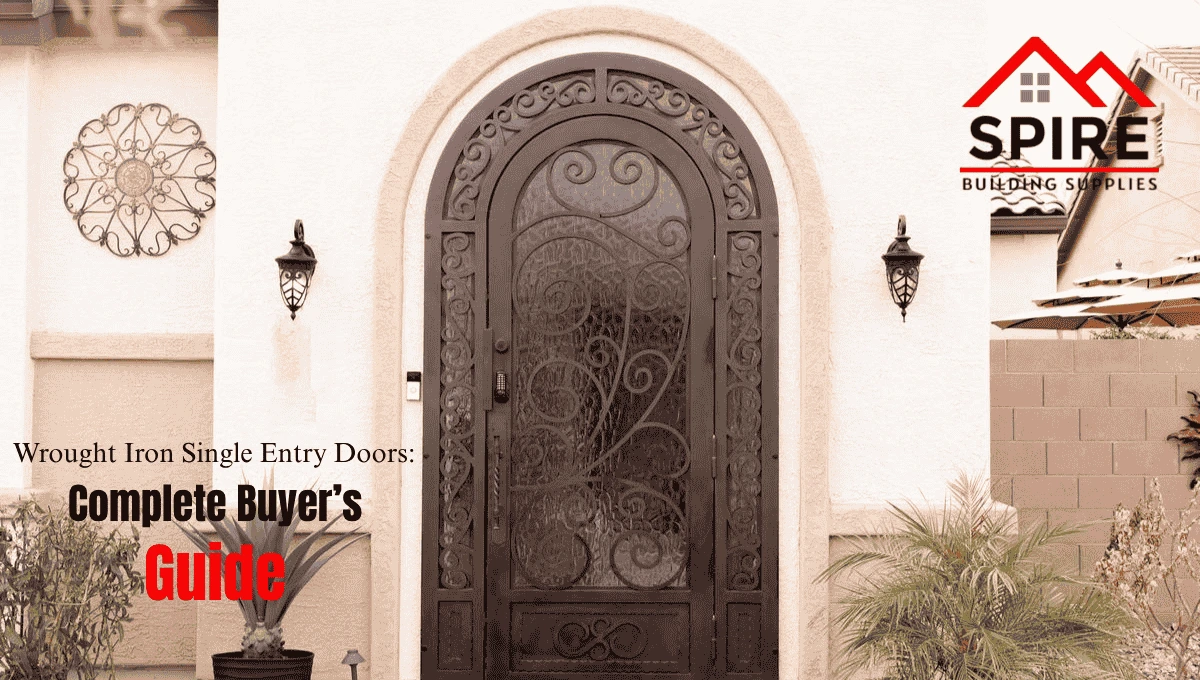
Choosing the right wrought iron single entry doors is one of those decisions that seems straightforward until you realize how many variables affect performance, appearance, and long-term value. From material quality to installation details, the wrong choice can lead to drafts, rust issues, or a door that simply doesn’t fit your home’s style.
This guide breaks down what actually matters. Whether you’re a homeowner upgrading your entrance or a builder specifying doors for a project, you’ll learn how to compare options, avoid common mistakes, and choose a door that performs as well as it looks.
What Are Wrought Iron Single Entry Doors?
A wrought iron single entry door is a single-panel exterior door made primarily from steel or iron, often combined with decorative glass and metalwork. Unlike double doors, it fits standard entryways while still offering a premium, architectural look.
Key Characteristics
- Heavy-duty metal construction
- Decorative or minimalist iron designs
- Glass panels (clear, frosted, or insulated)
- Weather-sealed frames for exterior use
If you’ve searched for iron entry doors near me or wrought iron entry doors near me, you’ve likely seen both ornate and modern variations. The key is understanding which features actually impact performance—not just appearance.
Why Homeowners and Builders Choose Iron Entry Doors
- Strong First Impression
A well-designed front entry wrought iron door adds immediate visual weight to a home. Even a single door can create a focal point when paired with the right design and finish.
- Security and Strength
Compared to wood or fiberglass, iron doors provide:
- Higher resistance to forced entry
- Reinforced frames and locking systems
- Long-term structural stability
- Longevity
With proper coating and care, these doors can last decades without warping, cracking, or rotting.
- Design Flexibility
From simple geometric frames to intricate scrollwork, iron doors adapt to:
- Modern homes
- Mediterranean styles
- Traditional architecture
Benefits vs Limitations: What to Expect
Benefits
- Exceptional durability in harsh weather
- Low risk of warping or pest damage
- Customizable appearance
- Strong resale value
Limitations
- Higher upfront cost than standard wood doors
- Heavy weight requires proper installation
- Potential heat transfer if not insulated properly
- Finish maintenance in humid or coastal climates
If budget or insulation is a concern, some homeowners compare alternatives like Fiberglass double entry doors, which offer different trade-offs in cost and durability.
Key Buying Considerations (What Actually Matters)
1. Material and Build Quality
Not all iron doors are built the same.
Look for:
- 12–14 gauge steel thickness
- Fully welded frames (not spot-welded)
- Powder-coated or baked-on finishes
Lower-quality doors often cut corners here, which leads to early wear.
2. Glass Options
Glass impacts both privacy and energy efficiency.
Common choices:
- Clear glass – maximum visibility and light
- Frosted glass – privacy without losing brightness
- Double-pane insulated glass – better thermal performance
A practical example is the Single Exterior Wrought Iron Door, which balances design and functionality.
3. Style and Design Fit
Your door should match your home’s architecture—not fight it.
- Modern → clean lines, minimal ornamentation
- Traditional → curved ironwork, decorative elements
- Transitional → subtle patterns with neutral finishes
For a more decorative option, the Langston Wrought Iron Exterior Prehung Single Door shows how design can become a statement feature.
4. Size and Fit
Even standard doors require precise measurements.
- Measure rough opening, not just door slab
- Account for frame thickness
- Check swing direction and clearance
Improper sizing is one of the most common (and expensive) mistakes.
5. Insulation and Energy Efficiency
Iron naturally conducts heat, so insulation matters.
Look for:
- Foam-insulated cores
- Thermal breaks
- Quality weatherstripping
Without these, you may notice drafts or temperature fluctuations.
6. Hardware and Security Features
The door is only as strong as its hardware.
- Multi-point locking systems
- Heavy-duty hinges
- Corrosion-resistant handles
Avoid pairing a premium door with low-grade hardware.
7. Installation Quality
Even the best door won’t perform well if installed poorly.
Professional installation ensures:
- Proper sealing
- Smooth operation
- Structural alignment
This is especially important for heavier iron doors.
Common Mistakes to Avoid
Choosing Based Only on Appearance
A visually appealing door may lack insulation or durability.
Ignoring Climate Conditions
Coastal and humid environments require stronger finishes and rust protection.
Skipping Professional Installation
DIY installs often result in misalignment and air leaks.
Overlooking Glass Quality
Single-pane glass reduces both insulation and security.
Not Considering Long-Term Maintenance
Even durable materials need occasional upkeep.
Expert Tips from Real-World Experience
- Inspect welds closely – clean welds indicate better craftsmanship
- Ask about finish warranties – especially in humid climates
- Choose timeless designs if resale value matters
- Test door weight and swing before installation
- Plan for proper framing support due to door weight
Many buyers searching for a front-entry wrought iron door for sale focus on price first—but long-term performance depends on build quality and installation.
Real-World Use Cases
- Entry Upgrade in a Suburban Home
A homeowner replaces a basic wood door with a wrought iron model. Result: improved security and a noticeable boost in curb appeal.
- Builder Spec for New Construction
A builder selects iron doors for a mid-range home to increase perceived value without major structural changes.
- Privacy-Focused Entryway
Using frosted glass allows natural light while maintaining privacy—ideal for homes near sidewalks or streets.
Comparing Wrought Iron to Other Door Materials
| Feature | Wrought Iron | Wood | Fiberglass |
| Durability | Very High | Medium | High |
| Maintenance | Low–Medium | High | Low |
| Security | Excellent | Moderate | Good |
| Cost | Higher | Medium–High | Medium |
| Style Options | High | High | Moderate |
For broader options, you can explore Iron Doors to see different styles and configurations.
Maintenance: What You Should Expect
Wrought iron doors are relatively low maintenance, but not maintenance-free.
Basic upkeep includes:
- Cleaning with mild soap and water
- Checking seals annually
- Touching up scratches to prevent rust
- Lubricating hinges and locks
In humid or coastal areas, you may need to inspect finishes more frequently.
FAQs:
- Are wrought iron single entry doors energy efficient?
Yes, if they include insulated cores and double-pane glass. Without these, they can transfer heat.
- How long do wrought iron doors last?
With proper care, they can last 30 years or more.
- Do wrought iron doors require a lot of maintenance?
Not much. Occasional cleaning and minor touch-ups are usually enough.
- Are iron entry doors secure?
Yes, they are among the most secure residential door options available.
- Can I customize a wrought iron door?
Yes. Most doors can be customized in size, design, finish, and glass type.
What Customers Are Saying
We wanted something durable but stylish—our iron door completely changed the look of our entryway.
The frosted glass option gave us privacy without sacrificing natural light.
Installation made a huge difference. Once properly fitted, the door feels solid and secure.
Final Thoughts
A wrought iron single entry door is more than a design upgrade—it’s a structural and functional investment. When chosen carefully, it offers long-term durability, strong security, and a noticeable improvement in curb appeal.
Focus on what truly matters: build quality, insulation, proper fit, and installation. Avoid shortcuts, and you’ll end up with a door that performs reliably for years—not just something that looks good on day one.
About the Author
Spire Building Supplies Editorial Team
The team at Spire Building Supplies works closely with contractors, builders, and homeowners to understand how materials perform beyond the showroom. With hands-on experience in door selection, installation challenges, and long-term durability, the team focuses on practical advice that helps customers make confident, informed decisions.

Leave a comment