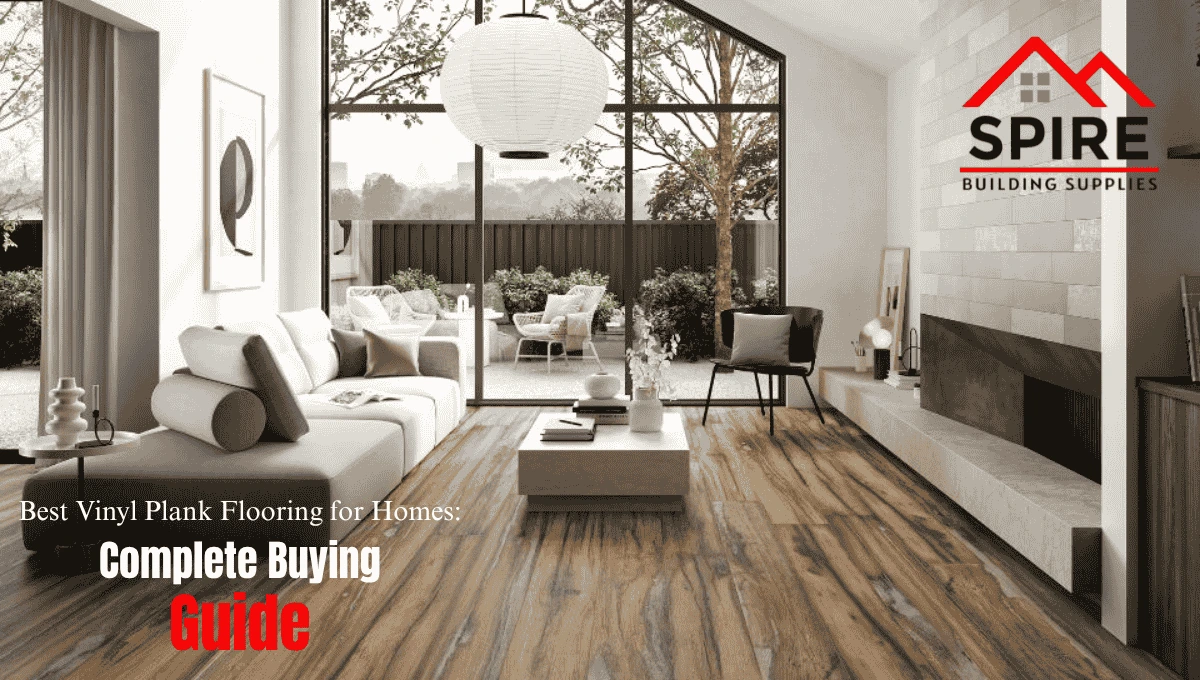
Choosing the best vinyl plank flooring can make or break how your home looks, feels, and performs over time. For homeowners and builders, it’s one of the most practical flooring options available but only if you understand what you’re actually buying. The wrong choice can lead to premature wear, water damage issues, or floors that simply don’t hold up to daily life.
This guide breaks down everything you need to know from materials and construction to real-world performance so you can make a confident, informed decision that works for your home or project.
What Is Vinyl Plank Flooring? (And Why It’s So Popular)
Vinyl plank flooring is a synthetic flooring material designed to mimic the appearance of natural wood while offering better resistance to moisture, scratches, and wear.
Key Components
Most modern vinyl plank flooring consists of:
- Wear layer – Protects against scratches and stains
- Design layer – Printed pattern that mimics wood grain
- Core layer – Provides stability (rigid core or flexible)
- Backing layer – Adds support and sometimes sound insulation
Why Homeowners and Builders Choose It
- Looks like real wood without the maintenance
- Handles moisture better than traditional hardwood
- Easier and faster to install
- Suitable for most rooms, including kitchens and basements
This combination is why many consider it among the best flooring options for modern homes.
Types of Vinyl Plank Flooring You Should Know
Not all vinyl plank flooring performs the same. Understanding the differences helps you avoid costly mistakes.
1. Luxury Vinyl Plank (LVP)
Often referred to as the best luxury vinyl plank flooring, LVP offers thicker construction, better durability, and more realistic wood textures.
Best for:
- Living rooms
- Bedrooms
- High-traffic areas
2. Rigid Core (SPC & WPC)
- SPC (Stone Plastic Composite): Very durable, great for high traffic
- WPC (Wood Plastic Composite): Softer underfoot, better for comfort
3. Glue-Down Vinyl Plank
- Ideal for commercial or high-traffic environments
- Requires professional installation
- Extremely stable over time
4. Click-Lock (Floating) Vinyl Plank
- Easy DIY installation
- Popular for residential use
- Works well over existing subfloors
A product like MOHAWK BRAND VINYL CLICK-DOWN FLOORING-Flooring is a good example of click-lock systems designed for ease of installation and long-term reliability.
Benefits and Limitations of Vinyl Plank Flooring
Benefits
- Water resistance: Suitable for kitchens and the best flooring for bathroom in many cases
- Durability: Resists scratches and dents
- Low maintenance: Easy to clean
- Affordability: Lower cost than hardwood
- Design versatility: Wide range of styles and finishes
Limitations
- Not completely waterproof in all cases (especially at seams)
- Can feel less premium than real hardwood
- Lower-quality options may fade or wear quickly
- Subfloor preparation is critical
Understanding these trade-offs helps you choose the right product for your specific needs—not just what looks good in a showroom.
How to Choose the Right Vinyl Plank Flooring
This is where most buyers go wrong—they focus on appearance and overlook performance factors.
- Check the Wear Layer Thickness
The wear layer determines how long your flooring lasts.
- 6–12 mil: Light residential use
- 12–20 mil: Standard residential
- 20+ mil: High-traffic or commercial use
- Evaluate Core Construction
Rigid core options are more stable and resistant to dents, especially in busy households.
- Consider Room Usage
- Bathrooms: Look for water-resistant or waterproof options
- Living areas: Focus on durability and aesthetics
- Bedrooms: Comfort and noise reduction matter more
- Compare Installation Methods
- Click-lock for DIY convenience
- Glue-down for long-term stability
- Look at Realistic Design
High-quality planks have:
- Embossed textures
- Natural wood grain patterns
- Variation between planks
For example, options like Poppy Reserve Luxury Vinyl Tile And Plank 6 mm-Flooring offer a balance of thickness, durability, and design realism.
Practical Buying Considerations
If you’re browsing options under Flooring, here’s what actually matters in real-life scenarios:
- What to Compare
- Thickness (total and wear layer)
- Warranty length
- Water resistance rating
- Installation requirements
- Brand reliability
2. What People Often Overlook
- Subfloor condition
- Expansion gaps
- Underlayment compatibility
- Color variation under different lighting
3. What Works Best in Real Homes
- Neutral tones for resale value
- Medium textures to hide wear
- Durable finishes for high-traffic areas
Common Mistakes to Avoid
These mistakes can lead to costly repairs or dissatisfaction.
- Choosing the Cheapest Option
Lower-cost vinyl often has thinner wear layers and shorter lifespan.
- Ignoring Subfloor Preparation
Uneven subfloors cause:
- Gaps
- Clicking noises
- Premature wear
- Using the Wrong Type for Wet Areas
Not all vinyl is fully waterproof. Always check specifications.
- Overlooking Installation Quality
Even premium flooring performs poorly if installed incorrectly.
- Mismatching Flooring Across Spaces
Inconsistent flooring disrupts visual flow and reduces home value.
Expert Tips for Better Results
Choose Slightly Higher Quality Than You Think You Need
It pays off in durability and long-term satisfaction.
Test Samples at Home
Lighting can change how flooring looks throughout the day.
Plan Transitions Between Rooms
Smooth transitions improve both aesthetics and functionality.
Consider Long-Term Maintenance
Some finishes hide scratches better than others.
Think About the Entire Interior
Flooring should complement doors, walls, and finishes. For example, pairing flooring choices with entry features like wrought iron single entry doors creates a cohesive design.
Real-World Examples
Example 1: Family Home Upgrade
A homeowner replaced worn carpet with vinyl plank flooring:
- Improved durability for kids and pets
- Easier cleaning
- Modernized appearance
Example 2: Rental Property Renovation
A builder installed rigid core vinyl:
- Reduced maintenance costs
- Increased tenant appeal
- Faster installation turnaround
Example 3: Bathroom Remodel
Switching to water-resistant vinyl created a practical alternative to tile, making it one of the best flooring for bathroom projects with easier maintenance.
Customer Experiences
We installed vinyl plank throughout our home, and it’s held up perfectly with pets and kids.
The click-lock system made installation much easier than expected.
Upgrading to a thicker wear layer was worth it—no visible scratches after a year.
FAQ:
What is the best vinyl plank flooring for homes?
High-quality luxury vinyl plank with a thick wear layer and rigid core is typically the best choice for durability and performance.
Is vinyl plank flooring good for bathrooms?
Yes, many options are water-resistant or waterproof, making them suitable for bathroom use.
How long does vinyl plank flooring last?
With proper installation and care, it can last 10–25 years depending on quality.
Can vinyl plank flooring look like real wood?
Yes, modern designs closely mimic natural wood grain and texture.
Is vinyl plank better than hardwood?
It depends—vinyl is more water-resistant and affordable, while hardwood offers a more premium natural feel.
Final Thoughts
Vinyl plank flooring has become a go-to solution for modern homes because it balances durability, style, and cost. But not all options are equal. By focusing on wear layers, core construction, and real-world performance, you can avoid common pitfalls and choose flooring that truly lasts.
The goal isn’t just to find something that looks good today it’s to invest in flooring that continues to perform well years down the line.
About the Author
Spire Building Supplies Editorial Team
The Spire Building Supplies team works closely with homeowners, contractors, and builders to understand how materials perform in real-world conditions. Their insights are based on hands-on experience with installation, product durability, and practical use helping readers make informed decisions that hold up over time.

Leave a comment