
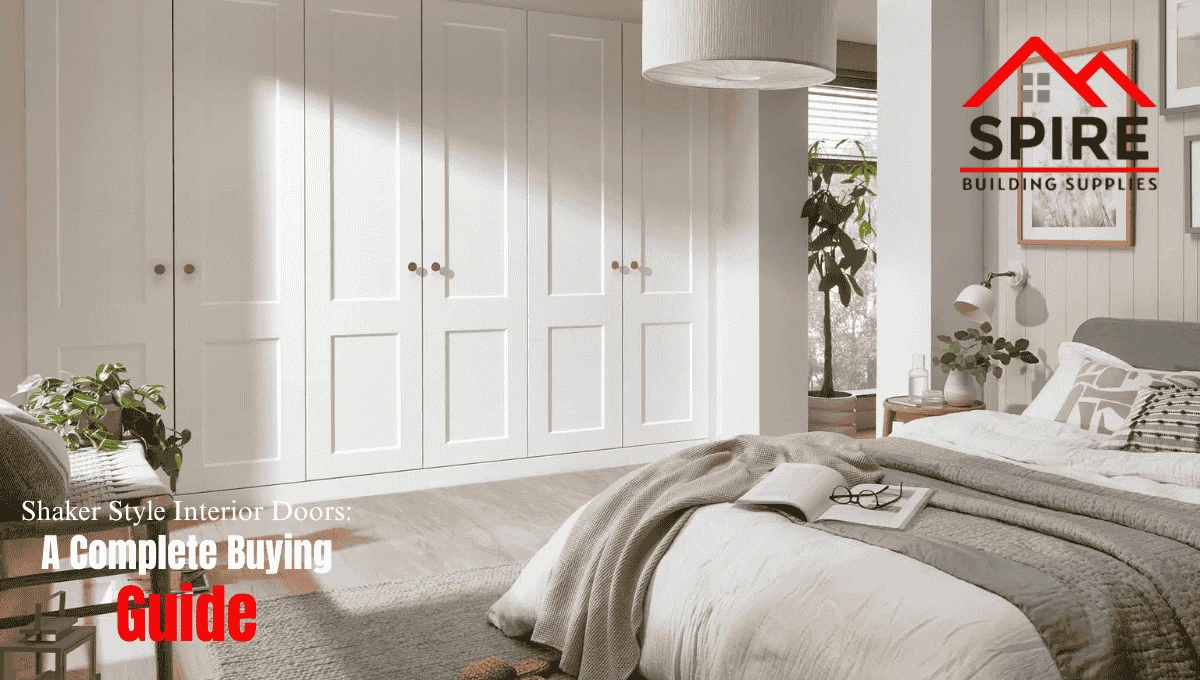
Few interior design choices hold up across as many home styles as shaker style interior doors. Whether you’re finishing a craftsman bungalow, a modern farmhouse, or a clean contemporary build, shaker doors fit without forcing the aesthetic. But that versatility also means they’re easy to get wrong the wrong profile, the wrong material, or the wrong finish can make a thoughtfully designed space feel disconnected. This guide will help you understand exactly what makes a shaker door work, where the real differences between options lie, and how to make a decision you won’t second-guess six months after installation.
What Makes a Door “Shaker Style”?
The shaker style comes from 18th-century Shaker furniture-making a tradition built on functional simplicity, clean lines, and quality craftsmanship. Applied to doors, the defining feature is a flat recessed center panel framed by clean, square-edged rails and stiles. No decorative carving.
What you get is a door with visual structure the frame-and-panel look without the fussiness of traditional raised panel designs. That restraint is exactly why shaker doors interior have remained popular across so many decades and so many design movements.
The number of panels matters too. A single large recessed panel reads more modern and open. Two stacked panels introduce a bit more visual rhythm and suit transitional or traditional spaces better. Understanding this difference before you shop saves a lot of time.
Shaker Doors vs. Other Interior Door Styles
Before committing, it’s worth knowing how shaker doors compare to what else is available.
Flat panel (slab) doors — Completely flush with no panel detail. More minimalist than shaker. Work well in ultra-modern or Scandinavian-influenced interiors but can feel stark in warmer, more layered spaces.
Raised panel doors — Traditional carved profiles with decorative detailing. The opposite of shaker’s restraint. Common in colonial and Victorian-era homes, less suited to contemporary builds.
French doors — Glass-paned doors. Different functional category, though shaker-style frames around glass inserts are available.
Shaker doors sit in the middle — they have enough detail to feel intentional without the formality of traditional raised panel designs. That’s the reason they’ve become the dominant interior door style in new construction and renovation alike.
Panel Count: One Panel vs. Two Panel
This is one of the most important and most overlooked decisions in the buying process.
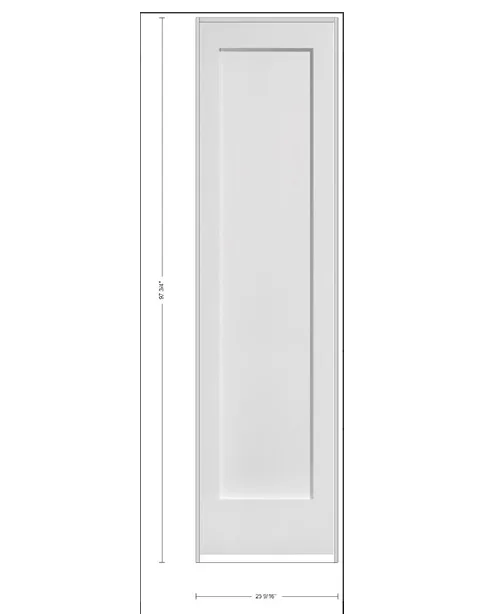
Single Panel Shaker Doors
A 1 Panel Shaker 6’8″ Height Interior Door features one large recessed panel that spans most of the door face. The result is clean, open, and slightly more contemporary in feel. It works well in:
- Modern and transitional homes
- Spaces where you want a lighter, more open visual
- Rooms with minimal trim profiles
Two Panel Shaker Doors
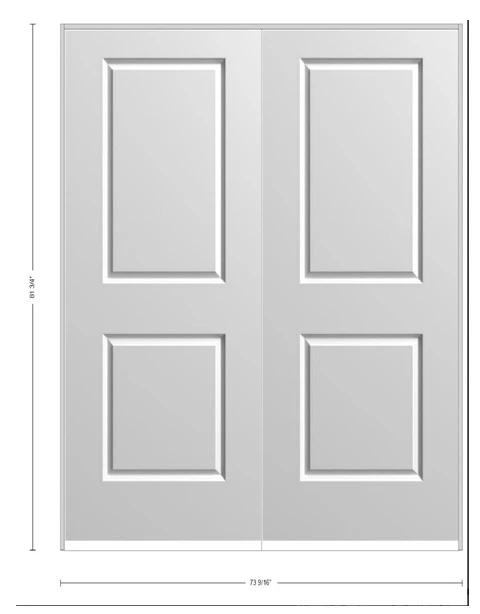
A two panel shaker door divides the face into two stacked panels, creating slightly more visual weight and structure. This suits:
- Craftsman and farmhouse interiors
- Spaces with more detailed trim and molding
- Transitional homes where some traditional influence is present
The difference seems subtle in photos, but in person across a hallway of six or eight doors — the panel count shapes the entire rhythm of the space.
Material Options and What They Mean in Practice
Hollow Core vs. Solid Core
Most shaker interior doors are available in both configurations. Hollow core doors are lighter and more affordable — the right choice for closets, laundry rooms, and secondary bedrooms where acoustic performance isn’t a priority. Solid core doors are heavier, dampen sound more effectively, and feel more substantial. They’re worth the cost in primary bedrooms, home offices, and bathrooms.
MDF vs. Wood Veneer Facing
MDF-faced shaker doors are dimensionally stable — they resist warping and paint exceptionally well. For painted finishes, MDF is often the better choice. Wood veneer doors suit stained or natural finishes and bring genuine warmth to the grain.
Primed vs. Unfinished
Many shaker doors come factory-primed and ready for paint. This saves prep time and gives you a consistent base. Unfinished doors offer more flexibility for stains and custom finishes but require more on-site work.
Shaker Doors and Cabinets: Keeping the Interior Cohesive
One of the most effective design moves in modern interiors is carrying the shaker profile from doors through to shaker cabinet doors creating visual continuity between the cabinetry and the door frames throughout a space.
In a kitchen, for example, if your cabinet doors use a flat-recessed panel shaker profile, matching that same profile on the adjacent pantry door or utility door reads as intentional design rather than coincidence. It’s a detail that interior designers use consistently and one that’s easy to apply yourself if you know what to look for.
The key is matching the rail and stile width. Standard shaker cabinet doors often use slightly narrower frames than full interior doors, but the proportions should be in harmony. When in doubt, bring a sample door panel to the cabinet showroom or bring a cabinet door sample when you’re selecting your interior shaker door.
Pre-hung vs. Slab: Which Do You Need?
This is a basic but important distinction that catches buyers off guard.
Slab doors are just the door panel — no frame, no hinges, no hardware prepped. You need an existing door frame to hang them into. If you’re replacing existing doors that already have frames in good condition, slab is fine.
Pre-hung doors come as a complete unit: door, frame, hinges, and sometimes the door stop. If you’re framing a new opening, finishing a room addition, or the existing frame is damaged, pre-hung is the right choice.
Ordering the wrong type means extra labor cost or a trip back to the supplier. Measure your existing frame (or new rough opening) carefully before deciding.
For standard 6’8″ height openings, the 1 Panel Shaker 6’8″ Height 80 Inch Interior Door is a well-suited option that fits the most common residential rough openings without custom sizing.
What to Think About Before You Buy
Door Swing Direction
Every interior door is either left-hand or right-hand swing, depending on which side the hinges are on and the direction the door opens. Stand in the doorway facing the room — if the hinges are on your left, it’s a left-hand door. Get this wrong on a pre-hung unit and you’ve got a return on your hands.
Width and Height
Standard interior doors are 80″ tall and range from 24″ to 36″ wide. Bathrooms typically use 24″–28″. Bedrooms use 28″–32″. Main passage doors and primary bedrooms benefit from 32″–36″. If you’re building to code with accessibility in mind, 32″ clear opening is the minimum for wheelchair access.
Thickness
Most residential interior doors are 1-3/8″ thick. Some solid core and exterior-grade doors run 1-3/4″. Make sure your hardware (locksets, hinges, door stops) is sized to match.
Finish Coordination
Shaker doors take paint beautifully. The most popular choices are crisp white, warm off-white, and charcoal/black for an accent door. If you’re staining, test on a sample piece first — MDF doesn’t take stain the way wood veneer does.
Coordinating your floor and door finish is a good habit. If you’re working on flooring at the same time, the best vinyl plank flooring guide covers how to think about undertones and finish coordination between floors and interior elements.
Common Mistakes to Avoid
-
Mixing Panel Styles Across a Floor
Using a single-panel shaker in the hallway, a two-panel in the bedroom, and a flat slab on the bathroom creates visual noise. Pick one profile and use it consistently throughout a level. Small variations in profile are much more noticeable in person than in product photos.
-
Ordering Before Measuring the Rough Opening
Don’t trust your memory or the previous door’s dimensions — especially in older homes where openings were sometimes built out of square. Measure the rough opening height and width, not the old door itself.
-
Skipping the Primer on MDF Doors
MDF absorbs paint differently than wood. If you apply a finish coat directly to bare or lightly sanded MDF, you’ll get blotchy, uneven results. Two coats of quality primer before any finish paint is not optional — it’s the only way to get a clean, professional result.
-
Ignoring the Frame and Casing
The door is only part of what you see. Thin, poorly installed casing makes even a great door look cheap. Make sure your casing profile complements the shaker detail — a simple flat or slightly stepped profile works best. Avoid overly ornate casing around a shaker door.
-
Choosing Hardware That Conflicts With the Style
Ornate Victorian lever sets on a shaker door look out of place. Shaker-style doors pair best with clean, simple hardware — square or rounded lever sets, minimalist backplates, and matte finishes (black, satin nickel, or brushed brass). The hardware is the last thing a person touches on their way in and out of a room. Don’t let it undercut the door selection.
-
Buying Pre-Hung When You Only Needed a Slab
Pre-hung units are more expensive and harder to transport. If your existing frame is square and in good shape, a slab door is the smarter buy. Check the frame with a level before you order.
Expert Tips From the Field
Paint the door before hanging it. Laying the door flat and painting it before installation gives you access to all edges and eliminates the masking and cleanup required when painting in place. It also lets you get the edges — which are often missed — properly coated.
Use three hinges on any door taller than 80″. Standard 6’8″ doors work on two hinges. Anything taller benefits from a third hinge in the middle to prevent racking and long-term sagging.
Don’t skip the undercut. Interior doors should be undercut 3/4″ to 1″ from the finished floor to allow air return through the HVAC system. This is code in many jurisdictions and practically important in any conditioned space. Ask your supplier or carpenter to confirm the right clearance for your floor type.
Order 10% extra if you’re cutting to size. Slab doors can typically be trimmed up to 3/4″ per side. If you’re fitting a non-standard opening, having a spare door gives you margin for error.
Sample the finish first. Order a primed door sample and paint or stain it exactly as you plan to finish the full set. Live with it in the space for 48 hours under different lighting conditions before committing.
Real-World Use Cases
Full Home Renovation, Transitional Style: A homeowner replacing 1990s raised panel doors throughout a two-storey home chose a two panel shaker profile in primed MDF, painted Sherwin-Williams Alabaster. The updated doors immediately modernized the interior without requiring any trim replacement. Total cost was significantly less than a custom millwork solution, and the result was cohesive across all 11 doors.
New Build, Modern Farmhouse: A builder specifying doors for a custom home used single-panel shaker doors throughout the main floor and secondary bedrooms, with the same profile in a taller format for the primary suite. The consistent profile across 14 openings gave the interior a deliberate, designed feeling that clients frequently comment on.
Rental Property Upgrade: An investor refreshing a duplex replaced original hollow-core flat slabs with primed single-panel shaker doors in standard sizing. The change required no framing work, cost less than expected, and noticeably elevated the perceived quality of the units during showings.
People Also Ask
What makes a door “shaker style”? A shaker door has a flat recessed center panel surrounded by clean, square-edged rails and stiles. No ornate molding or curves — just structured simplicity. That’s what defines the style.
Are shaker interior doors more expensive than flat slab doors? Generally, yes — slightly. The panel construction adds manufacturing complexity. But the price gap between a basic shaker door and a flat slab is modest, and the visual return is significant in most interior contexts.
Can shaker doors be used in a modern home? Yes. Single-panel shaker doors work very well in modern and minimalist interiors. The key is choosing the right panel count (one panel reads cleaner and more contemporary) and keeping hardware minimal.
What’s the best finish for shaker interior doors? Paint is the most popular choice, and MDF-faced shaker doors take paint exceptionally well with proper priming. Crisp white and warm off-white tones are the most versatile. For stained finishes, choose a wood veneer door instead of MDF.
Should interior doors match throughout a home? Generally, yes — especially on the same floor. Consistent door style, finish, and hardware throughout a level creates a cohesive interior. It’s fine to vary between floors if the design intent changes, but mixing profiles within the same visual field creates noise.
What Customers Have Said
We replaced every door in our main floor with single-panel shakers — primed, painted white. The transformation was bigger than I expected for what felt like a simple change. Everything just looks more intentional now. — M. Lindqvist, Homeowner, BC
As a contractor, I’ve been spec’ing shaker doors on most of my builds for the past four years. Clients love them, they install cleanly, and the style doesn’t date quickly. That’s what matters to me. — T. Okonkwo, Residential Contractor, Alberta
I was worried about matching my kitchen cabinets with the door profile — but once I found a shaker door with the same rail width as my uppers, it looked like it was always meant to be that way. — R. Sato, Homeowner, Ontario
Final Thoughts
Shaker style interior doors earn their popularity honestly — they’re versatile, timeless, and easy to integrate into almost any interior. But getting them right means thinking through panel count, material, swing direction, and finish before you order. The decisions aren’t complicated, but skipping them is where most buyers run into problems.
Take the time to measure carefully, sample your finish, and pick a profile you’ll use consistently. Done right, shaker doors are one of the simplest ways to give an interior a cohesive, considered look — and one of the most cost-effective upgrades available in a renovation or new build.
About The Author
Written by the Spire Building Supplies Editorial Team — building materials specialists and residential design advisors with hands-on experience across residential construction, renovation, and interior finishing. Our content is written to help you make better decisions, not to steer you toward a particular product.

Leave a comment