
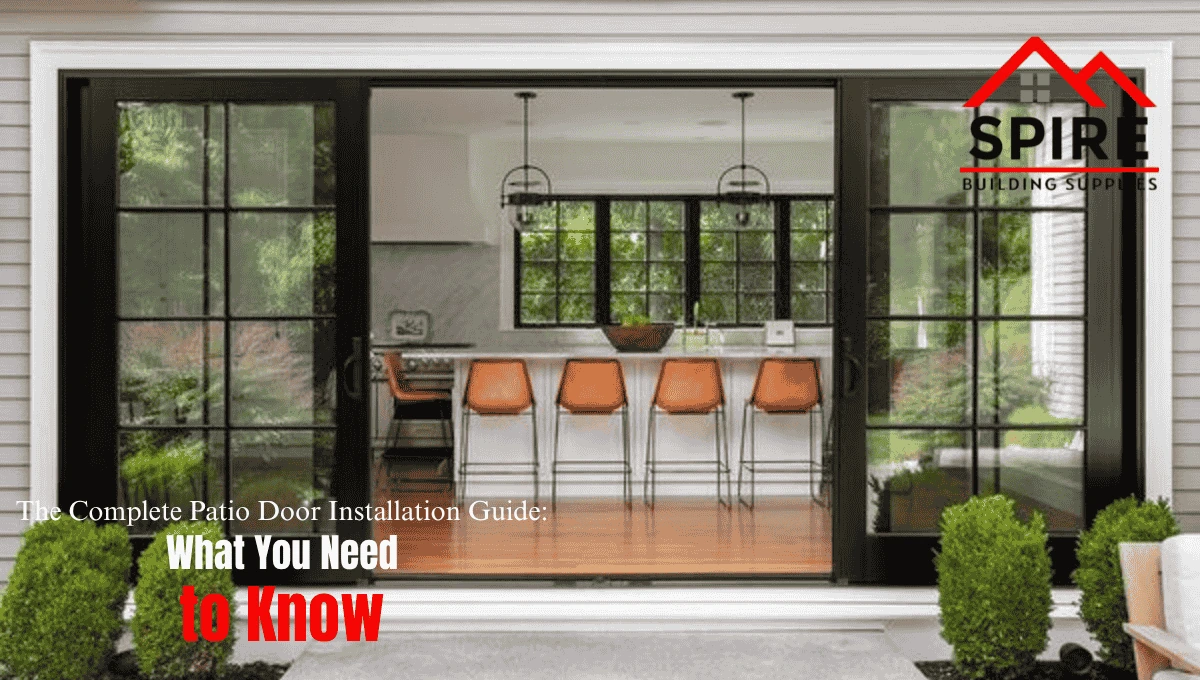
A new patio door can transform how a room feels more light, better flow, and a direct connection to your outdoor space. But patio door installation is one of those projects where the details matter more than most homeowners realize. Get the rough opening wrong, skip the flashing, or choose the wrong door type for your climate, and you’re looking at drafts, water damage, or a door that won’t seal properly for years.
This guide covers the full picture: door types, how installation actually works, what to look for before buying, the mistakes that cause the most problems, and the practical details that most guides skip over. Whether you’re doing it yourself or managing a contractor, this is what you actually need to know.
Understanding Your Patio Door Options
Before installation begins, you need to know what type of door you’re working with. The configuration affects the rough opening size, the installation process, the hardware, and ultimately how the door performs over time.
Sliding Patio Doors
The most common choice for residential use. Sliding patio doors operate on a track system one panel is fixed, the other slides. They’re space-efficient (no swing clearance needed), handle large glass panels well, and are generally easier to install than hinged alternatives. The main maintenance consideration is keeping the track clean and the rollers in good condition.
A popular option is the Full Lite Gliding Patio Door a clean, full-glass sliding design that maximizes natural light and suits both contemporary and transitional home styles. It’s a strong choice where the view and light transfer matter most.
Hinged (French) Patio Doors
French doors use one or two hinged panels that swing open. They create a wider clear opening when both panels are open, which is useful for moving furniture or for a more dramatic entry feel. They require swing clearance on one or both sides, which affects furniture placement near the door.
Vinyl vs. Wood vs. Fibreglass
The frame material affects energy performance, maintenance requirements, and cost. Here’s a practical breakdown:
- Vinyl: Low maintenance, good thermal performance, cost-effective. The most common choice for Canadian climates. Doesn’t require painting or staining.
- Wood: Best aesthetic warmth and natural feel. Requires periodic sealing or painting. More susceptible to moisture damage if not maintained.
- Fibreglass: Highest performance for energy efficiency and durability. More expensive but holds up exceptionally well in extreme temperature swings.
For a well-priced vinyl option that performs reliably in most residential applications, the Inspire Series Vinyl Patio Door 6068 is worth considering. The 6068 sizing (6 feet wide, 6’8″ tall) suits standard rough openings and delivers solid thermal performance without the premium price of fibreglass.
Before Installation: What to Check First
Most installation problems start before the first screw goes in. These are the things worth getting right upfront.
Measure the Rough Opening Accurately
The rough opening is the framed hole in the wall where the door unit sits. For patio doors, rough opening width is typically the door width plus 1″ (for shimming and adjustment), and height is door height plus 0.5″ to 1″.
Check the Subfloor and Sill Condition
If you’re replacing an existing patio door, inspect the sill and surrounding subfloor before ordering your replacement. Water infiltration from a poorly sealed old door is common and often causes rot that isn’t visible until the old unit is removed. Replacing rotted framing adds time and cost — better to know before the new door arrives.
Understand Your Wall Construction
Standard 2×4 framing with exterior sheathing and interior drywall gives a wall thickness of approximately 4.5″ to 5″. Patio door frames (jamb depth) are sized accordingly. If your walls are thicker — common in older homes or in cases where extra insulation was added — you’ll need extension jambs or a custom-depth unit.
Confirm the Swing and Panel Configuration
For sliding doors: confirm which panel is the active (sliding) one, and whether it operates from the left or right. For hinged doors: determine inswing vs. outswing and left-hand vs. right-hand hinge. Getting this wrong at the order stage is one of the most common and frustrating mistakes in door replacement projects.
How Patio Door Installation Works: Step by Step
This section covers the standard process for a sliding patio door replacement in a wood-framed exterior wall. New construction or different door types will have variations, but the core sequence is the same.
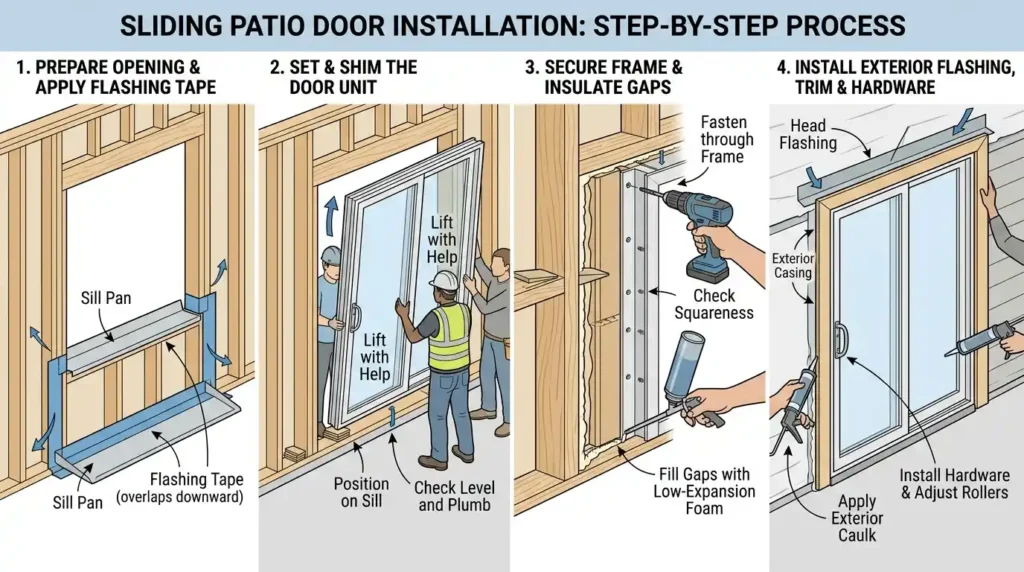
- Remove the existing door unit. Take out the old door, frame, and any trim. Inspect the rough opening for rot, damage, or moisture intrusion before proceeding.
- Prepare the rough opening. Check for square, level, and plumb. Correct any issues in the framing. Install a sill pan or sloped sill to direct any water that gets past the door away from the structure.
- Apply flashing tape. Flash the sill first, then the sides, overlapping properly so water runs down and out, never into the wall cavity. This is the single most important waterproofing step.
- Set the door unit. With help, lift the door into the rough opening. Set it on the sill, check for level, and adjust with shims as needed. Do not fasten permanently until the unit is square and plumb.
- Fasten through the frame. Secure the unit through the pre-drilled holes in the jamb, working from the hinge side first (for hinged doors) or the fixed panel side (for sliders). Check operation after each fastener.
- Insulate the gaps. Fill the space between the door frame and rough opening with low-expansion foam or fibreglass batt insulation. Avoid high-expansion foam — it can bow the frame and affect operation.
- Flash the exterior and install trim. Apply head flashing above the door, integrate with the house wrap, and install exterior casing. Caulk all exterior joints with a quality exterior-grade sealant.
- Install interior trim and hardware. Set interior casing, install the lock hardware, adjust the rollers or hinges for smooth operation, and do a final check of the seal and weatherstripping.
Common Patio Door Installation Mistakes to Avoid
- Skipping the sill pan. A flat sill with no slope or drainage is a water infiltration problem waiting to happen. Even a small amount of water sitting against the door frame will eventually cause damage.
- Using high-expansion foam around the frame. It’s tempting to fill fast. But high-expansion foam exerts pressure that can bow the jamb inward, causing the door to stick or not seal properly. Use low-expansion or batt insulation instead.
- Not checking for plumb and square before fastening. Once you’ve driven screws, it’s much harder to correct alignment. Check level and plumb at every stage before shimming, after shimming, and after fastening.
- Ignoring the head flashing. Side and sill flashing get attention, but the head (top) flashing is equally critical. Water running down the wall above the door needs to be directed outward over the door frame, not behind it.
- Ordering the wrong hand or swing configuration. This is a very common and very avoidable mistake. Confirm the operating panel location and swing direction with your supplier before ordering, not after the unit arrives on site.
- Forgetting to account for flooring height. If new flooring hasn’t been installed yet, the finished floor height will affect the door’s bottom clearance and operation. Factor this in before setting the door.
Expert Tips for a Better Installation
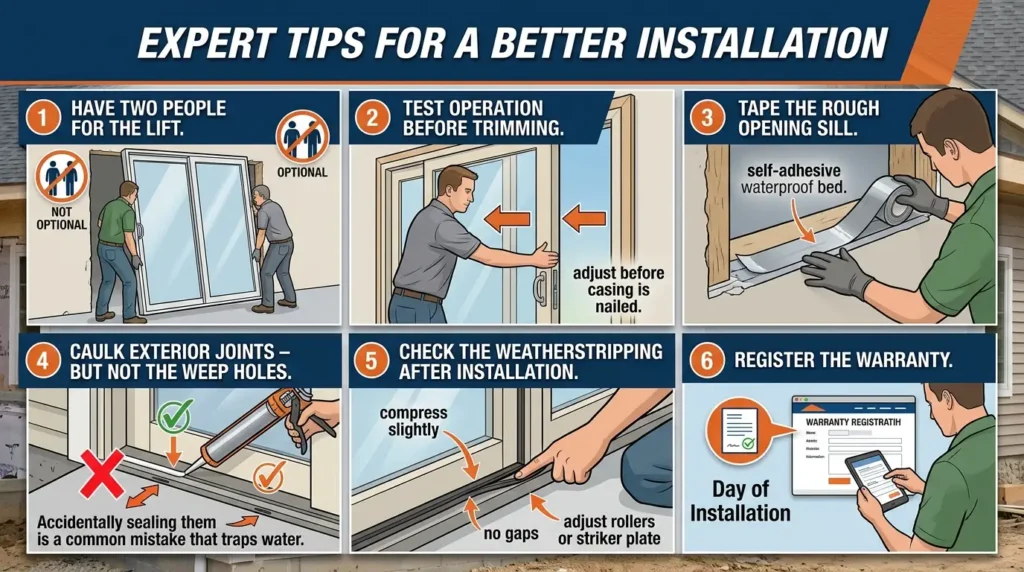
Have two people on site for the lift. Patio door units — especially full-lite glass panels — are heavy and awkward. A two-person installation is not optional; it’s how you avoid dropped glass, misaligned frames, and injuries.
Test operation before trimming. Install the door, check the slide or swing, confirm the lock aligns and engages cleanly, then install the trim. It’s much easier to adjust before casing is nailed.
Tape the rough opening sill before the door goes in. Self-adhesive flashing tape on the sill is fast and creates a proper waterproof bed for the door frame to sit on. Don’t skip it.
Caulk exterior joints — but not the weep holes. Weep holes at the bottom of sliding door frames are there to let water out. Accidentally sealing them is a common mistake that traps water inside the frame.
Check the weatherstripping after installation. Compress it slightly when the door closes. If there’s a gap anywhere, adjust the rollers or striker plate before calling the job done.
Register the warranty. Most quality door manufacturers require registration within a set window after purchase. Do it the day of installation while the details are fresh.
Real-World Scenarios: Where Installation Details Make the Difference
Replacing an Old Slider in a 1980s Home
Older homes often have non-standard rough openings — slightly out of square, with different wall thicknesses than modern builds. In these cases, plan for extra shimming time and inspect the sill and surrounding framing carefully before ordering. Many replacement projects in older homes reveal minor rot or moisture damage that needs to be addressed before the new door goes in.
New Construction with a Vinyl Slider
In new construction, the rough opening is set during framing. Confirm the door dimensions and rough opening requirements with your supplier before the framers finish — it’s far easier to adjust framing at that stage than after drywall. For standard new builds, a vinyl sliding door in a 6068 or 9068 configuration handles most residential openings well.
Upgrading to a Larger Opening
If you’re expanding an existing opening to accommodate a wider door, you’re into structural work — the header above the opening needs to be engineered for the new span. This is not a DIY situation. A structural engineer or experienced contractor needs to specify the header before any framing is cut.
If you’re still deciding on door style alongside this project, the guide to shaker style interior doors covers how to match interior and exterior door choices for a consistent aesthetic throughout the home.
What Our Customers Say
We replaced a 30-year-old sliding door ourselves using this guide as a reference. The flashing steps were the most useful our old door had significant rot at the sill that we would have buried again without knowing what to look for.
— Kevin M., Homeowner, Kelowna
We’ve installed Spire’s vinyl patio doors on four townhouse projects now. Consistent quality, good weatherstripping from the factory, and the sizing works with standard rough openings without modification.
— Sandra L., Residential Builder, Surrey
The Inspire Series door was a great fit for our budget and the installation was straightforward. The instructions were clear and the rollers adjusted easily to get a tight seal.
— Tom R., Homeowner, Calgary
Frequently Asked Questions
Can I install a patio door myself?
Yes, if you have intermediate carpentry skills and the right tools. A standard sliding door replacement in an existing opening is manageable for a capable DIYer. New construction installs and projects involving structural changes to the opening are better left to professionals.
How long does patio door installation take?
A straightforward replacement of an existing sliding door typically takes 4–8 hours for an experienced installer, or a full day for a DIYer doing it carefully for the first time. Projects with framing repairs, rot remediation, or structural changes take longer.
What size rough opening do I need for a patio door?
For most sliding patio doors, the rough opening should be the door width plus 1″ and the door height plus 0.5″ to 1″. Always confirm the required rough opening with your specific door’s installation instructions, as it can vary by manufacturer and frame design.
What is the best material for a patio door in a cold climate?
Vinyl and fibreglass both perform well in cold climates. Vinyl is the more common and cost-effective choice and handles temperature swings without significant expansion or contraction. Fibreglass offers the best overall energy performance but at a higher cost. Wood requires more maintenance in cold, wet climates.
How do I know if my patio door is properly sealed?
Close the door and check the weatherstripping contact around the entire perimeter it should compress slightly and leave no gaps. On a windy day, hold a candle or lighter near the edges; flickering indicates air infiltration. Proper roller adjustment and aligned lock hardware are also key to maintaining a good seal over time.
Final Thoughts
Patio door installation done right is a project that pays off for years in comfort, energy performance, and the daily experience of your space. Done wrong, it’s a source of ongoing problems that are expensive to fix after the fact.
The fundamentals aren’t complicated: measure accurately, flash properly, don’t rush the levelling, and use the right materials at every step. Most installation failures come down to shortcuts in those basics.
Whether you’re sourcing a single replacement door or specifying for a full build, the patio doors range at Spire Building Supplies covers standard residential sizes and configurations with the product knowledge to help you get the right unit for your specific opening.
About the Spire Building Supplies Editorial Team
The Spire Building Supplies content team draws on hands-on experience with residential and commercial building products. Our guides are written by people who understand how materials perform in the field not just on paper. We focus on giving homeowners and builders the practical information they need to make good decisions, avoid costly mistakes, and get results that hold up over time. No filler, no sales pitch just useful, honest guidance from people who know the product.



Leave a comment