
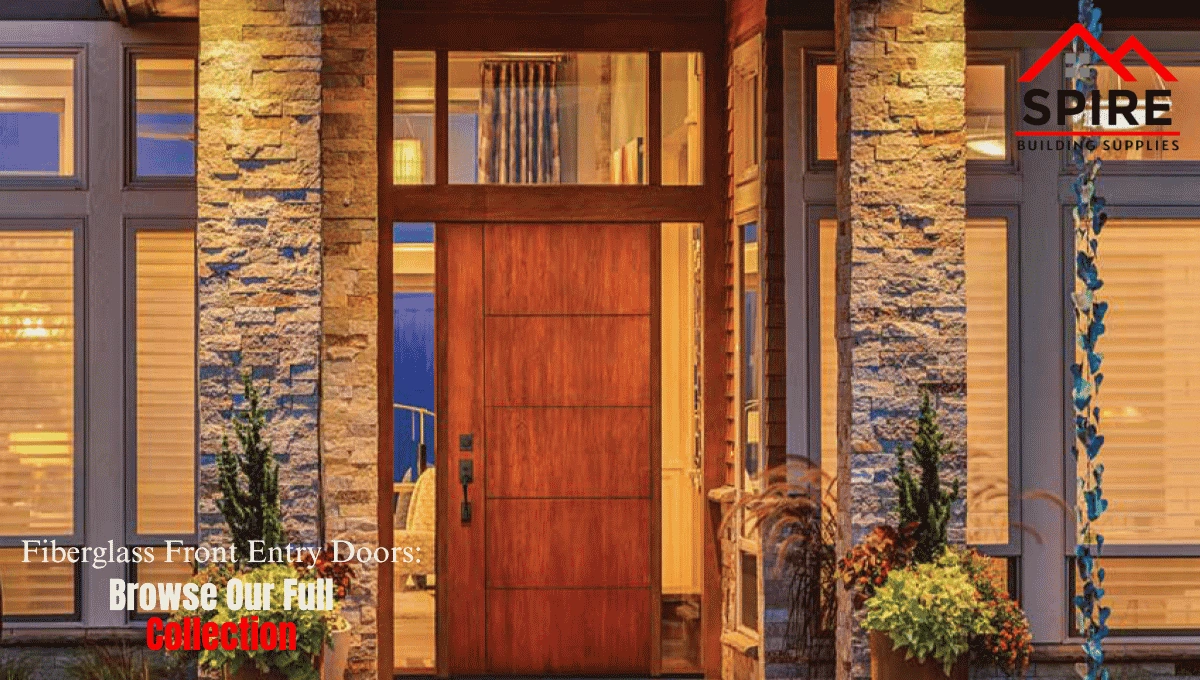
Choosing the right entry door is one of those decisions that seems simple until you realize how much it affects your home’s security, energy efficiency, and overall curb appeal. Fiberglass front entry doors have become a popular choice for homeowners who want durability without sacrificing style. But not all fiberglass doors are the same, and picking the wrong one can lead to long-term frustration, from poor insulation to premature wear.
This guide walks you through what actually matters when selecting a fiberglass entry door based on real-world experience, not just product specs so you can make a confident, informed decision.
What Are Fiberglass Front Entry Doors?
A fiberglass front entry door is constructed with a reinforced fiberglass skin over a solid core, often made of polyurethane foam. This combination creates a door that’s:
- Strong and impact-resistant
- Insulated for energy efficiency
- Resistant to moisture, warping, and rot
Unlike wood, fiberglass won’t swell or crack in humid conditions. Compared to steel, it doesn’t dent easily or conduct heat as quickly.
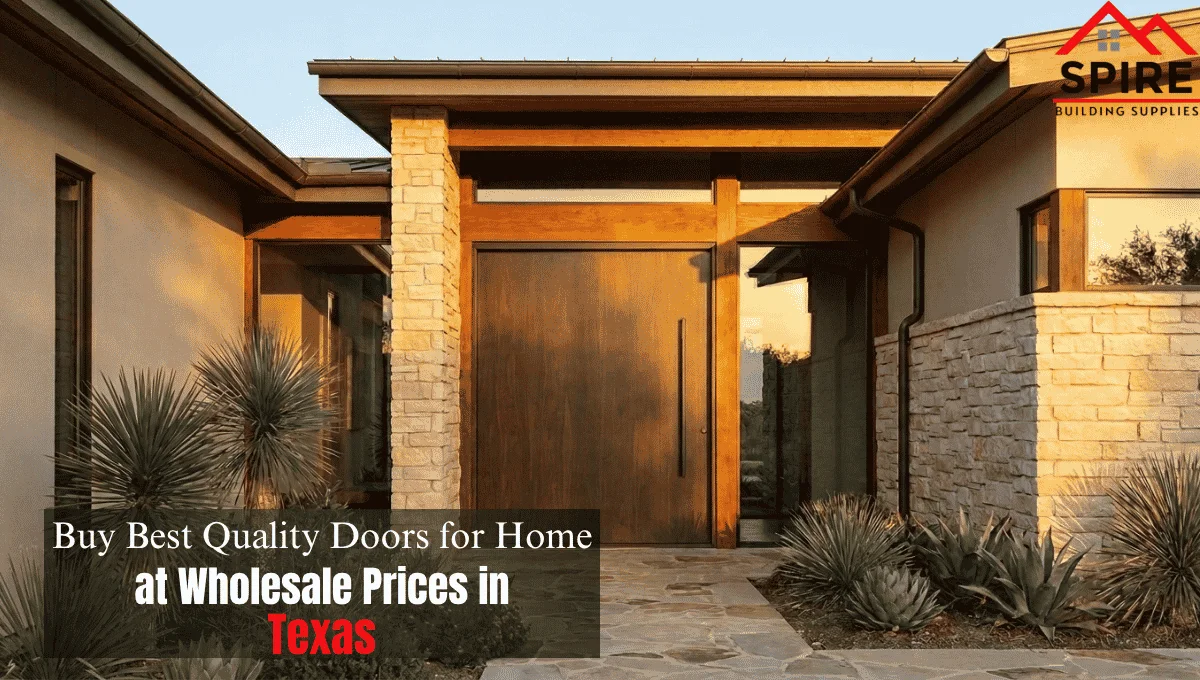
If you’re browsing modern , you’ll notice they often mimic the look of real wood grain while offering much lower maintenance.
Why Homeowners Choose Fiberglass Over Other Materials
1. Durability That Holds Up Over Time
Fiberglass doors are built to handle harsh weather heat, humidity, rain, and even coastal conditions. In regions where wooden doors struggle with expansion and contraction, fiberglass stays stable.
2. Energy Efficiency
Most exterior fiberglass door options come with insulated cores that help maintain indoor temperatures. This reduces energy loss and can lower utility bills over time.
3. Low Maintenance
You don’t need to sand, stain, or repaint frequently. Occasional cleaning and minimal upkeep keep the door looking new for years.
4. Design Flexibility
From modern minimal styles to textured woodgrain finishes like a rustic fiberglass door, there’s a wide variety of designs available.
5. Security Performance
Fiberglass doors are tough. When paired with quality hardware and proper installation, they provide solid resistance against forced entry.
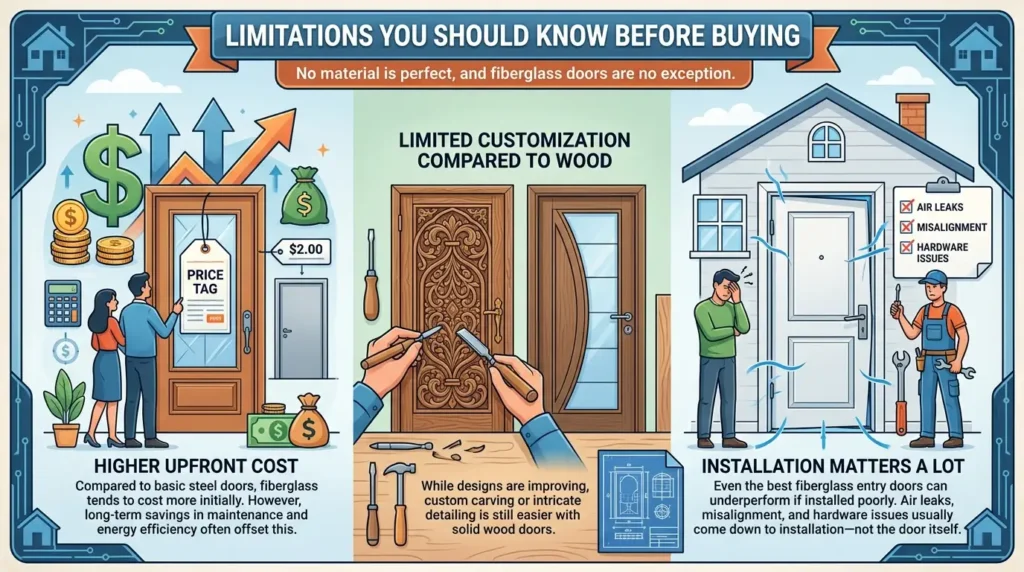
Limitations You Should Know Before Buying
No material is perfect, and fiberglass doors are no exception.
Higher Upfront Cost
Compared to basic steel doors, fiberglass tends to cost more initially. However, the long-term savings in maintenance and energy efficiency often offset this.
Limited Customization Compared to Wood
While designs are improving, custom carving or intricate detailing is still easier with solid wood doors.
Installation Matters a Lot
Even the best fiberglass entry doors can underperform if installed poorly. Air leaks, misalignment, and hardware issues usually come down to installation—not the door itself.
Key Things to Consider Before You Choose
1. Door Configuration
Think about how the door fits your entryway:
- Single vs. double doors
- Prehung vs. slab doors
- Glass inserts or solid panels
For example, a Single Prehung Fiberglass Door in Black with 1 Lite can offer a clean, modern look while allowing natural light into the entry.
2. Insulation Rating
Look for doors with:
- Polyurethane cores
- Good energy ratings
- Tight weatherstripping
This is especially important if your front door faces direct sun or strong winds.
3. Finish and Style
Fiberglass doors can replicate:
- Oak, mahogany, or walnut textures
- Smooth painted finishes
- Rustic or contemporary designs
Choose a style that complements your home’s architecture—not just current trends.
4. Glass Options
If your door includes glass:
- Look for double or triple-pane glass
- Consider low-E coatings for energy efficiency
- Evaluate privacy levels (clear vs. frosted vs. decorative)
5. Hardware Compatibility
Make sure the door supports:
- Secure lock systems
- Smart locks (if needed)
- Durable hinges and handles
A strong door is only as secure as its hardware.
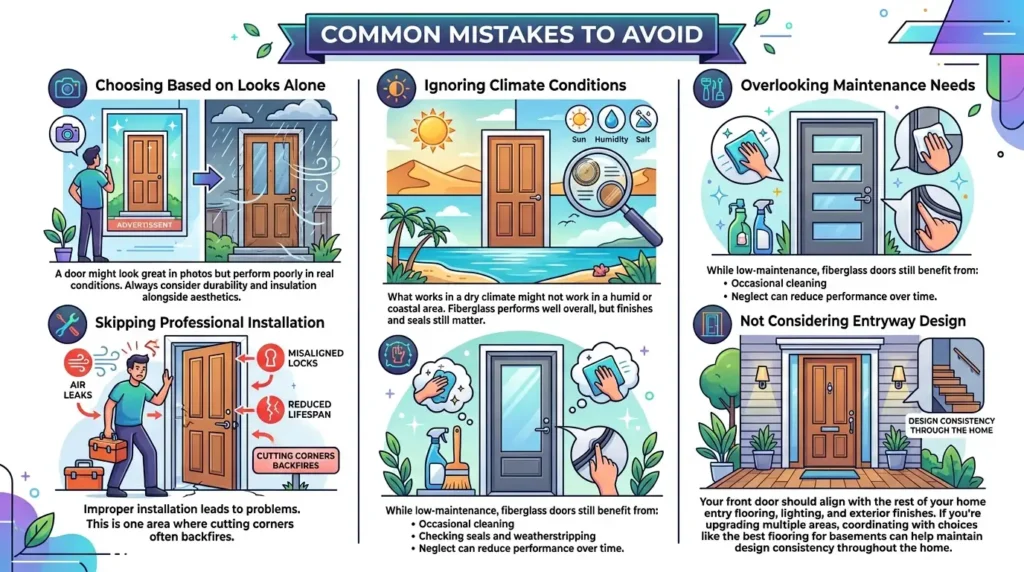
Common Mistakes to Avoid
Choosing Based on Looks Alone
A door might look great in photos but perform poorly in real conditions. Always consider durability and insulation alongside aesthetics.
Ignoring Climate Conditions
What works in a dry climate might not work in a humid or coastal area. Fiberglass performs well overall, but finishes and seals still matter.
Skipping Professional Installation
Improper installation leads to:
- Air leaks
- Misaligned locks
- Reduced lifespan
This is one area where cutting corners often backfires.
Overlooking Maintenance Needs
While low-maintenance, fiberglass doors still benefit from:
- Occasional cleaning
- Checking seals and weatherstripping
Neglect can reduce performance over time.
Not Considering Entryway Design
Your front door should align with the rest of your home entry flooring, lighting, and exterior finishes. If you’re upgrading multiple areas, coordinating with choices like the best flooring for basements can help maintain design consistency throughout the home.
Expert Tips for Choosing the Best Fiberglass Entry Doors
Focus on Core Construction
Not all fiberglass doors are equal. Pay attention to:
- Core density
- Frame quality
- Reinforcement around lock areas
These details affect both durability and security.
Test the Finish Quality
Run your hand over the surface. A good front door fiberglass finish should feel:
- Smooth or realistically textured
- Evenly coated
- Free from bubbles or inconsistencies
Consider Long-Term Value
Instead of asking, “What’s the cheapest option?” ask:
- How long will this door last?
- What maintenance will it need?
- Will it improve energy efficiency?
Often, spending a bit more upfront saves money later.
Don’t Ignore Weather Sealing
Look for:
- Tight-fitting frames
- High-quality weatherstripping
- Threshold durability
These details make a noticeable difference in comfort.
Real-World Use Cases
- Busy Family Homes
Fiberglass doors handle daily wear kids, pets, constant use without dents or scratches showing easily.
- Coastal or Humid Areas
Unlike wood, fiberglass won’t warp or rot, making it ideal for high-moisture environments.
- Rental or Investment Properties
Low maintenance and durability reduce long-term repair costs, making fiberglass a practical choice.
- Modern Renovations
Clean-lined designs with glass inserts work well in contemporary homes, especially when paired with neutral exterior finishes.
What Homeowners Are Saying
We switched from a wooden door to fiberglass, and the difference in insulation was immediate. The house feels more comfortable year-round.
After two years, it still looks brand new. No warping, no repainting—just basic cleaning.
Installation made all the difference. Once it was properly fitted, we noticed zero drafts.
Frequently Asked Questions
Are fiberglass front entry doors better than wood?
They’re more durable and require less maintenance than wood, especially in humid or extreme weather conditions.
How long do fiberglass entry doors last?
With proper installation and minimal maintenance, they can last 20–30 years or more.
Do fiberglass doors look like real wood?
Yes. Many modern designs replicate wood grain very realistically, especially higher-end models.
Are fiberglass doors energy efficient?
Yes. Their insulated cores help reduce heat transfer and improve indoor comfort.
Can fiberglass doors crack or dent?
They’re resistant to dents and cracks, but extreme impact can still cause damage—though it’s less common than with steel or wood.
Final Thoughts
Fiberglass front entry doors strike a strong balance between durability, energy efficiency, and design flexibility. They’re not the cheapest option upfront, but in real-world use, they often prove to be one of the most practical choices for homeowners.
The key is to focus on construction quality, proper installation, and choosing a design that fits your home not just what looks good in a catalog.
If you take the time to evaluate these factors carefully, you’ll end up with a door that performs well for years without constant maintenance or costly repairs.
About the Author
Spire Building Supplies Editorial Team
The Spire Building Supplies team works closely with builders, contractors, and homeowners to understand what actually performs well in real construction environments. With hands-on experience in materials, installation challenges, and long-term durability, the team focuses on practical guidance not just product descriptions so readers can make informed, confident decisions for their homes.

Leave a comment