
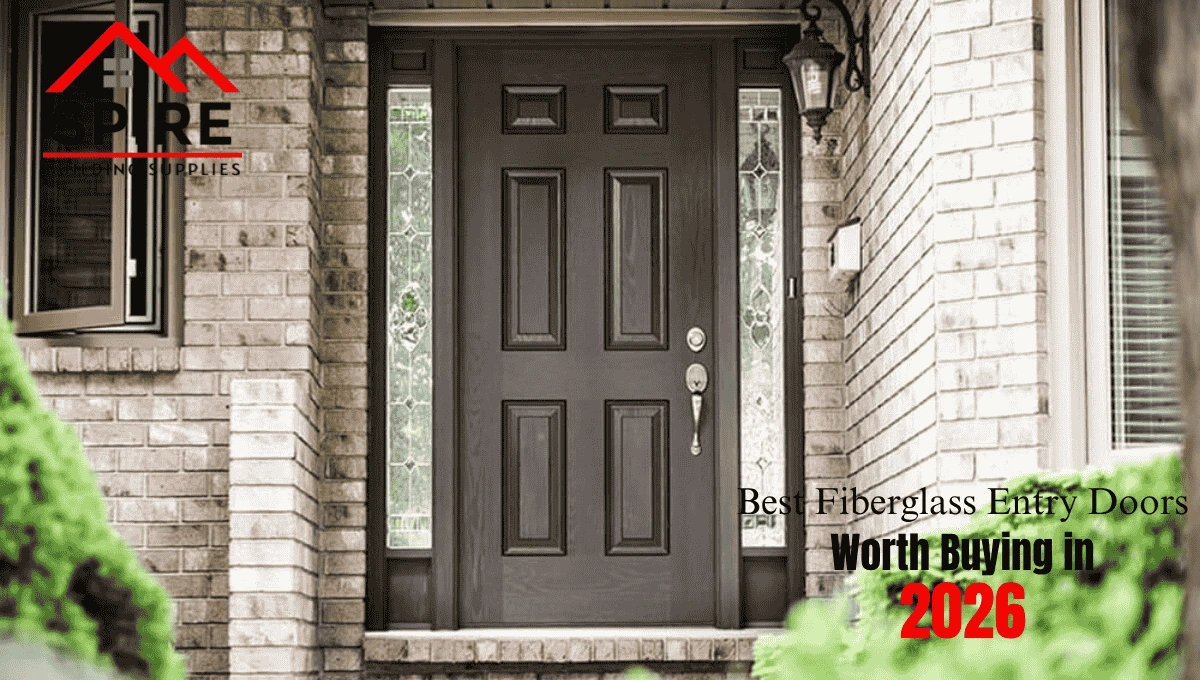
Your front door has a bigger job than most homeowners realize. It needs to look good, seal tightly, hold up to weather, support security, and still feel like it belongs with the rest of the house. That’s exactly why so many homeowners and builders are narrowing their search to the best fiberglass entry doors in 2026. A poor choice can lead to drafts, fading, swelling, alignment issues, or a door that simply looks dated faster than expected.
This guide is built to help you avoid that. You’ll learn what makes a fiberglass entry door worth buying, how to compare styles and performance, where buyers often make expensive mistakes, and which features matter most in real homes not just in a showroom or product listing.
If you’re replacing an old front door, planning a remodel, or specifying doors for a new build, this article will help you make a smarter decision with fewer regrets.
Why Fiberglass Entry Doors Are So Popular in 2026
Fiberglass has become a go-to material for front entries because it solves a lot of the issues homeowners run into with older wood or low-end steel doors.
A good fiberglass door can offer:
- Better resistance to warping and moisture
- Lower maintenance than solid wood
- Improved insulation and comfort
- More design flexibility than many buyers expect
- Strong curb appeal with long-term practicality
That combination matters because your front entry isn’t just decorative. It affects daily use, energy performance, first impressions, and even how “finished” your home feels from the street.
For builders, it also reduces one major headache: callbacks caused by movement, sticking, or finish breakdown after installation.
What Makes a Fiberglass Entry Door Worth Buying?
Not every fiberglass door deserves to be called one of the best.
Two doors can look similar online and perform very differently in real life. The difference usually comes down to how the full system is built not just how the slab looks in a photo.
The best fiberglass entry doors usually get these things right:
- A stable, weather-resistant shell
- A quality insulated core
- Reliable weatherstripping
- A properly designed threshold
- Strong frame compatibility
- Well-integrated glass, if included
- A finish and style that hold up over time
That’s what separates a “good-looking door” from a good long-term purchase.
Key Concepts Homeowners Should Understand Before Buying
If you only compare by style and price, you’ll miss some of the details that matter most after installation.
Door slab vs. complete entry system
A front door is not just a panel.
A full entry system includes:
- Door slab
- Frame
- Threshold
- Sill
- Weatherstripping
- Hinges
- Bore prep
- Glass package (if applicable)
A lot of performance issues people blame on the “door” are actually frame, threshold, or install problems.
Prehung vs. slab doors
For most exterior replacements, a prehung unit is the safer choice.
Why?
Because a prehung system is usually easier to install correctly and more likely to provide:
- Better alignment
- Cleaner reveal margins
- Smoother operation
- More consistent weather sealing
That’s especially relevant if you’re researching fiberglass front doors installation and trying to avoid fit problems later.
Smooth vs. textured fiberglass finishes
Fiberglass can be made to suit different home styles.
Generally:
- Smooth fiberglass works well in modern and contemporary homes
- Textured or woodgrain fiberglass works better for traditional or transitional exteriors
The best option isn’t universal. It depends on the architecture of the house and how exposed the entry is to weather and sunlight.
Benefits of Fiberglass Entry Doors
If you’re weighing your options, these are the advantages that tend to matter most in real homes.
1) Lower maintenance than wood
This is one of the biggest reasons buyers upgrade.
Wood can be beautiful, but it often demands more upkeep than homeowners expect—especially at exposed front entries.
Fiberglass typically resists:
- Swelling
- Rot
- Splitting
- Surface movement
- Finish-related frustration
That doesn’t mean no maintenance. It means less frequent upkeep and fewer surprises.
2) Better long-term stability
One of the most practical reasons to choose fiberglass is that it usually stays more consistent through seasonal changes.
That matters because front doors are constantly exposed to:
- Heat
- Cold
- Humidity
- Rain
- UV exposure
- Daily opening and closing
A quality exterior fiberglass door tends to handle those demands better than many alternatives when installed correctly.
3) Strong curb appeal without high upkeep
A front door upgrade can dramatically change the look of a home without requiring a full exterior remodel.
The best fiberglass exterior entry doors often offer:
- Clean modern lines
- Glass-lite design options
- Wood-look or painted finishes
- Better architectural presence
- A more current appearance from the street
This is one reason so many remodelers use the front door as a “high-impact, moderate-cost” exterior improvement.
4) Good energy performance potential
While no door alone will transform a home’s utility bills, a well-built fiberglass entry system can help reduce:
- Air leakage
- Drafts
- Heat gain near the entry
- Cold spots in winter
- Outdoor noise
That matters more than people think especially in homes where the front entry opens directly into the living area.
The Realistic Limitations of Fiberglass Doors
A useful buying guide should cover the tradeoffs too.
1) Upfront cost can be higher than basic alternatives
Compared with low-end steel or builder-grade doors, fiberglass often costs more upfront.
But buyers should compare more than the sticker price. The real cost includes:
- Maintenance
- Refinishing
- Replacement frequency
- Comfort issues
- Installation quality
- Long-term durability
Often, the better value shows up over time.
2) Product quality varies a lot
This is where many homeowners get caught off guard.
Not all fiberglass doors exterior buyers see online are built to the same standard. Performance can vary based on:
- Core construction
- Door thickness
- Frame quality
- Glass package
- Finish quality
- Weather sealing details
That’s why it’s worth buying from a source that actually specializes in door systems rather than treating them like a generic commodity.
3) Installation still matters—a lot
A good product can still perform badly if it’s installed into:
- An out-of-square opening
- A poorly flashed wall
- A weak sill transition
- A compromised old frame
- Inadequate sealing conditions
That’s why installation should never be an afterthought.
What to Look for in the Best Fiberglass Entry Doors
This is where a smart buying decision really happens.
1) Match the door to your home’s exposure
Start with real-world conditions, not just style.
Ask:
- Is the entry covered or fully exposed?
- Does the door get harsh afternoon sun?
- Is there regular rain or wind exposure?
- Is the home in a humid or high-heat region?
- Will the entry see heavy daily use?
A door under a deep porch has different demands than one fully exposed to weather.
2) Choose a style that fits the architecture
The best front door is one that feels like it belongs on the house.
For modern homes:
Look for:
- Smooth slab-like faces
- Minimal paneling
- Vertical or geometric glass layouts
- Dark or neutral finishes
For transitional homes:
Look for:
- Clean panel symmetry
- Balanced glass proportions
- Mid-tone or architectural neutrals
For traditional homes:
Look for:
- More defined panel detail
- Classic-lite arrangements
- Warmer finishes or painted tones
If you’re comparing available fiberglass doors, it helps to browse actual category collections instead of shopping by material alone. Spire Building Supplies’ fiberglass door category includes a range of exterior entry styles and configurations designed for both homeowners and builders comparing aesthetics and function.
3) Don’t underestimate glass configuration
Glass can completely change the feel of a door—but it also affects:
- Privacy
- Light flow
- Security feel
- Heat gain
- Cleaning and maintenance
This is especially important when evaluating fiberglass french doors or larger double-door layouts.
For example, if you want a cleaner, more minimal front entry, a style like 2 Square panel can make sense for homes that need a simpler profile without too much visual complexity. Spire’s site lists this as part of its fiberglass door offerings.
If you want a wider, more open-looking entry with glass presence, a layout like 3lite flush glazed double door may be worth considering for larger openings or more architectural facades. Spire’s product listings show this as one of its double-door style options.
4) Think beyond the slab
A lot of homeowners spend too much time comparing decorative details and not enough time asking practical questions like:
- What’s included with the unit?
- Is it prehung?
- What type of threshold is used?
- What kind of weatherstripping comes with it?
- What glass specification is included?
- Is the frame appropriate for the application?
These are the details that affect how the door performs after the installer leaves.
Common Mistakes to Avoid
This is where a lot of money gets wasted.
1) Choosing only based on appearance
A door can look beautiful online and still be the wrong fit for your home.
A better buying process is:
Performance first → fit second → style third → final decision as a balance of all three.
2) Reusing an old frame when you shouldn’t
This is one of the most common mistakes in door replacement projects.
If the existing frame has:
- Rot
- Water damage
- Air leakage
- Misalignment
- Threshold wear
…then replacing only the slab may create more problems than it solves.
3) Ignoring the bottom of the opening
The threshold and sill area is one of the biggest weak points in any entry system.
That’s where a lot of:
- Air leakage
- Water intrusion
- Draft complaints
- Operational issues
…actually begin.
4) Ordering without confirming swing and clearance
This sounds basic, but it still causes expensive mistakes.
Before ordering, confirm:
- Left-hand or right-hand swing
- Inswing or outswing
- Hardware placement
- Interior clearance
- Exterior landing space
5) Buying too cautiously for the facade
Some homes can visually support a stronger front entry than the owner initially chooses.
If the opening and architecture allow it, a more substantial entry can dramatically improve curb appeal.
That’s one reason it can help to compare door styles alongside broader homeowner advice like this guide to exterior doors for sale, especially if you’re deciding between styles, sizes, and configurations rather than material alone.
Expert Tips for Choosing Better in 2026
These are the details experienced installers, builders, and practical homeowners tend to pay attention to.
Tip 1: If you’re replacing a wood door, prioritize weather performance first
A lot of buyers replacing old wood doors are doing it because of:
- Swelling
- Binding
- Drafts
- Finish wear
- Repeated maintenance
If that’s your situation, make sure the new door system is solving the actual performance problem not just improving the look.
Tip 2: For resale, choose broad-appeal design
If you’re upgrading before listing or planning to sell within a few years, stick with designs that feel current but not overly trendy.
Usually the safest choices are:
- Clean panel layouts
- Moderate glass use
- Neutral exterior finishes
- Hardware-friendly styling
Tip 3: Covered entries allow more design flexibility
If your entry is protected by a porch or overhang, you have more freedom with:
- Darker finishes
- Decorative glass
- Larger lite openings
- More design-forward door styles
Fully exposed entries need more caution.
Tip 4: Think about the interior view too
People often shop only from the curb.
But you’ll also see that door from inside every day.
Think about:
- Natural light into the foyer
- Sightlines into living areas
- Interior color coordination
- Privacy from the street
That’s especially useful when comparing fiberglass exterior entry doors with more or less glass.
Real-World Buying Scenarios
Sometimes the best way to understand what works is to look at real use cases.
Scenario 1: A family replacing an older wood front door
The existing door looks nice but sticks in summer and leaks air in winter.
Best fiberglass advantage:
More stability, less maintenance, and better comfort.
Scenario 2: A builder outfitting several homes in one neighborhood
The goal is to balance visual appeal, durability, and fewer post-installation issues.
Best fiberglass advantage:
Consistent performance, style flexibility, and fewer callbacks.
Scenario 3: A homeowner updating curb appeal before resale
The house needs a front entry that feels clean, current, and move-in ready.
Best fiberglass advantage:
High visual impact without creating a future maintenance burden.
Scenario 4: A modern remodel with a wider entry opening
The project needs a front door that feels architectural rather than builder-basic.
Best fiberglass advantage:
Smooth profiles, glass options, and compatibility with larger statement entries.
Short Homeowner Perspectives
These are the kinds of comments people often make after choosing the right fiberglass door:
We replaced a wood door that swelled every summer. The fiberglass one has been much easier to live with.
It changed the entire look of the front of the house more than we expected.
The biggest difference was comfort. The old door always felt drafty, and the new one sealed much better.
FAQ:
What are the best fiberglass entry doors for most homes?
The best ones are usually prehung systems with strong weather sealing, a durable finish, and a style that matches the home’s architecture.
Are fiberglass doors better than wood front doors?
For many homeowners, yes. Fiberglass typically needs less maintenance and handles moisture and temperature changes better than wood.
How long do fiberglass entry doors last?
A quality fiberglass door can last for many years when properly installed and maintained. Lifespan depends on climate, exposure, and installation quality.
Are fiberglass french doors a good idea for exterior use?
Yes, as long as they’re well-built and properly installed. They work especially well where natural light and wider openings matter.
Does fiberglass front doors installation need a professional?
In many cases, yes. A proper install affects sealing, alignment, operation, and long-term performance more than many buyers expect.
Final Thoughts: Which Fiberglass Entry Doors Are Actually Worth Buying in 2026?
The best fiberglass entry doors in 2026 aren’t just the ones with the nicest finish or trendiest glass pattern.
They’re the ones that do the full job well:
- Look appropriate for the house
- Hold up to the local climate
- Seal properly
- Require less maintenance
- Fit the opening correctly
- Deliver value over time
That’s what makes fiberglass such a smart category to shop in.
If you’re choosing between styles, configurations, or entry system types, the best decision usually comes from balancing durability, design, exposure, and installation quality not from chasing the cheapest or flashiest option.
Done right, a front door upgrade is one of the few home improvements that can improve curb appeal, comfort, usability, and long-term satisfaction all at once.
Author Bio
Spire Building Supplies Editorial Team
The Spire Building Supplies editorial team creates practical, homeowner-friendly content focused on doors, building materials, and smart renovation decisions. Our articles are built around real-world product knowledge, installation considerations, and the details that affect long-term performance not just what looks good in a product photo.

Leave a comment