
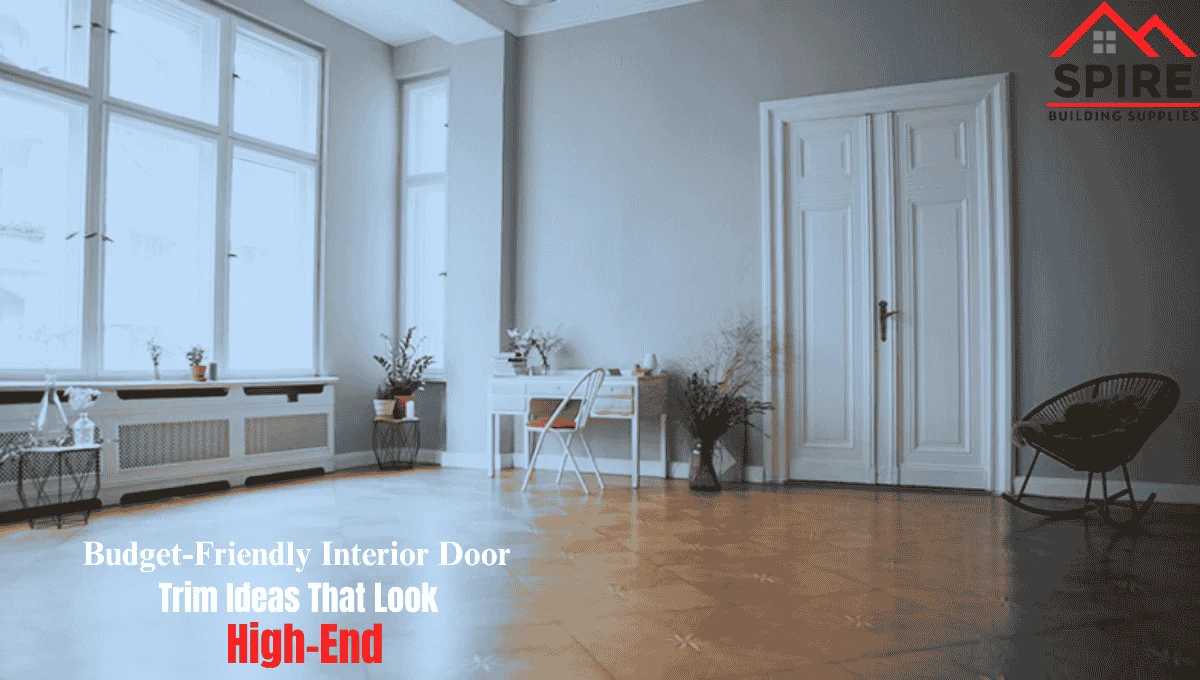
Most homeowners start searching for interior door trim ideas when their space feels incomplete—like something is missing even after painting and decorating. The truth is, doors without the right trim can make an entire room look cheap or unfinished.
The good news? You don’t need a luxury budget to create a high-end look—just the right trim strategy.
In this guide, I’ll walk you through real-world, budget-friendly interior door trim ideas that I’ve personally seen transform homes—from basic builder-grade spaces to magazine-worthy interiors—without overspending.
What Are Interior Door Trim Ideas?
Interior door trim ideas refer to the design, material, and styling choices used to frame a door, enhancing both aesthetics and structure. This includes casing styles, thickness, profiles, and finishes that can elevate a simple door into a focal design feature.
Why Door Trim Is a High-Impact, Low-Cost Upgrade
In home building & renovation supplies, trim is often overlooked because it seems “minor”. But in reality:
- It creates visual depth and contrast
- It hides installation gaps and protects edges
- It ties together baseboards, crown molding, and doors
- It significantly increases perceived home value
Expert insight: Buyers often associate thick, clean trims with “custom work”—even if the materials cost under $100 per door.
1. Flat Stock Trim (Modern & Minimal on a Budget)
If you want clean lines without breaking the bank, flat stock trim is your best friend.
Why it works:
- Uses simple boards (like 1×4 or 1×6)
- No fancy cuts or profiles required
- Perfect for modern and Scandinavian interiors
Best material choice:
- MDF (budget-friendly, smooth finish)
- Primed pine (more durable, slightly higher cost)
Pro Tip:
Use a 1x6x10 straight flexible trim baseboard for slightly uneven walls—it bends subtly and prevents visible gaps.
2. Craftsman-Style Trim (High-End Look, Low Complexity)
This is one of the most popular interior door trim ideas for a reason—it looks custom-built.
Key features:
- Thick vertical side casings
- A wider, layered top header
- Strong, geometric lines
Cost vs Value:
| Factor | Craftsman Trim |
|---|---|
| Cost | Moderate |
| Installation | Easy–Medium |
| Visual Impact | High |
| ROI | Excellent |
Real-world insight: I’ve seen homes gain a “custom home” feel just by upgrading to this style—especially when paired with 5–6 inch baseboards.
3. Layered Trim (The Secret to Luxury on a Budget)
Want that designer look? Layer your trim.
How it works:
- Combine multiple inexpensive pieces
- Example: flat board + thin decorative strip + top cap
Pros:
- Looks expensive
- Fully customizable
- Works with cheap materials
Cons:
- Slightly more labor
- Requires precise alignment
Expert tip: Paint everything the same color (usually white or off-white). It hides seams and makes the trim look like a single premium piece.
4. Thin vs Thick Trim (What Actually Looks Better?)
This is where most people go wrong.
Comparison: Thin vs Thick Trim
| Feature | Thin Trim (2–2.5 ”) | Thick Trim (3.5–6 ”) |
|---|---|---|
| Cost | Lower | Slightly higher |
| Appearance | Basic / builder-grade | Premium / custom |
| Durability | Less impact-resistant | More durable |
| Best for | Rentals, tight budgets | Long-term homes |
Verdict: If you can stretch your budget slightly, go thicker. It dramatically improves perceived quality.
5. Painted vs Stained Trim (Which Should You Choose?)
Painted Trim
Pros:
- Clean, modern look
- Hides imperfections
- Works with MDF
Cons:
- Can chip over time
Stained Wood Trim
Pros:
- Rich, natural texture
- More resistant to visible wear
Cons:
- Requires higher-quality wood
- More expensive
Expert opinion: For budget projects, painted trim gives you the best cost-to-luxury ratio.
Durability & Material Breakdown (What Actually Lasts)
When choosing interior door trim ideas, material matters more than style long-term.
MDF (Medium-Density Fiberboard)
- Smooth finish, perfect for paint
- Affordable
- Not moisture-resistant
Solid Wood (Pine, Oak)
- Strong and durable
- Can be stained
- Higher cost
PVC / Flexible Trim
- Water-resistant
- Ideal for bathrooms or uneven walls
- Slightly more expensive
Performance tip: For high-traffic areas (hallways, kids’ rooms), go with thicker trim (at least ¾ inch) to resist dents.
Maintenance & Lifespan
- Painted MDF: 7–10 years with touch-ups
- Solid wood: 15–25+ years
- PVC trim: 20+ years (low maintenance)
Easy maintenance tips:
- Use semi-gloss paint (easier to clean)
- Wipe regularly to prevent dust buildup
- Touch up chips annually
Safety Considerations Most People Ignore
- Avoid sharp trim edges in homes with kids
- Ensure trim is securely nailed (loose trim = hazard)
- Use low-VOC paints for indoor air quality
Common Mistakes to Avoid
- Choosing trim that’s too thin
- Mixing too many styles in one home
- Ignoring wall unevenness
- Using cheap paint (peels quickly)
- Not matching trim with baseboards
Biggest mistake: Treating trim as an afterthought—it should be planned with your overall design.
Expert Insights You Won’t Hear Everywhere
- Slightly oversized trim makes ceilings feel taller
- Consistency across rooms matters more than style
- Flat trim + sharp paint lines often beats expensive ornate trim
- Flexible trim solves more problems than people realize
Real Customer Experiences
James R. (Texas):
I switched to thicker flat trim and painted it white—my house instantly looked newer. Cost me under $300 total.
Emily S. (California):
Layered trim made my hallway doors look custom-built. Guests think I hired a designer.
Daniel K. (Florida):
I used flexible trim for uneven walls—no gaps, no stress. Worth every penny.
People Also Ask (PAA)
1. What is the best budget interior door trim?
Flat stock MDF trim offers the best balance of cost, ease, and appearance.
2. How thick should door trim be?
At least ¾ inch thick for durability and a high-end look.
3. Can I install door trim myself?
Yes, most styles like flat or Craftsman trim are DIY-friendly.
4. Does door trim increase home value?
Yes, it improves perceived quality and buyer appeal.
5. What color trim looks most expensive?
Crisp white or soft off-white with a semi-gloss finish.
Final Thoughts
Upgrading your door trim is one of the highest ROI improvements you can make without a full renovation. The right interior door trim ideas can completely transform your space—without draining your budget.
If you’re sourcing reliable, durable materials, Spire Building Supplies offers options that balance cost, performance, and finish quality—especially for homeowners who want that premium look without overspending.
See our best collections of building accessories; visit this page: How to Avoid Common Mistakes When Choosing the Best Building Material Supplier
Author Bio
The Spire Building Supplies Team is a group of industry professionals with hands-on experience in home construction, renovation, and material sourcing. With years of practical knowledge in Home Building & Renovation Supplies, the team shares expert insights, real-world tips, and product guidance to help homeowners and builders make smarter, cost-effective decisions. Their goal is to simplify complex choices and deliver reliable advice you can trust for every stage of your project.

Leave a comment