
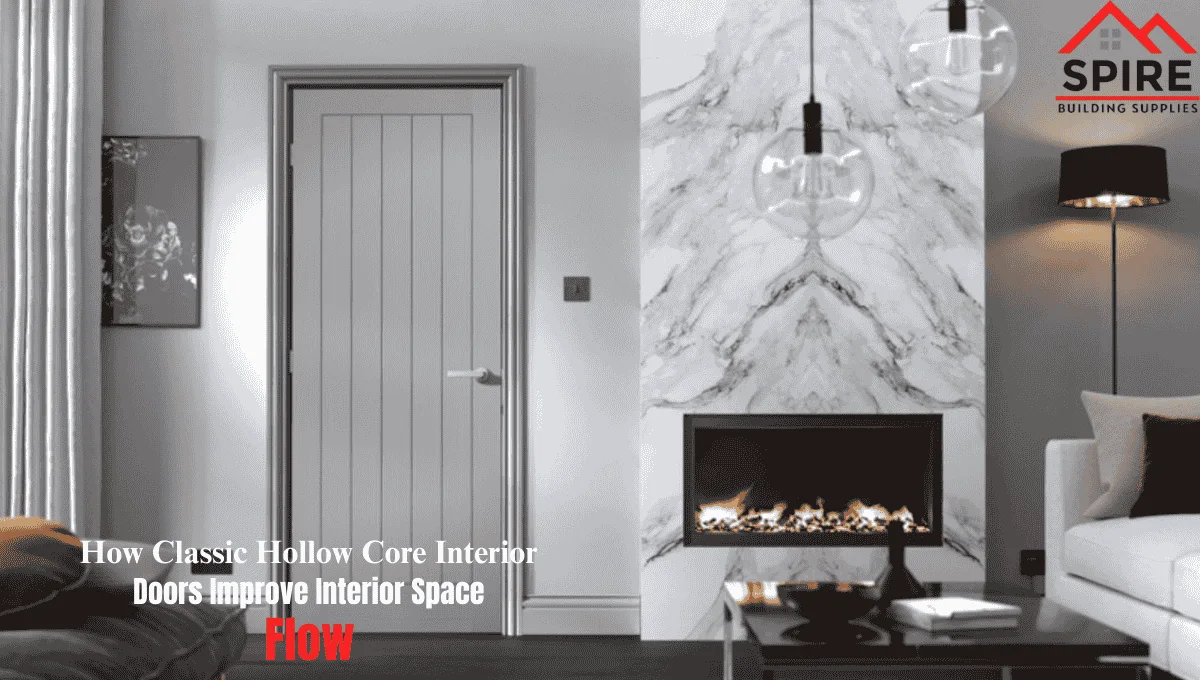
Modern homeowners often focus on flooring, windows, and paint colors, but classic hollow-core interior doors also play an important role in how a home feels and functions. The right interior door helps rooms connect smoothly, improves light flow, and makes spaces feel more open.
Because it is lightweight and visually simple, a classic hollow-core interior door creates natural transitions between rooms without making interiors feel heavy or crowded.
What Is a Classic Hollow Core Interior Door?
A classic hollow-core interior door is constructed with a lightweight honeycomb or grid interior surrounded by a durable outer shell. This design offers the appearance of a traditional interior door without the weight and bulk of solid wood.
Key characteristics include:
- Lightweight construction
- Smooth or molded panel designs
- Easy installation and replacement
- Cost-effective for large homes
- Builders frequently use configurations such as Molded Panel 3’0″ x 6’8″ Riverside and Molded Panel 3’0″ x 8’0″ Riverside, which fit standard and tall interior openings.
These options allow homeowners to maintain a consistent design throughout the house while improving circulation and layout efficiency.
Why Interior Space Flow Matters in Modern Homes
Interior space flow refers to how easily people, light, and visual elements move between rooms.
Poor space flow often causes:
- Tight hallways that feel cramped
- Rooms that feel visually disconnected
- Heavy design elements that interrupt sightlines
- Well-designed interiors solve this by using lightweight structural elements and consistent design features—and doors play a major role.
Interior designers increasingly recommend hollow-core doors because they maintain structural separation while preserving openness.
How Hollow Core Doors Improve Interior Space Flow
1. Lightweight Construction Creates Effortless Movement
Heavy doors can interrupt daily movement, especially in high-traffic areas like hallways and bedrooms.
A Classic hollow core Interior doors opens easily and requires less effort to operate. This makes transitions between rooms smoother, especially for families with children or elderly residents.
Designers often choose these doors in:
- Bedroom entrances
- Laundry rooms
- Home offices
- Closet spaces
Because they open effortlessly, they encourage natural movement through the home.
2. Slim Profiles Maintain Visual Continuity
Thick or decorative doors can visually dominate smaller spaces.
Hollow core doors typically feature clean panel lines and minimal framing, allowing the eye to move smoothly from one room to another.
For example:
- Molded Panel 3’0″ x 6’8″ Riverside models work well in standard-height rooms.
- Molded Panel 3’0″ x 8’0″ Riverside versions enhance homes with higher ceilings by maintaining proportional design.
This consistency improves the perception of larger, more connected interiors.
3. Consistent Door Design Strengthens Layout Cohesion
Interior designers emphasize repetition in architecture. When doors share the same style and proportions across rooms, they create visual rhythm.
Using the same Classic hollow core Interior door style throughout a house can:
- Align design elements across hallways
- Reduce visual clutter
- Strengthen architectural balance
Homes with consistent interior doors often feel more organized and spacious, even if the square footage is modest.
4. Allows Flexible Room Planning
Because hollow core doors are lightweight and affordable, they’re ideal for homeowners experimenting with layout changes.
During remodeling projects, designers may recommend installing new doors in areas like:
- Home offices
- Guest rooms
- Pantry spaces
- Laundry areas
Using standard models such as Molded Panel 3’0″ x 8’0″ Riverside allows flexibility while keeping design consistent.
Practical Tips for Improving Space Flow with Interior Doors
Homeowners can maximize the benefits of hollow core doors by applying a few design strategies.
Use Taller Doors in Open Layouts
Doors like Molded Panel 3’0″ x 8’0″ Riverside visually extend the wall height and make the ceilings feel higher.
Maintain Consistent Panel Styles
Mixing too many door styles can break visual flow. Stick to a single design across major living spaces.
Choose Light Paint Colors
White, soft gray, or neutral tones help doors blend with walls and maintain openness.
Consider Hardware Placement
Minimalist handles and hinges keep doors from becoming visual distractions.
Why Builders Prefer Hollow Core Doors
From a builder’s perspective, interior doors must balance cost, durability, and design consistency.
Construction professionals frequently choose hollow core doors because they:
- Reduce structural weight on frames
- Install quickly during large projects
- Provide a uniform design across multiple rooms
In modern residential construction, the classic hollow-core interior doors is often the standard choice because it delivers both practicality and aesthetics.
Builders also note that lightweight doors can extend hinge life and reduce long-term wear on frames.
Common Mistakes Homeowners Should Avoid
Even though hollow core doors are versatile, certain mistakes can limit their benefits.
Choosing Inconsistent Door Sizes
Using different heights across rooms disrupts visual balance. Stick with standard sizes or consistently use tall doors.
Ignoring Room Function
Not every space needs the same level of privacy. Bathrooms may require upgraded hardware or acoustic seals.
Overlooking Door Finish
A poorly finished door can stand out awkwardly. Matching the trim color with the door panels maintains harmony.
Using Heavy Decorative Hardware
Large handles or ornate knobs can overpower the door’s minimal design.
Real Customer Testimonials
Amanda R., Dallas, TX
When we renovated our hallway, replacing old solid doors with hollow core ones made the entire space feel lighter and more modern.
James P., Fort Worth, TX
The Molded Panel 3’0″ x 8’0″ Riverside doors made our ceilings look higher and our house feel more open.
Rachel S., Arlington, TX
We installed matching hollow-core doors throughout our home, and the layout finally feels cohesive.”
Frequently Asked Questions
Are hollow-core interior doors durable?
Yes. While lighter than solid wood doors, modern hollow core doors are built with reinforced panels and durable surfaces suitable for everyday residential use.
Where should hollow-core doors be installed?
They are ideal for bedrooms, closets, hallways, laundry rooms, and home offices.
Do hollow-core doors reduce noise?
They provide moderate sound separation but less insulation than solid-core doors.
What door size is most common in homes?
The most common size is 3’0″ x 6’8″, though taller options like 3’0″ x 8’0″ are increasingly popular in modern homes.
Are hollow-core doors good for renovations?
Yes. Their lightweight design and affordability make them excellent choices for large renovation projects.
Conclusion
Improving interior space flow doesn’t always require major renovations. Sometimes, simple architectural choices can transform how a home feels.
A classic hollow-core interior doors offers a practical solution that enhances movement, visual continuity, and overall design harmony. By selecting consistent styles, appropriate sizes, and thoughtful finishes, homeowners can create interiors that feel open, balanced, and welcoming.
At Spire Building Supplies, homeowners and contractors can find high-quality interior doors designed to support both functional layouts and modern design aesthetics. Whether you’re renovating a single room or upgrading your entire home, the right interior door can make a remarkable difference.
See our complete guidance to buying fiberglass doors. Visit this page: A Complete Guide to Buying Fiberglass Doors in Fort Worth & Arlington
Author Bio
Spire Building Supplies Team
The team at Spire Building Supplies specializes in interior doors, flooring, and construction materials for residential and commercial projects across the United States. With years of industry experience, our experts share practical insights to help homeowners, contractors, and designers choose building materials that improve functionality, durability, and style.

Leave a comment