
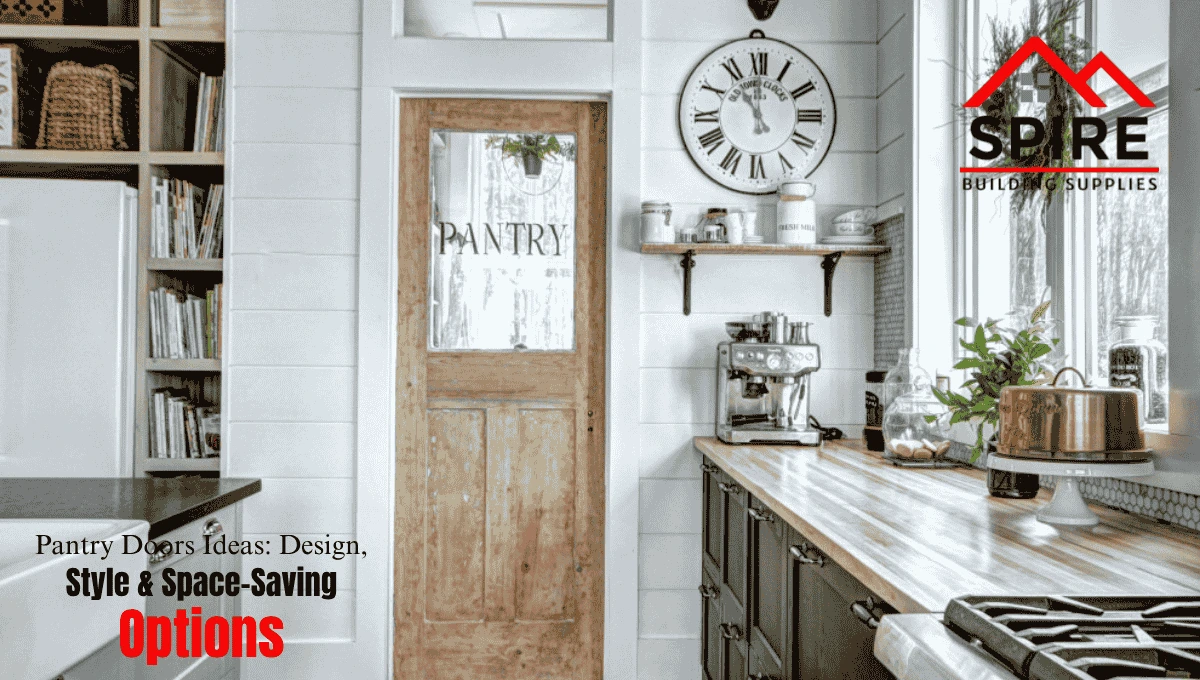
Choosing the right pantry door often gets overlooked during kitchen planning but it can make a surprising difference in both function and style. The best pantry doors ideas don’t just look good; they improve access, save space, and complement your kitchen layout. A poorly chosen door, on the other hand, can block movement, clash with your design, or simply feel inconvenient over time.
This guide breaks down practical, real-world pantry door options, helping homeowners and builders understand what works, what doesn’t, and how to choose the right solution for different kitchen setups.
What You Need to Know About Pantry Doors
A pantry door is more than just an entry point—it affects:
- Kitchen flow (how easily you move around)
- Storage accessibility
- Visual appeal of the space
- Light and openness
Key Factors That Matter
Before exploring styles, it’s important to understand:
- Available space (tight kitchens vs open layouts)
- Pantry size (walk-in vs cabinet-style)
- Usage frequency (daily vs occasional)
- Design consistency (matching cabinets, flooring, and overall theme)
Explore options here:
Pantry doors
Popular Pantry Door Designs
Let’s look at pantry door designs that actually work in real homes—not just in catalogs.
1. Sliding Pantry Door (Space-Saving Favorite)
A sliding pantry door is one of the most practical solutions for smaller kitchens.
Why it works:
- No swing clearance needed
- Ideal for tight layouts
- Easy to operate
Where it fits best:
- Apartments
- Compact kitchens
- Modern minimalist homes
Real insight: Sliding doors reduce obstruction but require wall space for the track.
2. Hinged Swing Doors (Traditional Choice)
These are standard kitchen pantry doors with inward or outward opening.
Pros:
- Simple installation
- Works with most layouts
- Cost-effective
Cons:
- Requires clearance space
- Can block movement in tight areas
3. Glass Pantry Doors
Glass panels add a decorative element while keeping the space visually open.
Benefits:
- Makes the kitchen feel larger
- Adds natural light
- Stylish for modern interiors
Consideration:
- Requires organized pantry (everything is visible)
4. Frosted Glass Doors
A practical compromise between style and privacy.
- Light passes through
- Hides clutter
- Works well in contemporary kitchens
5. Barn-Style Pantry Doors
A trending option, especially in farmhouse or rustic kitchens.
- Mounted on a sliding track
- Adds character
- Space-saving like sliding doors
6. Pocket Doors
These doors slide into the wall, completely disappearing when open.
Advantages:
- Maximum space efficiency
- Clean, seamless look
Limitation:
- Requires wall cavity installation (best during construction)
7. Double Pantry Doors
Perfect for larger pantry openings.
- Easier access
- Balanced appearance
- Ideal for walk-in pantries
Benefits of Choosing the Right Pantry Door
- Better Space Utilization
The right door can free up valuable kitchen space.
- Improved Workflow
Easy access to pantry items saves time during cooking and organizing.
- Enhanced Aesthetics
A well-chosen door ties the entire kitchen design together.
- Increased Property Appeal
Thoughtful design choices can improve resale value.
Limitations to Consider
No option is perfect. Each pantry door design comes with trade-offs:
- Sliding doors need wall space
- Hinged doors need clearance
- Glass doors require maintenance
- Pocket doors require structural planning
Understanding these limitations helps avoid costly mistakes.
How to Choose the Right Pantry Door
When comparing different kitchen pantry doors, focus on what actually matters in daily use.
- Measure Your Space Carefully
- Check door swing clearance
- Consider nearby cabinets and appliances
- Match Your Kitchen Style
- Modern → glass or sliding doors
- Traditional → paneled hinged doors
- Rustic → barn-style doors
- Consider Door Height Options
Standard heights matter for both function and aesthetics:
Taller doors create a more open, premium look.
- Think About Daily Usage
- Frequent access → easy-open designs
- Less frequent use → style-focused options
- Installation Complexity
Some doors (like pocket or barn doors) require more planning compared to standard hinged doors.
Common Mistakes to Avoid
- Ignoring Space Constraints
Choosing a swinging door in a tight kitchen can disrupt movement.
- Prioritizing Style Over Function
A stylish door that’s hard to use becomes frustrating quickly.
- Overlooking Storage Visibility
Glass doors look great—but only if your pantry stays organized.
- Not Planning Installation Early
Some door types need structural preparation.
- Choosing the Wrong Size
Incorrect height or width can affect both usability and appearance.
Expert Tips That Make a Difference
Based on real-world projects:
- Choose sliding or pocket doors for small kitchens
- Use frosted glass if you want light without clutter visibility
- Match door finish with cabinets for a cohesive look
- Test door movement before finalizing (especially in tight spaces)
- Consider long-term use, not just initial appearance
Real-World Examples
- Small Kitchen Upgrade
A homeowner replaced a swinging door with a sliding pantry door—freeing up space and improving movement around the kitchen island.
- New Construction Project
A builder installed 8-foot pantry doors in an open kitchen, creating a more spacious and premium feel.
- Modern Renovation
Frosted glass doors were used to add light while hiding pantry clutter—balancing function and aesthetics.
- Full Kitchen Remodel
A barn-style door added character to a farmhouse kitchen while saving space.
Pantry Doors vs Other Door Installations
If you’re planning multiple door upgrades, it’s helpful to understand installation basics.
Learn more here:
patio door installation
While pantry doors are simpler, proper alignment and fitting still matter for long-term performance.
What Homeowners Say
Switching to a sliding pantry door made our small kitchen feel much bigger.
We chose frosted glass, and it’s the perfect balance between style and practicality.
Upgrading to taller pantry doors changed the whole look of our kitchen.
FAQs
- What is the best type of pantry door for small kitchens?
Sliding or pocket doors work best because they don’t require swing space.
- Are glass pantry doors practical?
Yes, but they require a well-organized pantry since contents are visible.
- What size pantry door should I choose?
Standard sizes are 6’8″ and 8’0″, depending on ceiling height and design preference.
- Do pantry doors affect kitchen design?
Absolutely. They play a big role in both aesthetics and functionality.
- Can I install a pantry door myself?
Basic hinged doors are DIY-friendly, but sliding or pocket doors may require professional installation.
Final Thoughts
The best pantry doors ideas come down to balancing space, style, and everyday usability. A good choice improves how your kitchen looks and works, while a poor one can create daily inconvenience.
Instead of focusing only on design trends, think about how you actually use your kitchen. The right pantry door should feel natural, easy to use, and visually consistent with your space.
About the Author
Editorial Team – Spire Building Supplies
The team at Spire Building Supplies brings practical, hands-on experience in residential construction and home improvement. Their insights are based on real-world applications, helping homeowners and builders make smart, functional design decisions that stand the test of time.


Leave a comment