
The best front door material for extreme weather is fiberglass. It resists heat, humidity, moisture, warping, and temperature fluctuations better than most alternatives. Fiberglass doors also offer excellent energy efficiency, low maintenance, and long-term durability, making them a top choice for homeowners in Texas and across the USA.
Your front door faces Texas heat, heavy rain, strong winds, and year-round weather exposure every day. Choosing the wrong material can lead to warping, cracking, higher energy bills, and costly repairs.
So, what is the best front door material for extreme weather?
The answer depends on your priorities, including durability, maintenance, energy efficiency, security, and curb appeal. In this guide, we’ll compare fiberglass doors, mahogany doors, and iron doors to help you choose the best option for long-term performance in harsh weather conditions.
Why Your Front Door Material Matters
Your front entry door does much more than welcome guests.
It also serves as:
- A barrier against harsh weather
- A key part of your home’s insulation system
- A major security component
- An important curb appeal feature
- A long-term investment
In Texas, where temperatures often exceed 100°F during summer and storms can arrive unexpectedly, material selection becomes even more important.
A weather-resistant front door helps prevent:
- Air leaks
- Water infiltration
- Warping
- Cracking
- Rust formation
- Higher utility bills
- Premature replacement
What Makes a Front Door Suitable for Extreme Weather?
Before comparing materials, it helps to understand what characteristics matter most.
Moisture Resistance
Rain and humidity can damage certain door materials over time.
Thermal Stability
Extreme heat and cold cause materials to expand and contract. A good door remains stable despite temperature changes.
Energy Efficiency
Insulated doors help maintain indoor comfort while reducing heating and cooling costs.
Durability
The best doors withstand years of weather exposure without losing performance.
Maintenance Requirements
Some materials require regular refinishing while others need very little upkeep.
Fiberglass Doors: The Top Choice for Most Homeowners
When discussing weather-resistant entry systems, fiberglass doors consistently rank among the best performers.
Why Fiberglass Performs So Well
Fiberglass is engineered to withstand conditions that often damage traditional wood doors. Unlike natural wood, it doesn’t absorb moisture. Unlike steel, it won’t rust.
This makes fiberglass highly suitable for regions with:
- High humidity
- Heavy rainfall
- Intense sunlight
- Temperature fluctuations
Advantages of Fiberglass Doors
Exceptional Weather Resistance
Fiberglass resists:
- Warping
- Cracking
- Rotting
- Swelling
- Moisture damage
Energy Efficiency
Many fiberglass doors contain insulated cores that help regulate indoor temperatures.
Low Maintenance
Most homeowners only need occasional cleaning.
Realistic Wood Appearance
Modern manufacturing techniques allow fiberglass to replicate premium wood species with impressive accuracy.
Potential Drawbacks
- Higher initial cost than basic steel doors
- Surface damage can require professional repair
Best For
- Texas homeowners
- Coastal properties
- High-humidity regions
- Long-term investments
Expert Verdict
For most homeowners facing extreme weather, fiberglass remains one of the best doors available today.
Mahogany Doors: Beauty with Responsibility
Many homeowners dream of installing elegant mahogany doors because of their rich texture and timeless appearance.
Why Mahogany Remains Popular
Mahogany is one of the most respected hardwoods in the door industry.
Its benefits include:
- Natural beauty
- Strong structural integrity
- Premium appearance
- Increased curb appeal
Weather Performance
While mahogany is more durable than many other wood species, it remains a natural material.
Over time, exposure to:
- Moisture
- Direct sunlight
- Temperature changes
can affect its appearance and performance.
Maintenance Requirements
To preserve a mahogany front door, homeowners typically need:
- Regular sealing
- Refinishing
- Protective coatings
Best For
- Covered entryways
- Luxury homes
- Homeowners willing to maintain wood finishes
Expert Verdict
Mahogany offers unmatched elegance, but it requires more care than fiberglass or steel in extreme weather environments.
Iron Doors: Security Meets Luxury
Few entry systems create the same visual impact as iron doors.
These doors combine strength, sophistication, and security in a way few other materials can match.
Advantages of Iron Doors
Outstanding Security
Iron remains one of the strongest door materials available.
Superior Wind Resistance
Its structural integrity performs exceptionally well during storms.
Long Lifespan
Properly maintained iron doors can last for decades.
Premium Appearance
Many luxury homes use iron entry systems to create a grand entrance.
Considerations
Iron doors may:
- Require occasional maintenance
- Become warm in direct sunlight
- Cost more than fiberglass or steel options
Best For
- Luxury homes
- Security-conscious homeowners
- High-end Texas properties
Expert Verdict
Iron doors provide exceptional durability and protection but often come with higher installation and maintenance costs.
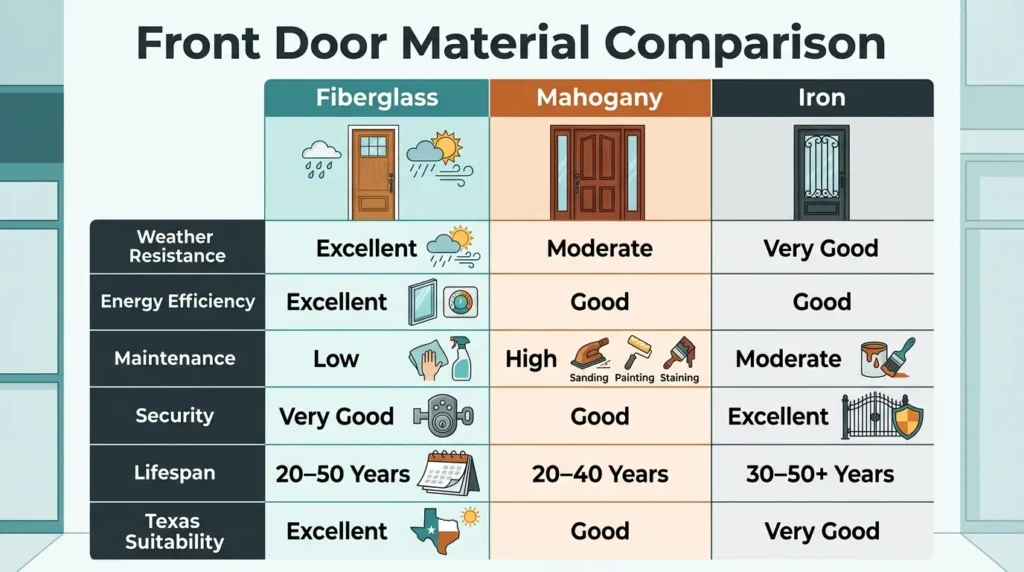
Front Door Material Comparison
Which Front Door Is Best for Texas Homes?
Texas weather creates unique challenges.
Homeowners often deal with:
- Intense UV exposure
- Long periods of heat
- Humidity
- Severe thunderstorms
- High winds
For these conditions, fiberglass consistently offers the most balanced performance.
Why Fiberglass Excels in Texas
- Resists heat-related expansion
- Handles humidity effectively
- Requires little maintenance
- Maintains appearance longer
- Provides excellent insulation
This combination makes fiberglass one of the best doors for Texas homeowners seeking long-term value.
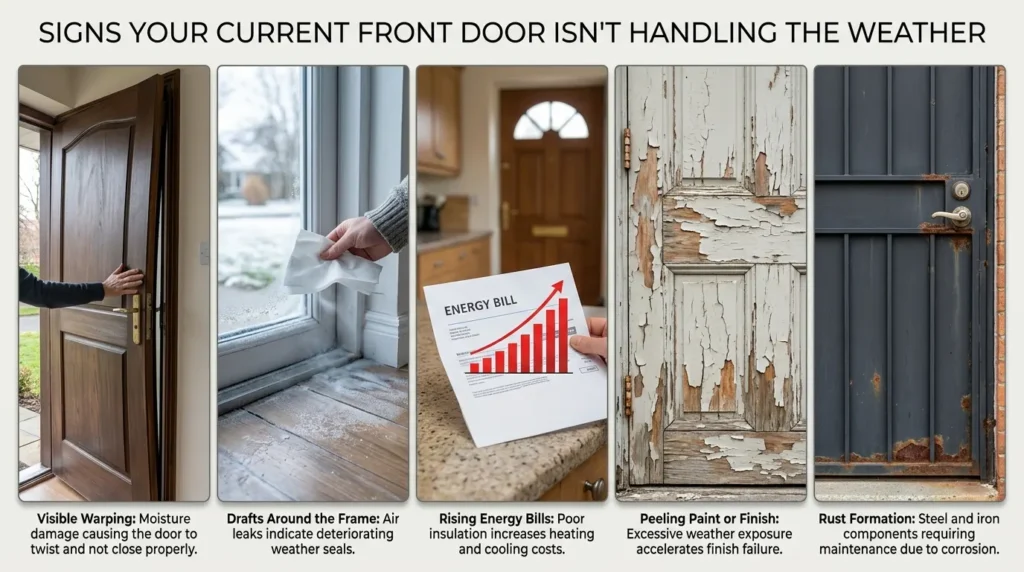
Signs Your Current Front Door Isn’t Handling the Weather
Many homeowners wait too long before replacing a failing door.
Watch for these warning signs:
Visible Warping
Doors that no longer close properly may have experienced moisture damage.
Drafts Around the Frame
Air leaks often indicate deteriorating weather seals.
Rising Energy Bills
Poor insulation can increase heating and cooling costs.
Peeling Paint or Finish
Excessive weather exposure often accelerates finish failure.
Rust Formation
Steel and iron components may require maintenance if corrosion appears.
Energy Efficiency Matters More Than Ever
Modern homeowners increasingly prioritize energy savings.
An energy-efficient front door can help the following:
- Lower utility bills
- Improve indoor comfort
- Reduce HVAC workload
- Enhance sustainability
Look for:
- Insulated cores
- Energy-efficient glass
- Quality weatherstripping
- Proper installation
Even the best material cannot perform properly if installed incorrectly.
Why Professional Installation Is Essential
A premium door can still fail if installation is poor.
Proper installation ensures:
- Tight weather seals
- Smooth operation
- Structural stability
- Improved energy efficiency
- Longer lifespan
This is why experienced contractors often recommend investing in both quality products and professional installation.
What Homeowners Are Saying
David M. – Dallas, TX
After replacing our old wood door with fiberglass, we’ve noticed fewer drafts and much lower maintenance requirements.
Rachel S. – Houston, TX
Our iron entry door transformed the entire appearance of our home. It feels incredibly secure and still looks amazing.
Mark T. – Austin, TX
The team at Spire Building Supplies helped us compare materials and choose the best option for our climate. The fiberglass door has exceeded expectations.
People Also Ask
What is the best front door material for extreme weather?
Fiberglass is generally considered the best front door material because it resists moisture, heat, humidity, and temperature fluctuations while requiring minimal maintenance.
Are fiberglass doors better than wood doors?
For extreme weather conditions, fiberglass usually performs better because it does not warp, crack, or absorb moisture like natural wood.
Do Iron doors rust?
Modern iron doors use protective coatings that help prevent rust. Regular maintenance further extends their lifespan.
Are mahogany doors worth the investment?
Yes. Mahogany doors offer exceptional beauty and curb appeal, although they require more maintenance than fiberglass or steel.
What is the most energy-efficient front door?
Insulated fiberglass doors are among the most energy-efficient options available today.
Final Thoughts
When evaluating the best front door material for extreme weather, there is no one-size-fits-all answer. The ideal choice depends on your priorities, budget, climate, and maintenance expectations.
For homeowners seeking the best overall combination of weather resistance, energy efficiency, durability, and low maintenance, fiberglass doors remain the clear leader. Those prioritizing luxury may prefer mahogany doors, while homeowners focused on security often choose iron doors.
No matter which option you select, investing in quality materials and professional installation will help protect your home, improve comfort, and deliver lasting value for years to come.
Not Sure If Your Windows Are Also Showing Their Age?
If you’re evaluating a new front door, it’s also worth checking the condition of your windows. Drafts, rising energy bills, moisture between panes, and difficulty opening or closing windows can all be signs that replacement may be necessary.
Related Guide: 10 Clear Signs You Need Window Replacement Before Costs Rise
In this guide, you’ll learn how to identify common warning signs, avoid costly repairs, improve energy efficiency, and determine the right time to invest in replacement windows for your home.



Leave a comment