
If your windows are letting in drafts, fogging between panes, or just plain hard to open, you already know it’s time for a change. Single hung vinyl replacement windows are one of the most popular solutions homeowners and builders turn to and for good reason. They’re practical, affordable, low-maintenance, and built to handle the everyday demands of real homes. But choosing the right window isn’t as simple as picking a size and calling it done. This guide breaks down everything you need to know before you buy, install, or specify them for a project.
What Is a Single Hung Window?
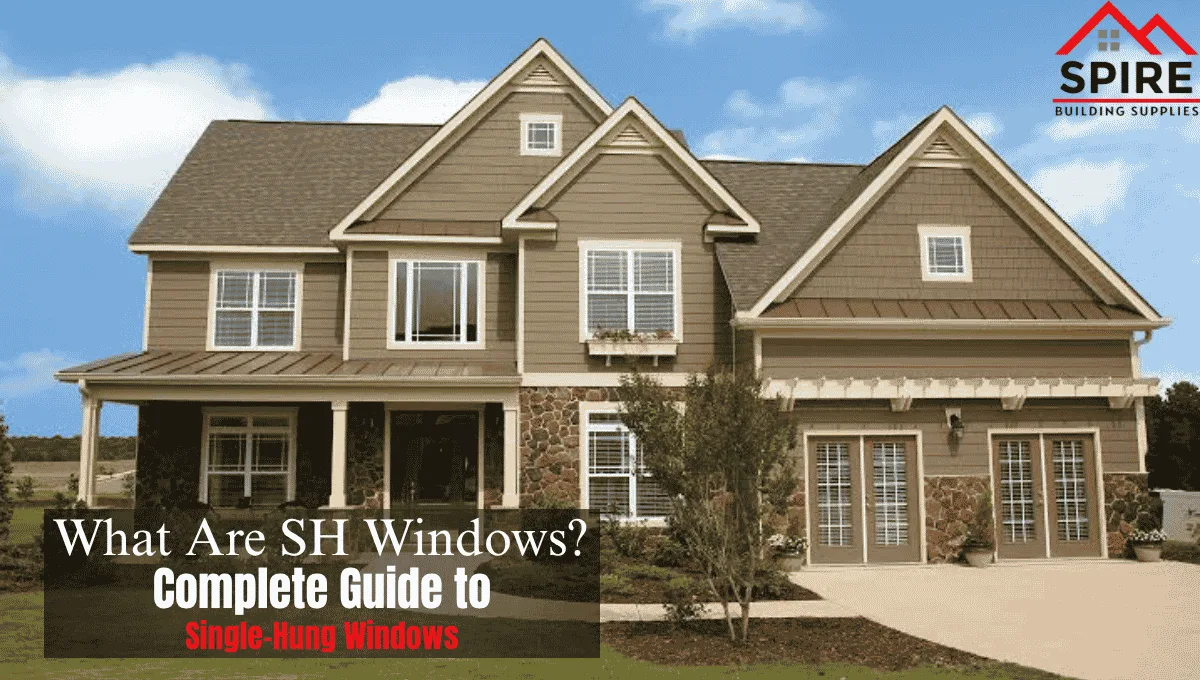
A single hung window has two sashes — upper and lower — but only the bottom sash moves. The top sash stays fixed in place. That’s the defining feature that separates it from a double hung window, where both sashes slide up and down.
Because of their simpler mechanism, single hung windows are typically more affordable than double hung models. There are fewer moving parts, which also means fewer components that can wear out over time.
They’re a common choice for:
- Bedrooms and living rooms where full ventilation control isn’t critical
- Replacement projects where the opening size is already fixed
- Budget-conscious builds that still need durable, energy-efficient windows
- Contractor and builder projects requiring consistent, reliable performance across multiple units
Why Vinyl? Understanding the Material Advantage
Vinyl frames have become the dominant material in replacement windows — and not just because they’re cheap. When made well, vinyl performs exceptionally well across a range of conditions.
Key benefits of vinyl window frames:
- No painting required: Vinyl doesn’t peel, chip, or rot. The color is baked in.
- Moisture resistance: Unlike wood, vinyl won’t warp or swell from humidity or rain.
- Thermal performance: Vinyl is a poor conductor of heat, which means less energy transfer through the frame itself.
- Low lifetime cost: The upfront price is competitive, and maintenance costs over 10–20 years are minimal.
- Noise dampening: A well-constructed vinyl window with quality glazing significantly reduces outside noise.
That said, not all vinyl is the same. Thickness, multi-chamber construction, and the quality of the weatherstripping all affect how well a vinyl window performs over time. Cheaper vinyl can become brittle in very cold climates. It’s worth reading specs carefully, not just checking the price tag.
Replacing Single Hung Windows: What the Process Actually Looks Like
Whether you’re a homeowner doing one window or a builder replacing 30, the replacement process follows a similar pattern — though the details vary depending on whether you’re doing a full-frame replacement or an insert replacement.
Full-Frame vs. Insert Replacement
Full-frame replacement removes everything — the sashes, the frame, the trim, and sometimes the exterior casing. This is the right call when the existing frame is damaged, rotted, or structurally compromised.
Insert replacement (also called a pocket replacement) drops a new window unit into the existing frame. It’s faster, less disruptive, and less expensive — but it only works when the existing frame is still solid and square.
For most residential replacement projects, insert windows are the practical choice. For new construction or major renovations, full-frame installation gives you a clean slate.
What to Measure Before You Order
Measuring wrong is the most expensive mistake in window replacement. Here’s what to get right:
- Measure the rough opening width at the top, middle, and bottom — use the smallest measurement
- Measure the height on the left, center, and right — again, use the smallest
- Account for the frame depth if you’re doing an insert — the new window needs to fit within the existing frame
- Double-check that the opening is square by measuring diagonally in both directions
If the diagonals don’t match, the opening isn’t square — and that will affect how well your new window seals and operates.
Spire Building Supplies carries a range of single hung windows sized to fit standard rough openings, including popular options like the INSPIRE VINYL SH 3050 and the INSPIRE VINYL SH 3060 — both of which are well-suited for standard residential replacement projects.
Energy Efficiency: What Actually Matters
Single hung vinyl windows can be highly energy-efficient — or mediocre — depending on the glazing and construction. Here’s what to look at when evaluating performance:
Glazing
- Double-pane (insulated glass unit or IGU): The baseline standard for any quality replacement window
- Low-E coating: A thin metallic coating that reflects infrared heat. Reduces heat gain in summer and heat loss in winter
- Argon or krypton gas fill: Denser than air, these gases slow heat transfer between panes
Ratings to check:
- U-factor: Measures how much heat passes through the window. Lower is better. Look for 0.30 or below for good performance
- Solar Heat Gain Coefficient (SHGC): Measures how much solar heat enters through the glass. Lower values keep interiors cooler in warm climates
- Air leakage rating: How much air passes through the window assembly. Lower is better
In most North American climates, a double-pane, Low-E window with argon fill is the sweet spot between cost and performance.
Common Mistakes to Avoid When Replacing Single Hung Windows
These are the errors that cost people time, money, or both:
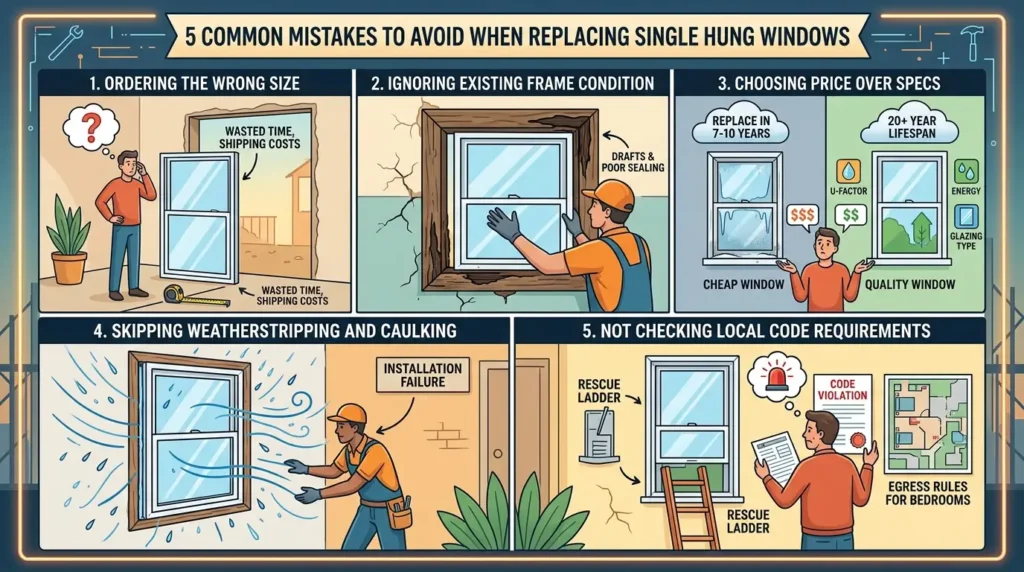
1. Ordering the wrong size
Windows are manufactured to specific dimensions. If you order wrong, you’re paying for shipping both ways and waiting on a new order. Measure twice — or three times — before submitting.
2. Ignoring the existing frame condition
Dropping a new window into a rotted or out-of-square frame creates problems from day one: drafts, difficult operation, and poor sealing. Inspect the frame thoroughly before deciding on insert vs. full-frame replacement.
3. Choosing price over specs
The cheapest window isn’t always the worst, but buying solely on price without checking U-factor, glazing type, and frame construction can mean replacing the window again in 7–10 years instead of 20+.
4. Skipping proper weatherstripping and caulking
Even a quality window performs poorly if the installation isn’t sealed properly. Air and moisture infiltration at the edges defeats the purpose of upgrading.
5. Not checking local code requirements
Some municipalities have requirements around window egress dimensions, especially for bedrooms. Single hung windows have a fixed upper sash, which limits maximum opening — verify this meets code for the specific room before ordering.
Expert Tips for Getting the Best Results
- Buy from a supplier who stocks the size you need — custom orders take longer and cost more
- If replacing multiple windows, order all at once; batch orders often reduce per-unit cost
- Consider the orientation of the window — south-facing windows benefit from lower SHGC to reduce heat gain; north-facing windows prioritize U-factor
- For rental properties or high-traffic homes, prioritize frame durability and ease of cleaning over aesthetics
- If you’re a builder sourcing multiple units, verify lead times before scheduling your install crew
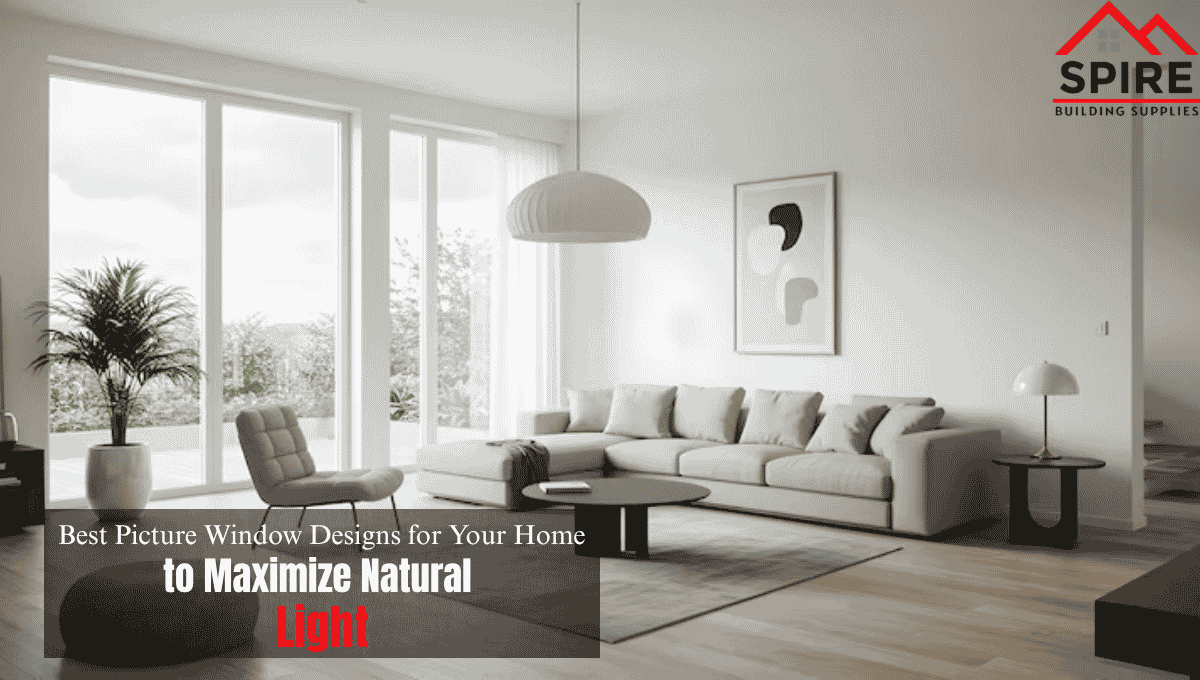
If your project also includes larger fixed glass areas, you may want to read about picture window replacement options — they pair well with single hung windows in open living spaces.
Real-World Scenarios: Where Single Hung Vinyl Windows Make the Most Sense
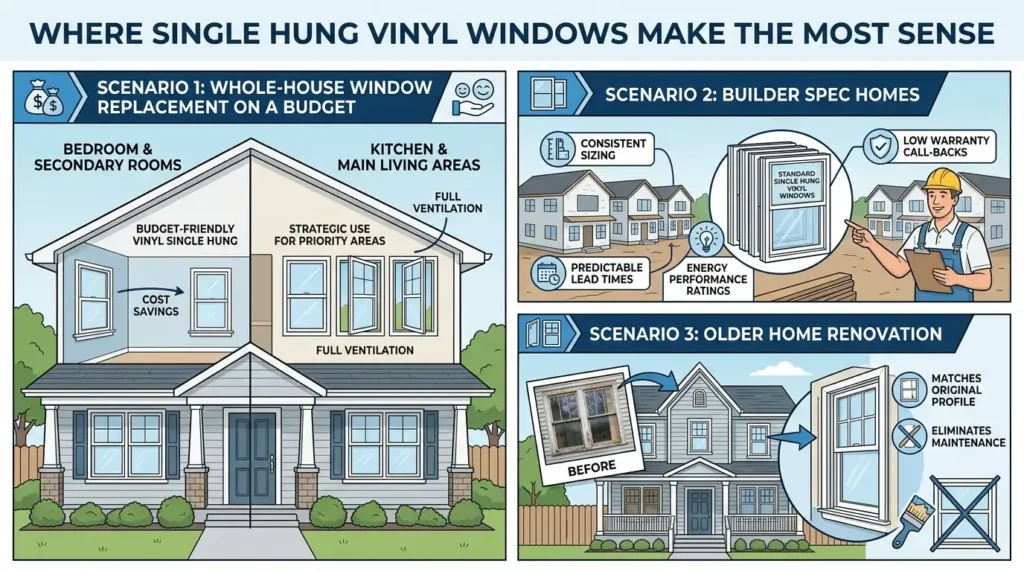
Scenario 1: Whole-house window replacement on a budget
A homeowner replacing 12 windows across a 1,960 sq ft home chose single hung vinyl windows for all bedroom and secondary rooms, reserving double hung units for the kitchen and main living areas where full ventilation was more important. The result was a significant cost saving without sacrificing comfort in the most-used spaces.
Scenario 2: Builder spec homes
A regional home builder standardized on a single hung vinyl window line for all spec homes below a certain price point. Consistent sizing, predictable lead times, and low warranty call-backs made the decision straightforward. Buyers appreciated the clean look and the energy performance ratings included in the listing materials.
Scenario 3: Older home renovation
An older home with original wood windows — single hung in design — required full-frame replacement due to frame rot. Vinyl single hung windows matched the original profile while eliminating the ongoing maintenance burden the homeowner had dealt with for years.
Frequently Asked Questions
What is the difference between a single hung and double hung window?
In a single hung window, only the bottom sash opens. In a double hung window, both the top and bottom sashes move. Double hung windows offer more ventilation options but typically cost more.
Are single hung vinyl windows energy efficient?
Yes — when they include double-pane glass, Low-E coating, and gas fill between panes. Look for a low U-factor (0.30 or below) and an appropriate SHGC for your climate.
How long do single hung vinyl replacement windows last?
Quality vinyl windows typically last 20–40 years with minimal maintenance. Frame life depends on UV resistance and wall thickness. Cheaper vinyl can degrade faster in extreme climates.
Can I replace a single hung window myself?
Insert replacements are manageable for experienced DIYers. Full-frame replacements typically require professional installation to ensure proper sealing, squareness, and waterproofing. Incorrect installation voids most warranties.
What sizes do single hung vinyl replacement windows come in?
Standard widths range from 24″ to 48″ and heights from 36″ to 72″, though this varies by manufacturer. Common nominal sizes like 3050 (30″ wide x 50″ tall) and 3060 (30″ wide x 60″ tall) fit many standard rough openings.
What Customers Are Saying
We replaced eight windows in our home and the difference in drafts and our heating bill was immediate. The vinyl frames look clean and we haven’t touched them since installation.
— David R., homeowner
As a contractor, I need windows that show up on time, fit right, and don’t come back as warranty calls. The single hung vinyl units from Spire have been consistent across three projects now.
— Marcus T., residential builder
I was nervous about getting the measurements right, but the team helped me confirm sizing before I ordered. The install went smoothly and the windows look great.
— Linda K., homeowner
Making the Right Call on Single Hung Vinyl Replacement Windows
Replacing your windows is one of those home improvements that pays you back every single day in comfort, energy savings, and peace of mind. Single hung vinyl windows hit a practical sweet spot: they’re built to last, easy to maintain, and available at price points that make sense whether you’re replacing one window or outfitting an entire build.
The key is going in informed. Know your measurements. Understand the glazing specs. Check the frame condition before you decide between insert and full-frame. And buy from a supplier who can actually answer your questions not just process your order.
If you’re ready to move forward, explore Spire Building Supplies‘ full range of single hung windows to find the right fit for your project or reach out directly if you need sizing guidance before you order.
About the Author
This article was written by the editorial team at Spire Building Supplies — a supplier with hands-on experience across residential and commercial window projects. The team draws on direct product knowledge, builder feedback, and real installation experience to provide practical, accurate guidance for homeowners and contractors making window decisions.


Leave a comment