
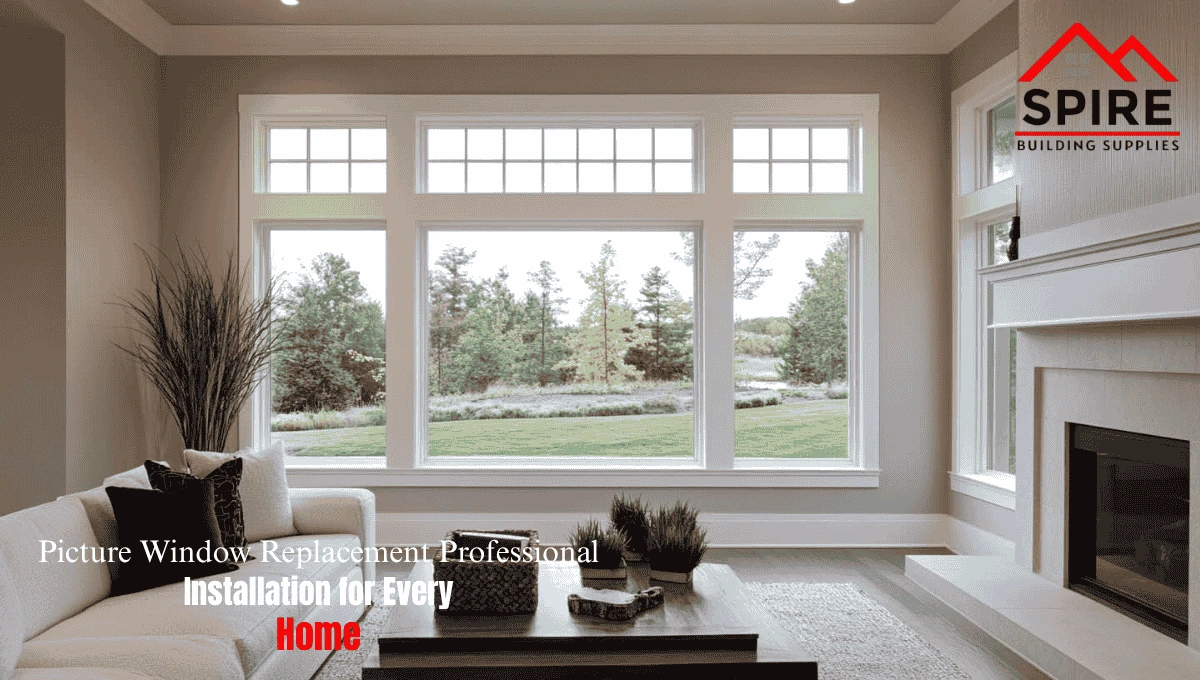
If you’re noticing condensation between the glass, feeling cold drafts on otherwise warm days, or simply staring at a view through a scratched, faded, or yellowing frame your picture window is probably overdue for a replacement. A proper picture window replacement isn’t just a cosmetic upgrade. Done right, it can meaningfully improve your home’s energy efficiency, indoor comfort, and resale value.
This guide walks you through everything you need to know before you replace a picture window: what affects the outcome, what to watch out for, and how to make a decision you won’t regret in two years.
What Is a Picture Window, and Why Does It Matter?
A picture window is a fixed, non-operable window — it doesn’t open or close. It’s designed entirely to frame a view and let natural light into a space, which is why it’s typically large and installed in living rooms, dining areas, or anywhere a panoramic view makes sense.
Because they don’t have moving parts like casements or double-hungs, picture windows tend to have a simpler structure but that doesn’t mean they’re maintenance-free. Over time, seals fail, frames warp, and glazing technology becomes outdated. When that happens, replacing the window (rather than patching it) is almost always the right call.
Signs It’s Time to Replace Your Picture Window
You don’t always need a professional inspection to know something’s wrong. Here are the most reliable indicators:
- Fogging or condensation between panes — This means the insulating seal has failed. The argon or krypton gas that improves thermal performance has escaped, and the unit is no longer doing its job.
- Noticeable drafts near the frame — Even with a fixed window, a failing frame or poor installation can allow air infiltration.
- Visible frame damage — Warping, rot (on wood frames), cracking, or discoloration that doesn’t clean off.
- Higher energy bills without explanation — A degraded large picture window can be a significant source of heat loss in winter and heat gain in summer.
- Difficulty maintaining comfortable indoor temperatures — If one room always feels colder or hotter than the rest of the house, the window is often the culprit.
If you’re seeing two or more of these signs, replacement is likely more cost-effective than repair.
Choosing the Right Replacement Window: What Actually Matters
This is where a lot of homeowners make costly mistakes buying on price alone, or choosing based on appearance without understanding performance specs. Here’s what to actually evaluate.
Frame Material
Vinyl is the most common choice for replacement picture windows, and for good reason. It’s durable, low-maintenance, thermally efficient, and holds up well in most climates. Quality vinyl frames won’t rot, peel, or require painting. Products like the INSPIRE VINYL PW 2850 and INSPIRE VINYL PW 2860 are purpose-built for residential replacement projects and offer a strong combination of structural performance and energy efficiency.
Wood frames offer excellent insulation and a classic look, but they require ongoing maintenance and are vulnerable to moisture damage in humid climates.
Aluminum is strong and slim-profiled, but conducts heat and cold readily — making it less energy-efficient unless thermally broken.
Fiberglass performs well in extreme climates and is dimensionally stable, but comes at a higher price point.
Glass Package
For most climates, double-pane Low-E glass with argon gas fill is the standard recommendation. It blocks UV rays, reduces heat transfer, and handles most seasonal temperature swings effectively. In colder regions or for large picture windows replacement projects, triple-pane glass may be worth the additional investment.
U-factor measures how well a window resists heat loss (lower is better). Solar Heat Gain Coefficient (SHGC) measures how much solar heat the window lets in — you want lower SHGC in hot climates and higher in colder ones.
Don’t just look at the center-of-glass rating. Ask for the whole-window U-factor, which accounts for the frame and is a more accurate real-world measure.
Size and Structural Considerations
Large picture windows require proper structural support. Before ordering a replacement, confirm that the rough opening and surrounding framing can accommodate the new unit — especially if you’re upsizing. This is a step where professional measurement matters, not just eyeballing.
The Replacement Process: What to Expect
Understanding how installation works helps you ask the right questions and catch problems early.
- Accurate Measurement
The replacement window must fit precisely within the existing rough opening, or adjustments to the framing are needed. A good installer measures in multiple places because older frames are rarely perfectly square.
- Removal of the Existing Window
The old unit is carefully removed — ideally without damaging the surrounding wall finish, trim, or interior finishes. If the existing installation used expanding foam or caulk that has hardened significantly, this step takes more care.
- Preparing the Opening
The installer checks the rough opening for rot, moisture damage, or structural issues. This is a critical checkpoint. Any water-damaged framing must be repaired before the new window goes in, or you’re sealing problems inside the wall.
- Installing the New Unit
The replacement window is set, leveled, shimmed, and secured. Proper shimming ensures the window operates correctly (even though picture windows don’t open, proper shimming prevents frame distortion that could compromise the seal).
- Flashing, Sealing, and Insulation
This is where many DIY installations — and some rushed professional ones — go wrong. Proper flashing around the window directs water away from the frame. The gap between the window and rough opening is filled with low-expansion foam or fiberglass insulation. Exterior caulk seals the perimeter.
- Interior Finishing
Trim is replaced or reinstalled, any patched drywall is finished, and the interior reveal is caulked and painted if needed.
Common Mistakes to Avoid
Measuring Wrong
Even being off by ¼ inch can cause fitment problems. Always measure the rough opening — height and width — at multiple points. Width at the top, middle, and bottom. Height on both sides. Use the smallest measurement.
Skipping the Flashing
Improper flashing is one of the leading causes of window-related water intrusion. It doesn’t show up immediately, but within a few years you’ll see rot, mold, or failed drywall. Don’t skip it, and don’t let an installer skip it either.
Choosing a Window Sized for Appearance Only
A large picture window with a poor U-factor or wrong SHGC for your climate will look great and perform poorly. Get the specs in writing before you buy.
Using High-Expansion Foam
Around windows, high-expansion spray foam can bow frames inward. Always use minimal-expanding or window and door rated foam.
Ignoring the Warranty Terms
Some window warranties are voided by improper installation. Read the terms before choosing your installer, and keep documentation of the installation.
Going the Full DIY Route on Large Windows
Replacing a small bathroom window is a manageable DIY project. Replacing a large picture window — especially on an upper floor or in a load-bearing wall area — involves real risk if you don’t know what you’re doing. Mishandled large glazing units can break, and improperly supported openings can cause structural issues.
How Long Should a Replacement Picture Window Last?
A quality vinyl picture window, professionally installed, should last 20 to 30 years — and often longer. The seal on an insulated glass unit (IGU) typically carries a warranty of 10 to 20 years depending on the manufacturer. Frame warranties vary, with many quality manufacturers offering lifetime warranties on the frame and hardware.
What shortens window lifespan most often: poor installation, water intrusion that wasn’t addressed, and glass units exposed to excessive thermal stress (like being directly shaded by an overhang on one side and fully exposed on the other).
Energy Efficiency and Cost Considerations
Replacing aging picture windows can reduce heating and cooling costs noticeably, especially if the existing windows are single-pane or have failed seals. According to the U.S. Department of Energy, heat gain and heat loss through windows accounts for 25–30% of residential heating and cooling energy use.
Factors that affect project cost:
- Window size (larger = higher cost)
- Frame material selected
- Glass package (double vs. triple pane, specialty coatings)
- Number of windows being replaced at once
- Access difficulty (ground floor vs. upper story)
- Whether existing framing needs repair
- Regional labor rates
Replacing multiple windows at once often reduces the per-unit cost and minimizes the number of times installers need to mobilize.
Expert Tips From the Field
- Order windows from a supplier who stocks or can quickly source the size you need. Custom large picture windows can have lead times of 3–6 weeks. Plan accordingly, especially before winter.
- Photograph the rough opening before the new window goes in. If a problem emerges later, you’ll have documentation of what the framing looked like.
- Don’t paint or caulk over weep holes. Weep holes in the frame allow any water that gets past the exterior caulk to drain out. Blocking them traps moisture.
- Check the Low-E coating orientation. It matters which surface the coating is on. For most climates, it’s applied to the interior surface of the outer pane. A reputable supplier will confirm this.
- Time your replacement for mild weather when possible. Open wall cavities in extreme cold or heat create discomfort and can affect the caulk and foam’s cure.
Real-World Use Cases
New Construction: A builder working on a custom home uses large picture windows in the main living area to frame a wooded backyard. Vinyl frames are chosen for their thermal performance and low long-term maintenance requirements. The window placement is coordinated with the HVAC design to account for solar gain.
Whole-Home Renovation: A homeowner replacing windows throughout an older bungalow prioritizes the large picture window in the living room first — it was original to the 1970s build and single-pane. After replacement with a double-pane Low-E unit, the room is noticeably warmer in winter and the condensation issue on the adjacent hardwood flooring (caused by the cold glass surface) disappears.
Energy Retrofit: A homeowner with rising utility bills identifies the large picture window on the south-facing wall as a major contributor to summer cooling load. A replacement window with a lower SHGC rating reduces the solar heat gain, and combined with other improvements, lowers the annual cooling bill meaningfully.
People Also Ask
How much does it cost to replace a picture window?
Costs vary considerably by size, frame material, and glass type. A standard residential picture window replacement including professional installation typically ranges from $400 to $1,200 or more for larger units. Custom sizes, premium glass packages, or difficult access can push costs higher.
Can a picture window be replaced without replacing the frame? Yes this is called an insert replacement. The new glazing unit fits inside the existing frame, which saves time and cost if the frame is still structurally sound. However, if the frame is damaged, rotted, or out of square, a full-frame replacement is the better choice.
How long does picture window replacement take?
Most single picture window replacements take 2–4 hours for a professional crew. Larger units, upper-floor installations, or situations requiring framing repair will take longer.
What is the most energy-efficient option for a large picture window?
Triple-pane glass with Low-E coating and argon or krypton gas fill, installed in a thermally broken or vinyl frame, offers the best thermal performance. For most climates, double-pane Low-E with argon is the practical standard that balances cost and performance well.
Do I need a permit to replace a picture window?
Requirements vary by municipality. Like-for-like replacements (same size, same location) often don’t require a permit in many jurisdictions. Structural changes like enlarging the opening typically do. Check with your local building department before work begins.
What Our Customers Say
We had a large picture window in the family room that had been fogging up for years. After replacing it with a vinyl unit from Spire, the difference in how warm the room feels in winter is remarkable. The installation team was thorough they repaired some minor framing rot before putting the new window in, which I really appreciated. — D. Kowalski, homeowner
As a builder, I need suppliers who can deliver quality product consistently and get me spec sheets quickly. Spire has been reliable on both fronts. The vinyl picture windows they carry perform well and our clients are happy with the long-term results. — R. Tran, residential builder
I was skeptical that swapping out one window would make a real difference. It did. The room that used to feel cold by the patio no longer has that chill near the glass. Straightforward process, no surprises. — M. Osei, homeowner
A Note on Related Home Improvement Projects
If you’re already planning a renovation that involves window replacement, it’s worth coordinating with other interior upgrades happening at the same time. Projects like luxury vinyl plank flooring installation often happen in the same renovation window and sequencing them correctly (windows before flooring, in most cases) saves time and protects your new materials from installation traffic.
About the Author
This article was developed by the editorial team at Spire Building Supplies, drawing on hands-on experience with residential window products, installation standards, and the practical questions homeowners and builders ask most often. Our goal is straightforward: give you accurate, useful information so you can make confident decisions — whether you’re replacing one window or outfitting an entire project.
For questions about specific product specifications or availability, visit spirebuildingsupplies.com or contact the Spire team directly.




Leave a comment