
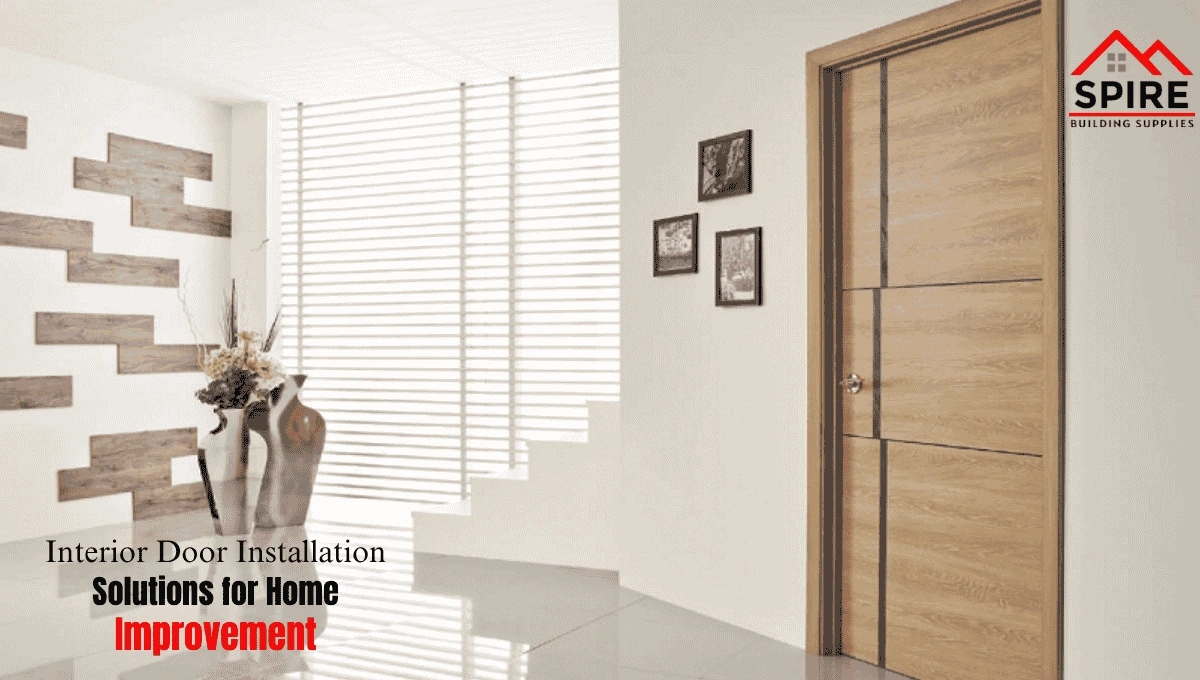
A new door can completely change how a room feels but most homeowners don’t realize how much goes into getting it right. Interior door installation seems straightforward until you’re halfway through the project and discover the rough opening is off by half an inch, the door swings the wrong way, or the trim doesn’t sit flush. These are fixable problems, but they’re also avoidable ones.
Whether you’re replacing a worn-out hollow-core slab, upgrading to something more stylish, or tackling a new build, this guide walks you through everything you need to know before you buy, plan, or install. We’ll cover the different door types and styles, what to look for when choosing hardware and materials, and the mistakes that turn a weekend project into a week-long headache.
What Is Interior Door Installation? A Quick Overview
Interior door installation is the process of fitting a door along with its frame, hinges, and hardware into a wall opening inside a home. This can involve:
- Pre-hung door installation: The door comes already attached to a frame, making it the easiest option for replacements or new openings.
- Slab door installation: Just the door panel itself, which gets hung into an existing frame using new or existing hinges.
- New rough opening construction: When you’re adding a doorway where one didn’t exist before, which involves framing work beyond just the door itself.
Each approach has different skill, tool, and time requirements. Knowing which situation you’re in before you purchase anything saves a lot of frustration.
Understanding Interior Door Styles: More Than Just Aesthetics
Choosing the right door isn’t just about looks the style affects how the door operates, how much space it needs, and what it costs to install.
Panel Doors
Panel doors are the most common interior door style in North American homes. They feature raised or recessed rectangular sections (panels) set within a frame of rails and stiles. A 1-panel square top MDF door gives a clean, modern look, while a 5-panel equal design is a timeless option that suits both traditional and transitional interiors.
Panel doors are widely available, easy to paint, and tend to be more rigid than hollow-core alternatives.
Flush Doors
Flush doors have a completely flat surface — no panels, no texture. They’re common in mid-century and contemporary homes and work well in minimalist spaces. Modern interior doors with flush profiles pair cleanly with integrated handles and simple frames.
French Doors
These are hinged double doors, typically with glass panels. Used between living areas, dining rooms, or as entry points to a home office. They let in light while still providing a degree of separation between spaces.
Barn Doors and Sliding Doors
Barn-style sliding doors have become popular for bathrooms, closets, and pantries where a swinging door would take up too much space. They require a wall section wide enough to slide into and a track system installed above the opening.
Bifold Doors
Bifold doors fold in on themselves and are a go-to for closets. They’re economical, widely available, and require minimal clearance but they don’t provide as much privacy or sound separation as solid-hung doors.
Key Measurements Before You Buy Anything
Getting your measurements wrong is the single most common source of problems in any door project. Here’s what you need to check:
Rough opening size: This is the framed opening in the wall. Standard interior doors are 80 inches tall (6’8″), with widths ranging from 24 to 36 inches. Your rough opening should typically be about 2 inches wider and 2.5 inches taller than the door size to allow for the frame and shimming.
Door swing direction: Stand in the doorway and determine which side the hinges will be on and which way the door will open. Measure clearance for the swing — you don’t want it hitting furniture or another door.
Floor-to-ceiling height: In older homes especially, ceilings and floors may not be perfectly level. Measure in multiple spots. If you’re installing a pre-hung unit, you need the frame to be plumb even if the surrounding structure isn’t.
Wall thickness: Standard interior walls are 4.5 inches (2×4 framing + drywall on both sides). Thicker walls — such as 2×6 framed walls or those with extra insulation — need extended jambs. Check before ordering.
Choosing the Right Door Material
The material affects cost, durability, paintability, and how the door performs over time.
Hollow-Core Doors
These are lightweight doors with a honeycomb cardboard core. They’re inexpensive and easy to handle solo, but they offer very little sound insulation and can be damaged easily. Good for closets or low-traffic areas where privacy and sound control aren’t priorities.
Solid Wood Doors
Real wood doors pine, oak, maple, or cherry offer excellent sound blocking, a premium feel, and can be stained or painted. The downside: they’re heavier, more expensive, and can warp or expand with seasonal humidity changes.
MDF (Medium-Density Fiberboard) Doors
MDF doors strike a balance between solid wood performance and cost. They’re denser than hollow-core, resist warping better than solid wood in humid environments, and take paint exceptionally well. For painted finishes, MDF is often the preferred choice of professional painters and contractors. MDF interior doors are especially popular for bathrooms and bedrooms where a crisp, smooth painted surface matters.
Solid Core Doors
These have an MDF or wood composite core inside an engineered wood shell. They’re heavier than hollow-core, significantly better at blocking sound, and more affordable than solid wood. A good middle-ground option for bedrooms, home offices, and media rooms.
Cheap Interior Doors: When Budget Options Make Sense (And When They Don’t)
Cheap interior doors typically hollow-core are perfectly serviceable in the right applications. A closet door doesn’t need to be solid core. A laundry room door doesn’t need sound isolation. Spending more than necessary on low-priority openings is a common mistake.
That said, low-cost doors tend to fall short in these situations:
- Bedrooms: Thin doors let in hallway noise and light. A solid-core door makes a measurable difference in sleep quality.
- Home offices: If you work from home and take calls, sound control matters. Hollow-core is not your friend here.
- Bathrooms: Steam and humidity over time can degrade hollow-core doors faster than solid alternatives.
- High-traffic areas: Kids slamming hollow-core doors will eventually show damage. Solid-core lasts longer under heavy use.
The smarter move is to spend your budget where the performance difference will actually be noticed and save on less critical openings.
Common Mistakes to Avoid
- Not Checking the Rough Opening Before Purchase
Ordering a door before verifying the rough opening size is a frustratingly common mistake. Measure twice. Then measure again.
- Forgetting About the Door Swing
Installing a door that swings into a wall switch, a toilet, or another door is a purely measurement problem — one that’s avoidable. Plan the swing direction before anything goes into the opening.
- Skipping the Level and Plumb Check
A door that’s even slightly out of plumb will either swing open or swing closed on its own. Always use a level when setting the frame, and shim as needed before nailing anything off.
- Using the Wrong Fasteners for the Wall Type
In homes with metal stud framing (common in condos and some commercial builds), you need screws appropriate for metal studs, not wood screws. Using the wrong fasteners means the hinges won’t hold properly.
- Rushing the Casing and Trim
Doors can look great or terrible depending on how well the casing sits against the jamb and the wall. Take your time with trim work. Gaps and uneven reveals are immediately visible and hard to ignore once you notice them.
- Ignoring the Floor Gap
The gap between the bottom of the door and the floor should be about 1/2 to 3/4 inch for air circulation and to clear carpet or rugs. Too tight and the door will drag. Too much and privacy and noise separation suffer.
Expert Tips for a Better Installation
Pre-drill hinge mortises accurately. Use a hinge mortise jig or a sharp chisel and take your time. A mortise that’s too deep makes the door bind; too shallow and it won’t close flush.
Set the strike plate last. Don’t cut the strike plate mortise until the door is hung and you can see exactly where the latch hits the jamb. Mark it with lipstick or chalk on the latch bolt, close the door, and the mark tells you precisely where to cut.
Paint or prime door edges before hanging. The edges of MDF and wood doors are the most vulnerable areas to moisture. Sealing all six sides — including the top and bottom edges — before installation extends the door’s life significantly.
Use 3-inch screws on at least one hinge. Standard hinge screws are short and only grip the jamb. Replacing the center screw on one hinge with a 3-inch screw that reaches the wall stud dramatically improves strength, especially on heavier solid-core or solid wood doors.
Check for square before the final nail. Once the frame is shimmed and roughly in position, measure the diagonals corner-to-corner. If they’re equal, the frame is square. If not, adjust before you commit.
Real-World Use Cases
Scenario 1 — Bedroom Upgrade in an Older Home: A homeowner in a 1970s house replaces hollow-core doors throughout with solid-core MDF panel doors. The result is noticeably quieter bedrooms and a more upscale look, at a moderate cost.
Scenario 2 — Home Office Addition: A couple converts a spare room into a shared home office. They install a solid-core door with a proper weatherstrip-style sweep and solid-core construction. Background noise from the rest of the house is significantly reduced during video calls.
Scenario 3 — New Construction Closet Build: A builder uses standard hollow-core bifold doors for all closets in a new build, reserving solid-core doors for bedrooms and bathrooms. This keeps costs manageable without compromising performance where it matters.
What to Consider If You’re Thinking About Exterior Upgrades Too
If your interior renovation has you thinking about the front entry as well, it’s worth considering what your exterior door says about the home. Exterior iron doors offer a significant visual upgrade and long-term durability and they pair well with updated interior doors to create a cohesive feel throughout the home.
What Our Customers Say
I was nervous about tackling the installation myself, but the pre-hung MDF doors from Spire were straightforward to work with. The finish is perfect for painting and everything lined up cleanly. Couldn’t be happier with how the bedroom turned out. — Michael T., homeowner
I’ve bought doors at the big-box stores before and was always disappointed by the quality. These MDF panel doors are noticeably better — heavier, cleaner edges, and the paint went on without any issues. Worth every penny. — Sandra R., interior designer
People Also Ask
Q: How long does it take to install an interior door?
A: A pre-hung door replacement typically takes 2 to 4 hours for someone with basic DIY experience. A slab door hung into an existing frame is faster around 1 to 2 hours. New rough opening construction takes longer and depends on the wall type.
Q: Can I install an interior door without removing the existing frame?
A: Yes, if the existing frame is in good condition and square. You’d be installing a slab door rather than a pre-hung unit. This is faster but requires that the existing jamb is undamaged and plumb.
Q: What is the standard interior door size?
A: The most common standard size is 80 inches tall by 32 inches wide (often written as 2’8″ x 6’8″). Bedrooms typically use 28–32 inch widths; bathrooms often use 24–28 inches. Always measure your rough opening before ordering.
Q: Are MDF doors good for bathrooms?
A: Yes, MDF doors perform well in bathrooms when all edges are properly sealed and painted. They resist warping better than solid wood in humid environments and take paint smoothly for a clean finish.
Q: What’s the difference between a pre-hung door and a slab door?
A: A pre-hung door comes with the frame, hinges, and sometimes the doorstop already assembled. A slab is just the door panel. Pre-hung is best for new openings or when the existing frame is damaged. Slab doors are simpler and cheaper when the frame is already in good shape.
Final Thoughts:
Interior doors don’t get as much attention as kitchens or bathrooms, but they’re one of those upgrades that quietly improves how a home feels every single day. The right door in the right opening properly hung, well-finished, and matched to the room’s needs is something you stop noticing because it just works.
The biggest takeaway from everything covered here: plan before you purchase. Measure the rough opening, decide on swing direction, match the material to the room’s demands, and don’t let budget decisions drive performance choices in areas where it will cost you comfort later.
Whether you’re replacing a single hollow-core door in a spare room or updating every interior door in the house, the decisions you make upfront style, material, sizing, and installation method determine how smooth the project goes and how long the result lasts.
Take your time, use the right tools, and don’t skip the level check. A well-installed door is one of those home improvements that pays off in both function and appearance for years to come.
About the Author
This article was written by the editorial team at Spire Building Supplies — a group of building professionals and home improvement specialists with hands-on experience in residential construction, door installation, and finish carpentry. Our goal is to help homeowners and trade professionals make smarter purchasing decisions by sharing practical, straightforward guidance based on real-world experience not marketing copy.
Looking for quality interior doors for your next project? Browse our full range of interior doors to find the right fit for your home.

Leave a comment