Iron Doors for Sale in Texas

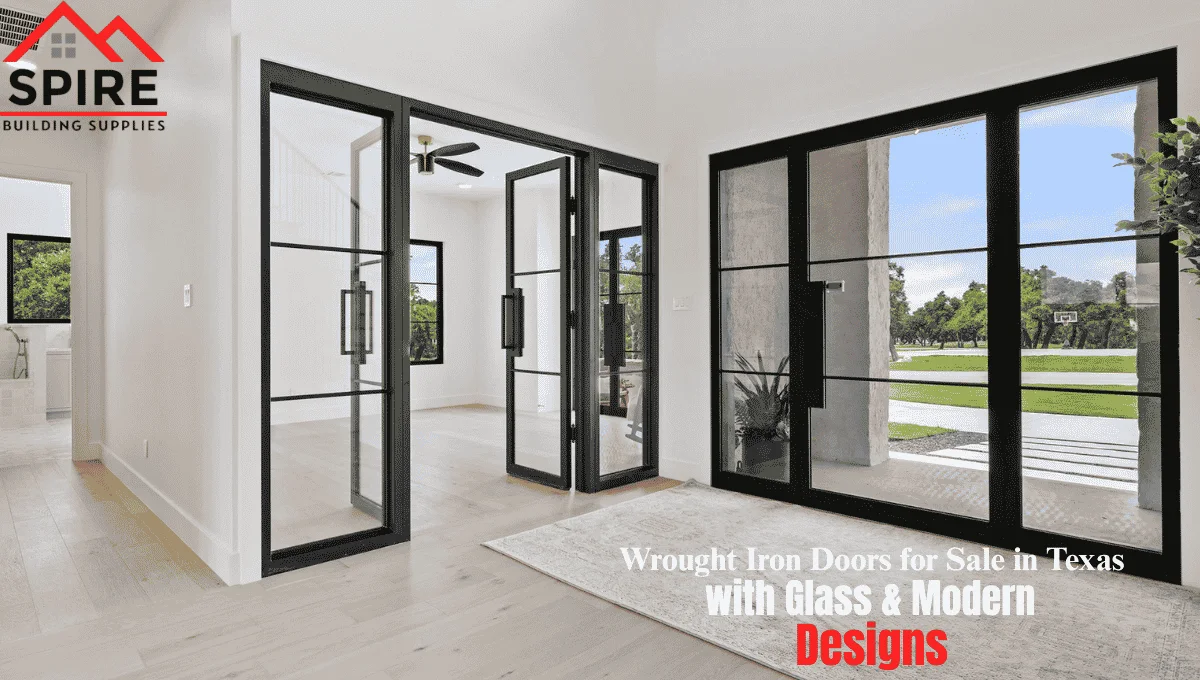
Wrought Iron Doors for Sale in Texas with Glass & Modern Designs

When homeowners start searching for iron doors for sale in Texas, they’re usually looking for more than just a door—they want security, durability, and a bold first impression. In Texas, where extreme weather, architectural diversity, and home value all matter, wrought iron doors with glass have quickly become a preferred choice. At Spire Building Supplies, we’ve worked closely with builders, contractors, and homeowners across Texas, and one thing is clear: iron doors are no longer just luxury—they’re becoming a smart, long-term investment.

This guide is built on real-world insights, product expertise, and customer experiences to help you choose the right wrought iron door with modern glass designs—without confusion or costly mistakes.

Why Wrought Iron Doors Are in High Demand Across Texas

Texas homes face unique challenges—intense heat, occasional storms, and a strong emphasis on curb appeal. That’s where wrought iron doors stand out.

Built for Texas Weather

Unlike traditional wood doors that warp or fiberglass doors that may fade over time, wrought iron doors are engineered for durability. Powder-coated finishes resist rust, while insulated glass panels help regulate indoor temperature.

Security Without Compromise

Security is a top concern for homeowners. Iron doors provide a solid barrier without sacrificing aesthetics. Reinforced frames and tempered glass options make them both strong and stylish.

Boost in Property Value

From modern homes in Austin to traditional estates in Dallas, iron entry doors instantly elevate the look and perceived value of a property.

Modern Glass Designs: Where Style Meets Function

The biggest shift in 2026 design trends is the integration of decorative and functional glass within iron doors.

Popular Glass Options

1. Water Glass Finish
Softly textured and semi-private, this glass type diffuses light beautifully. It’s perfect for homeowners who want brightness without full visibility.

2. Frosted & Obscure Glass
Ideal for privacy-focused entryways while still maintaining a sleek, modern look.

3. Clear Tempered Glass with Grilles
A great choice for contemporary homes that want maximum light with subtle design elements.

Featured Iron Door Styles Homeowners Love

At Spire Building Supplies, some models consistently stand out due to performance and design appeal:

Winslow Wrought Iron Prehung Front Door

A perfect blend of traditional ironwork and modern glass detailing. This style suits both suburban homes and upscale properties, offering durability with elegant scrollwork.

Water Glass Finish Wrought Iron Double Door

This design is ideal for grand entrances. The water glass texture adds privacy while allowing natural light to flow into the home, creating a warm and inviting entry.

Water Cubic Glass Prehung Front Door

For homeowners leaning toward modern architecture, this door delivers clean lines and geometric glass patterns that align with minimalist design trends.

Single vs Double Iron Doors: What Works Best?

Choosing between single and double doors depends on both space and design goals.

Single Iron Doors

  • Best for compact entryways
  • Cost-effective
  • Easier installation

Double Iron Doors

  • Ideal for luxury homes
  • Create a dramatic entrance
  • Increase natural light and accessibility

In Texas, double doors are especially popular in larger homes where curb appeal plays a major role.

Real Buyer Insight: What Texas Homeowners Actually Care About

From working with hundreds of customers, here’s what matters most:

  • Heat resistance and insulation
  • Low maintenance requirements
  • Custom sizing options
  • Quick availability for new builds or renovations

Many buyers initially consider wood or fiberglass but switch to iron after realizing the long-term benefits.

Cost of Iron Doors in Texas (2026 Guide)

Pricing varies depending on size, glass type, and customization.

Average Price Range

  • Single Iron Doors: $1,500 – $3,500
  • Double Iron Doors: $3,000 – $7,000+
  • Custom Designs: $5,000 and above

What Affects Cost?

  • Glass type (water glass, frosted, clear)
  • Frame thickness and steel quality
  • Custom finishes and hardware
  • Installation complexity

While the upfront cost is higher than standard doors, iron doors offer better ROI due to durability and resale value.

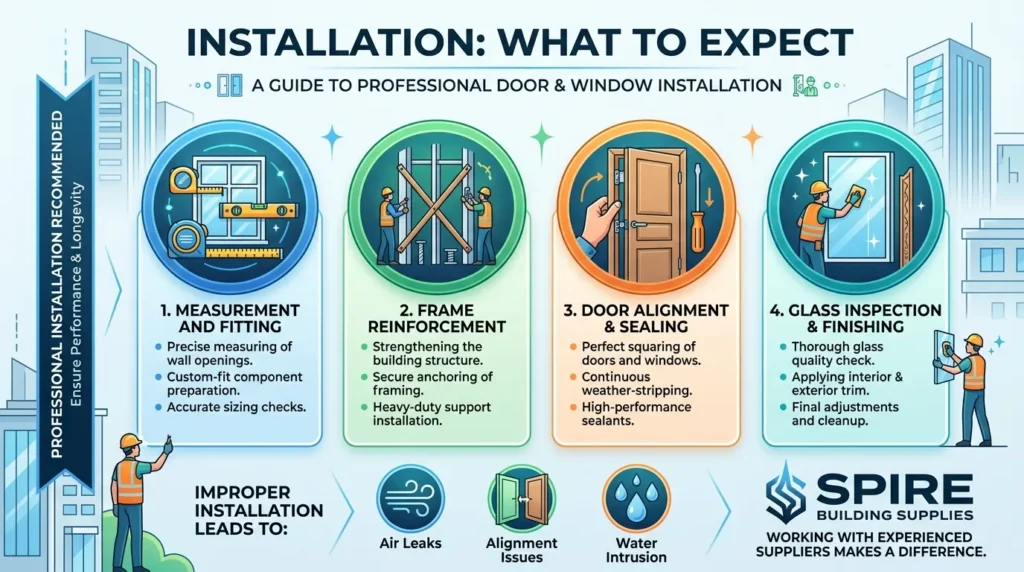
Installation: What to Expect

Professional installation is recommended to ensure performance and longevity.

Key Steps

  1. Measurement and fitting
  2. Frame reinforcement
  3. Door alignment and sealing
  4. Glass inspection and finishing

Improper installation can lead to air leaks or alignment issues, so working with experienced suppliers like Spire Building Supplies makes a difference.

Installation: What to Expect

Maintenance: Easier Than You Think

One common misconception is that iron doors require heavy maintenance.

In reality:

  • Wipe down with a damp cloth occasionally
  • Inspect hinges and locks annually
  • Reapply protective coating if needed after several years

Compared to wood doors that require frequent refinishing, iron doors are relatively low-maintenance.

Iron Doors vs Other Materials

Wood vs Iron

  • Wood: Classic look but prone to warping and termites
  • Iron: Durable, secure, weather-resistant

Iron vs Fiberglass

  • Iron: Stronger and more premium appearance
  • Fiberglass: Lightweight but less impact-resistant

For Texas conditions, iron doors consistently outperform alternatives.

Why Choose Spire Building Supplies

Choosing the right supplier matters as much as choosing the right door.

Proven Industry Expertise

Spire Building Supplies has built a reputation for delivering high-quality building materials across the U.S., including premium iron doors tailored for Texas homes.

Wide Product Range

From traditional scroll designs to sleek modern glass doors, the catalog offers options for every architectural style.

Customer-First Approach

Support doesn’t stop at purchase. From product selection to installation guidance, the team ensures a smooth experience.

Design Trends for 2026

Iron doors are evolving with modern architecture.

Minimalist Frames

Clean lines with less ornamentation are trending in urban Texas homes.

Matte Black Finishes

A popular choice for contemporary aesthetics.

Mixed Materials

Combining iron with large glass panels creates a balanced, modern look.

Smart Lock Integration

Technology is becoming part of entry door design, improving both convenience and security.

Customer Testimonials

James R., Dallas, TX
I was initially hesitant about the cost, but after installing a double iron door, the difference in appearance and security is unbelievable. Totally worth it.

Maria G., Houston, TX
We chose a water glass iron door that lets in natural light while still giving us privacy. It changed our entryway completely.

Daniel S., Austin, TX
Spire Building Supplies made the process easy. The quality of the iron door exceeded expectations, and installation was straightforward.

People Also Ask (PAA)

Are iron doors energy efficient in Texas heat?
Yes. Modern iron doors with insulated glass and thermal breaks help maintain indoor temperatures, reducing energy costs.

Do wrought iron doors rust over time?
Not if properly finished. Powder coating and weather-resistant treatments protect against rust, even in humid conditions.

Are iron doors safe for homes?
Absolutely. They provide enhanced security due to their strength and reinforced locking systems.

How long do iron doors last?
With proper care, wrought iron doors can last 20–30 years or more, making them a long-term investment.

Can I customize my iron door design?
Yes. Many homeowners choose custom sizes, glass styles, and finishes to match their home’s architecture.

Final Thoughts

If you’re searching for iron doors for sale in Texas, wrought iron doors with modern glass designs offer a powerful combination of strength, style, and long-term value. Whether you’re building a new home or upgrading your entryway, the right iron door can transform both appearance and functionality.

Spire Building Supplies stands out by offering reliable products, expert guidance, and a wide selection tailored to Texas homeowners. Instead of settling for standard options, investing in a well-designed iron door ensures your home makes a lasting impression while staying secure for years to come.

See our full range of hollow-core bedroom doors; visit this page: How Hollow Core Bedroom Doors Improve Interior Space Efficiency

Author Bio

Spire Building Supplies

Spire Building Supplies provides high-quality building materials, specializing in durable iron doors for modern homes. Trusted by homeowners and builders, the brand focuses on reliable products, practical solutions, and long-term value.

Interior shaker style doors

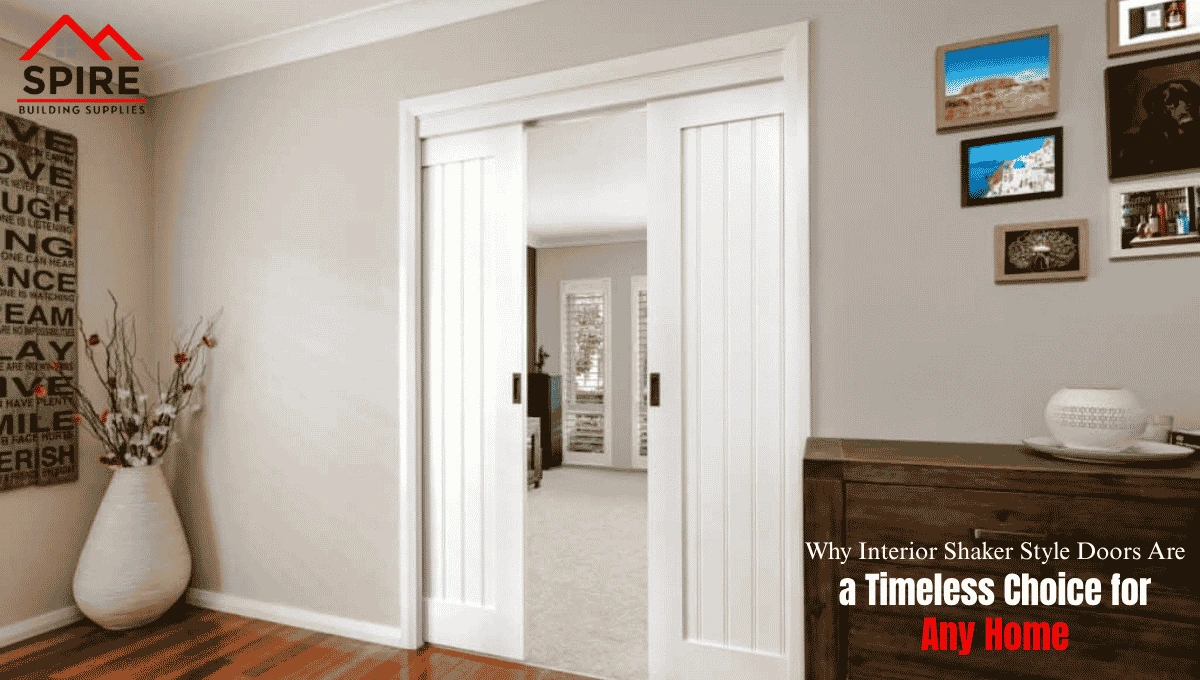
Why Interior Shaker Style Doors Are a Timeless Choice for Any Home

Interior shaker style doors have quietly remained one of the most reliable design choices in both modern and traditional homes. Whether you’re renovating a single room or building from scratch, these doors strike a balance between simplicity, durability, and visual appeal. Choosing the wrong door style can make a space feel dated or inconsistent so understanding why shaker designs continue to work across decades can save you time, money, and design frustration.

In this guide, you’ll learn what makes shaker doors unique, where they work best, what to look for before buying, and how to avoid common mistakes homeowners and builders often make.

What Are Shaker Style Doors?

A shaker interior door is defined by its clean, minimalist design typically a flat center panel framed by square edges. This style originates from the Shaker movement, which emphasized simplicity, craftsmanship, and functionality.

Key Characteristics:

  • Flat center panels (usually 1, 2, 3, or 5 panels)
  • Straight, square edges (no ornate detailing)
  • Symmetrical design
  • Versatile finish options (painted or stained)

You’ll also find the same design principle used in shaker style cabinet door designs, which is why shaker aesthetics feel cohesive throughout kitchens, closets, and interior spaces.

Why Shaker Style Doors Never Go Out of Style

  1. Simple Design That Works Everywhere

Shaker doors are neutral by design. They don’t compete with your flooring, wall color, or furniture. This makes them a safe long-term choice, especially if you plan to update your interiors over time.

  1. Fit Both Modern and Traditional Homes

From contemporary builds to classic homes, shaker style doors adapt easily. The same door can work in:

  • Minimalist interiors
  • Farmhouse designs
  • Transitional homes
  • Urban apartments
  1. Easy to Customize

You can paint shaker doors in bold colors, keep them crisp white, or use wood finishes for warmth. The clean lines act like a blank canvas.

  1. Consistency Across the Home

Using shaker doors alongside shaker cabinets creates a unified look. This consistency is something designers prioritize because it makes spaces feel intentional.

Types of Interior Shaker Style Doors

Not all shaker doors are identical. The number of panels and proportions can change the look significantly.

Common Options:

  • 2-Panel Doors
    Clean and modern. Ideal for contemporary homes.
    Example: 2 Panel Shaker 8’0″ Height -Interior Door
  • 5-Panel Doors
    More traditional and detailed. Great for classic interiors.
    Example: [5 Panel Shaker 6’8″ Height – Interior Door](5 Panel Shaker 6’8″ Height – Interior Door)
  • Full Collection
    Explore different variations here: Shaker door

Each option changes how formal or casual a space feels.

Benefits of Interior Shaker Style Doors

Timeless Appeal

You won’t feel the need to replace them in a few years due to changing trends.

Low Maintenance

Flat panels are easier to clean compared to decorative or carved doors.

Strong Resale Value

Buyers tend to prefer neutral, classic design elements—shaker doors check that box.

Budget Flexibility

Available in a wide range of materials and price points.

Limitations to Consider

No design is perfect for every situation. Here are a few things to keep in mind:

Can Feel Too Plain for Some Styles

If your home leans toward highly ornate or luxury classical design, shaker may feel too simple.

Quality Varies by Material

Lower-quality versions may use thin veneers or weak cores, which can impact durability.

Requires Good Finishing

Because the design is simple, poor paint or uneven installation becomes more noticeable.

What to Consider Before Choosing Shaker Doors

  1. Material Matters

Common options include:

  • Solid wood (premium, durable)
  • MDF (cost-effective, smooth finish)
  • Engineered wood (balanced option)

Your choice affects durability, weight, and cost.

  1. Panel Configuration
  • 2-panel = modern, clean
  • 5-panel = traditional, structured

Match the door style with your home’s architecture.

  1. Height and Proportion

Taller doors (like 8 ft) make ceilings feel higher and rooms more spacious.

  1. Finish and Color
  • White = classic and bright
  • Black = bold and modern
  • Wood stain = warm and natural
  1. Interior vs Entry Coordination

While focusing on interiors, consider how your doors align with exterior elements like fiberglass front entry doors. A cohesive transition between inside and outside improves overall design flow.

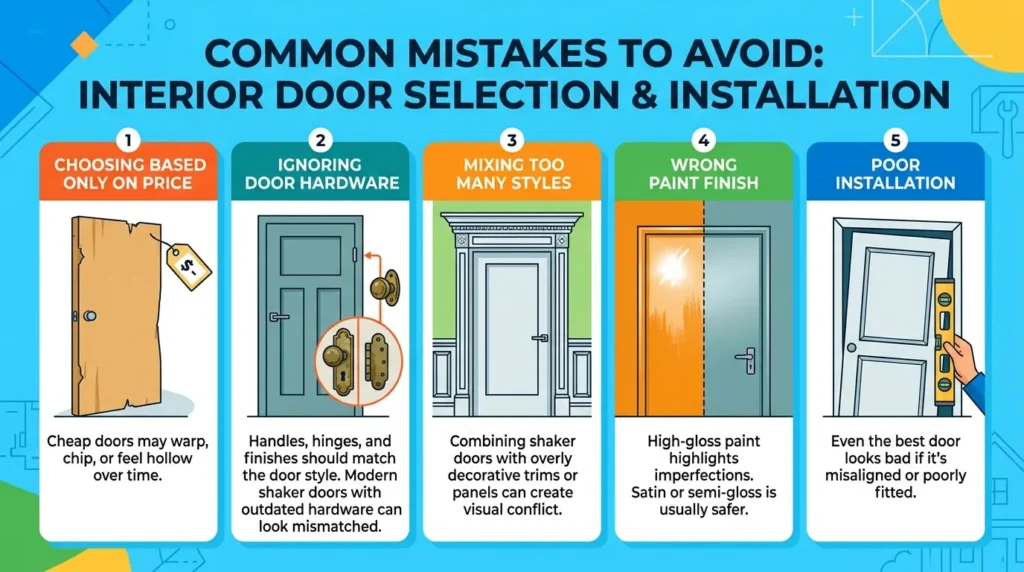
Common Mistakes to Avoid

Choosing Based Only on Price

Cheap doors may warp, chip, or feel hollow over time.

Ignoring Door Hardware

Handles, hinges, and finishes should match the door style. Modern shaker doors with outdated hardware can look mismatched.

Mixing Too Many Styles

Combining shaker doors with overly decorative trims or panels can create visual conflict.

Wrong Paint Finish

High-gloss paint highlights imperfections. Satin or semi-gloss is usually safer.

Poor Installation

Even the best door looks bad if it’s misaligned or poorly fitted.

Common Mistakes to Avoid

Expert Tips for Best Results

  • Stick to one panel style throughout the home for consistency
  • Use taller doors where ceiling height allows
  • Pair with simple trim for a clean look
  • Invest in solid core doors for better sound insulation
  • Test paint samples before committing

Real-World Use Cases

  1. New Construction Homes

Builders often choose shaker doors because they appeal to a wide range of buyers and reduce design risk.

  1. Home Renovations

Homeowners replacing outdated doors (like raised panel styles) often switch to shaker for a cleaner, updated look.

  1. Rental Properties

Durable shaker doors hold up well over time and are easy to repaint between tenants.

What Homeowners Are Saying

We replaced all our old doors with shaker style ones, and the house instantly felt more modern without doing a full renovation.

The 5-panel shaker doors gave our home a classic feel without looking outdated. It was a simple upgrade with a big impact.

As a builder, shaker doors are my go-to. Clients rarely second-guess the choice.

FAQ

What is a shaker interior door?

A shaker interior door features a simple design with flat panels and clean, square edges, making it versatile for many home styles.

Are shaker doors modern or traditional?

They work for both. The design is neutral enough to fit modern, transitional, and traditional homes.

Are shaker doors expensive?

They range from budget-friendly MDF options to premium solid wood versions, depending on material and construction.

How many panels should I choose?

2-panel doors look more modern, while 5-panel doors feel more traditional.

Do shaker doors increase home value?

They can improve visual appeal and buyer interest because of their timeless and widely accepted design.

Final Thoughts

Interior shaker style doors are one of those rare design choices that combine practicality with long-term appeal. They don’t rely on trends, which is exactly why they continue to work across different types of homes and projects.

If you’re planning a renovation or building a new home, focusing on simple, well-built elements like shaker doors can make a bigger difference than overcomplicated design features. Done right, they create a clean foundation that lets everything else in your home stand out.

About the Author

Spire Building Supplies Editorial Team
The team at Spire Building Supplies brings hands-on experience from working closely with homeowners, contractors, and builders across a wide range of residential projects. Their approach focuses on practical solutions, durable materials, and design choices that hold up in real-world conditions not just in showrooms.

Hollow Core Bedroom Doors

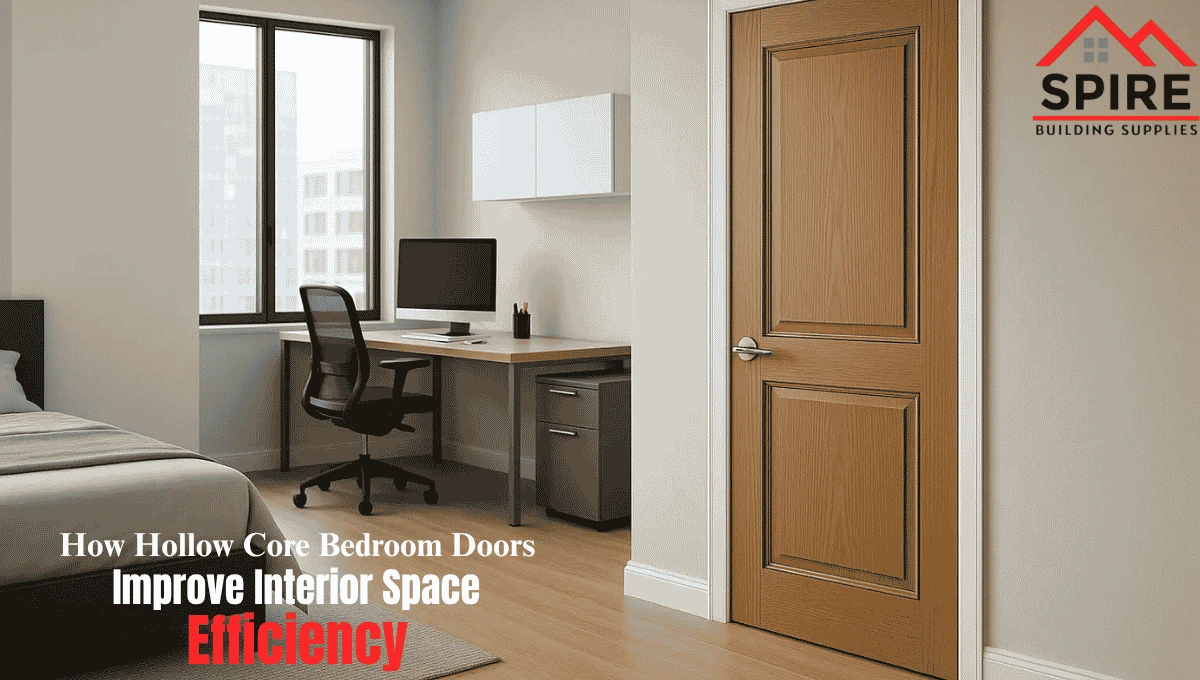
How Hollow Core Bedroom Doors Improve Interior Space Efficiency

When homeowners in Texas look for smarter ways to maximize space without stretching their budget, hollow core bedroom doors often come up as a practical solution. Unlike heavy solid wood doors, these lightweight interior doors are designed to optimize functionality while maintaining a clean, modern look. At Spire Building Supplies, we’ve seen firsthand how the right door choice can transform not just a room—but the way a home feels and functions.

Whether you’re renovating a compact bedroom in Houston, building a new home in Dallas, or upgrading interiors in Austin, hollow core doors offer a balance of efficiency, affordability, and style that aligns with modern living needs.

Why Interior Space Efficiency Matters in Modern Homes

Space is no longer just about square footage—it’s about how effectively you use it. In many Texas homes, especially urban and suburban builds, optimizing every inch is key.

A bulky, heavy door can:

  • Limit furniture placement
  • Reduce usable wall space
  • Create awkward movement flow

In contrast, hollow-core interior door are designed to:

  • Open and close with minimal effort
  • Fit seamlessly into tight layouts
  • Reduce strain on hinges and frames

As a result, they support smoother movement and a more functional living environment.

What Are Hollow Core Bedroom Doors?

Hollow core bedroom doors feature a lightweight inner structure—typically a honeycomb cardboard core—encased in a durable outer shell like MDF or plywood. This design reduces weight without sacrificing structural integrity for everyday use.

At Spire Building Supplies, popular options include:

  • Molded panel designs for a classic aesthetic
  • Smooth-finish doors for modern interiors
  • Prehung configurations for easy installation

These doors are especially suitable for bedrooms, closets, and interior partitions where heavy-duty insulation isn’t required.

How Hollow Core Bedroom Doors Improve Space Efficiency

1. Lightweight Design Enhances Usability

Because hollow core doors are significantly lighter than solid wood alternatives, they:

  • Open and close effortlessly
  • Put less stress on door frames
  • Require less clearance space

This makes them ideal for smaller bedrooms or tighter hallways commonly found in Texas homes.

2. Better Layout Flexibility

Heavy doors often dictate furniture placement. However, hollow-core doors allow:

  • Beds, dressers, and desks to be positioned closer to doorways
  • More freedom in interior design layouts
  • Improved room flow

For example, using a Molded Panel 1’6″ x 6’8″ door can make a noticeable difference in compact bedrooms where every inch matters.

3. Space-Saving Installation Options

Many homeowners choose prehung hollow core doors because they:

  • Come ready to install
  • Reduce installation errors
  • Save time and labor costs

Models like Molded Panel 1’8″ x 6’8″ Riverside are especially popular for standard bedroom openings in Texas homes.

4. Reduced Structural Load

In multi-room homes, especially two-story builds, lighter materials reduce overall structural stress. This contributes to:

  • Longer-lasting hinges
  • Fewer maintenance issues
  • Better long-term performance

Builders often recommend options such as Molded Panel 2’0″ x 6’8″ for consistent sizing and performance across multiple rooms.

5. Ideal for Multi-Room Homes

Texas homes often feature multiple bedrooms, closets, and utility spaces. Using hollow core doors throughout helps:

  • Maintain consistency in design
  • Lower overall material costs
  • Simplify installation

This approach is especially beneficial for large-scale residential projects.

Design Versatility Without Taking Extra Space

A major advantage of hollow core bedroom doors is their ability to blend into various interior styles without overwhelming the space.

Popular Design Options

  • Traditional molded panels for classic homes
  • Flush doors for minimalist interiors
  • Textured finishes for added depth

Because they are lighter and slimmer, these doors visually open up a room rather than making it feel enclosed.

Cost Efficiency Meets Space Efficiency

Budget and space often go hand in hand. Hollow core doors are one of the most cost-effective interior door options available.

Why Texas Homeowners Prefer Them

  • Lower upfront cost
  • Reduced shipping and handling expenses
  • Faster installation

At Spire Building Supplies, customers consistently choose hollow core doors when they need to balance affordability with performance.

Why Trust Spire Building Supplies

Choosing the right supplier matters as much as choosing the right door. Spire Building Supplies stands out because of:

Proven Industry Experience
Years of supplying high-quality building materials across Texas.

Product Consistency
Each door meets strict quality standards for durability and finish.

Customer Trust
Hundreds of satisfied homeowners, builders, and contractors rely on their products.

Expert Support
From selection to installation, their team provides guidance tailored to your project.

Expert Tips for Maximizing Space Efficiency

To get the most out of hollow core bedroom doors:

  • Choose standard sizes for easier replacement
  • Use light-colored finishes to enhance openness
  • Pair with modern hardware for a sleek look
  • Consider sliding or bi-fold variations where applicable

These small decisions can significantly impact how spacious a room feels.

Common Mistakes to Avoid

Even though hollow core doors are simple, mistakes can reduce their benefits:

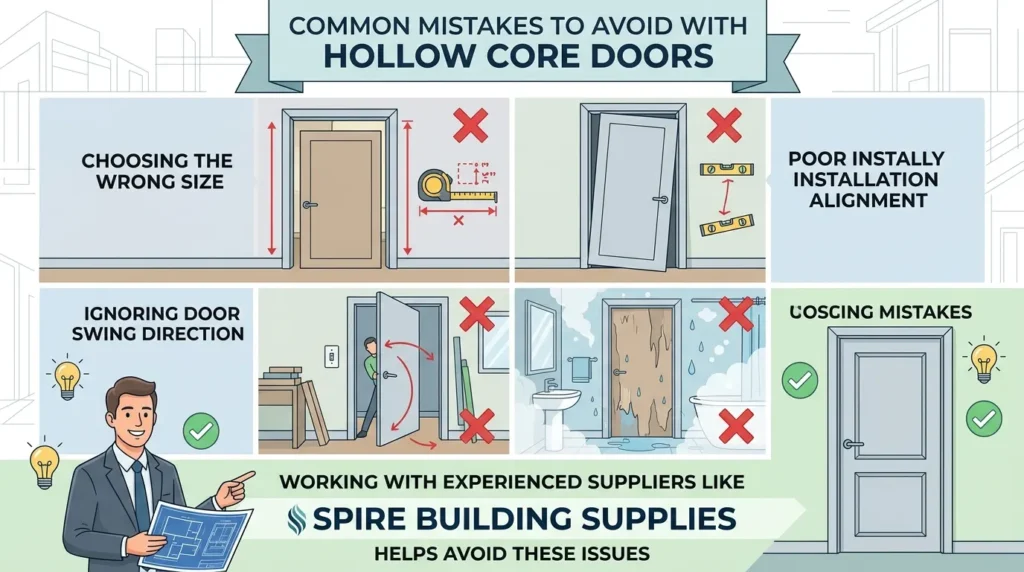
  • Choosing the wrong size
  • Poor installation alignment
  • Ignoring door swing direction
  • Using them in high-moisture areas without proper sealing

Working with experienced suppliers like Spire Building Supplies helps avoid these issues.

Common Mistakes to Avoid

Real Experience: What Homeowners and Builders Say

Testimonials

We replaced all bedroom doors in our Austin home with hollow core options from Spire Building Supplies. The rooms instantly felt more open, and installation was quick.
Mark T., Austin, TX

As a contractor in Dallas, I recommend hollow core bedroom doors for most residential projects. They’re reliable, cost-effective, and easy to work with.
James R., Home Builder

The Molded Panel doors we ordered fit perfectly and made a big difference in our smaller bedrooms.
Linda S., Houston, TX

People Also Ask (PAA)

Are hollow core bedroom doors good for small spaces?
Yes, they are ideal for small spaces because they are lightweight, require less clearance, and allow better furniture placement.

Do hollow core doors save space compared to solid doors?
While both take similar physical space, hollow core doors improve usable space by being easier to handle and less restrictive in layout planning.

Can hollow core doors be used in all bedrooms?
They work well for most bedrooms, especially where sound insulation is not a top priority.

How long do hollow core bedroom doors last?
With proper installation and care, they can last many years, making them a reliable option for interior use.

Are hollow core doors easy to install?
Yes, especially prehung versions. They are lightweight, which makes handling and alignment easier during installation.

Final Thoughts

Hollow core bedroom doors are more than just a budget-friendly option—they are a smart solution for improving how space is used inside your home. From easier movement to flexible layouts and faster installation, they deliver real value where it matters most.

For homeowners and builders across Texas, choosing the right interior door can make everyday living more comfortable and efficient. With trusted products and expert support, Spire Building Supplies continues to be a go-to source for high-quality hollow core door solutions.

See our full range of exterior window trims; visit this page: Best Exterior Window Trim Styles for Modern and Traditional Homes

Author Bio

Spire Building Supplies is a trusted provider of interior doors and construction materials across Texas, USA. Known for consistent quality and reliable service, the brand supports homeowners, contractors, and builders with practical solutions designed for modern living.

Fiberglass front entry doors

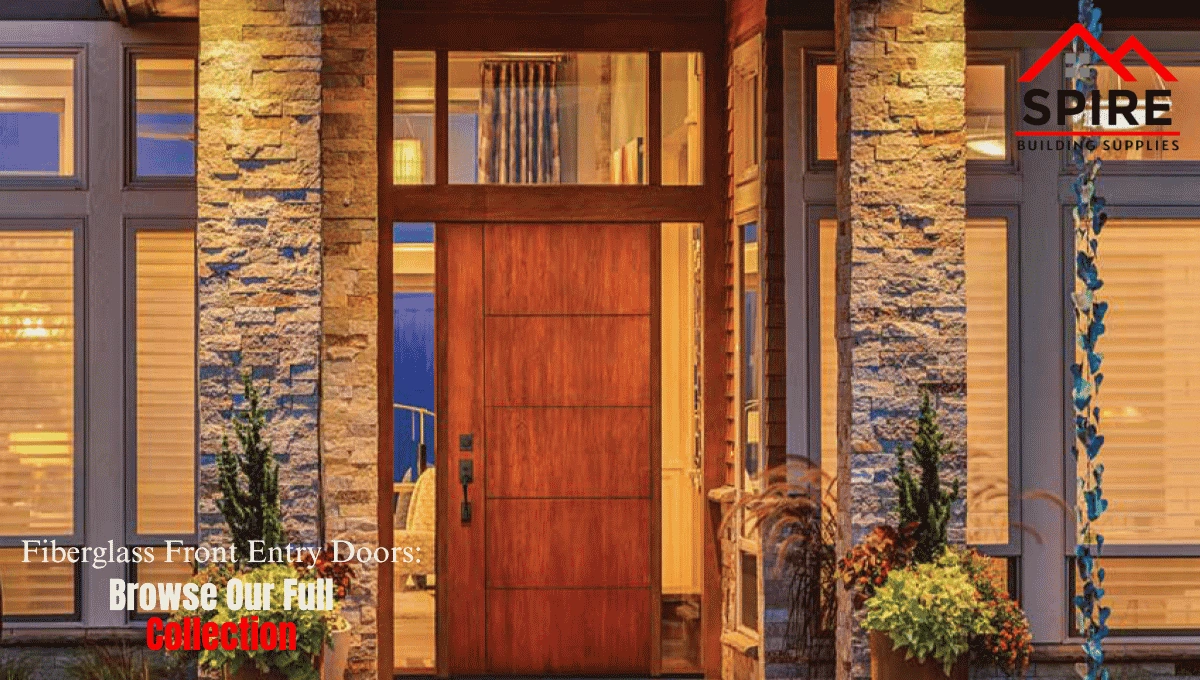
Fiberglass Front Entry Doors: Browse Our Full Collection

Choosing the right entry door is one of those decisions that seems simple until you realize how much it affects your home’s security, energy efficiency, and overall curb appeal. Fiberglass front entry doors have become a popular choice for homeowners who want durability without sacrificing style. But not all fiberglass doors are the same, and picking the wrong one can lead to long-term frustration, from poor insulation to premature wear.

This guide walks you through what actually matters when selecting a fiberglass entry door based on real-world experience, not just product specs so you can make a confident, informed decision.

What Are Fiberglass Front Entry Doors?

A fiberglass front entry door is constructed with a reinforced fiberglass skin over a solid core, often made of polyurethane foam. This combination creates a door that’s:

  • Strong and impact-resistant
  • Insulated for energy efficiency
  • Resistant to moisture, warping, and rot

Unlike wood, fiberglass won’t swell or crack in humid conditions. Compared to steel, it doesn’t dent easily or conduct heat as quickly.

If you’re browsing modern  , you’ll notice they often mimic the look of real wood grain while offering much lower maintenance.

Why Homeowners Choose Fiberglass Over Other Materials

1. Durability That Holds Up Over Time

Fiberglass doors are built to handle harsh weather heat, humidity, rain, and even coastal conditions. In regions where wooden doors struggle with expansion and contraction, fiberglass stays stable.

2. Energy Efficiency

Most exterior fiberglass door options come with insulated cores that help maintain indoor temperatures. This reduces energy loss and can lower utility bills over time.

3. Low Maintenance

You don’t need to sand, stain, or repaint frequently. Occasional cleaning and minimal upkeep keep the door looking new for years.

4. Design Flexibility

From modern minimal styles to textured woodgrain finishes like a rustic fiberglass door, there’s a wide variety of designs available.

5. Security Performance

Fiberglass doors are tough. When paired with quality hardware and proper installation, they provide solid resistance against forced entry.

Limitations You Should Know Before Buying

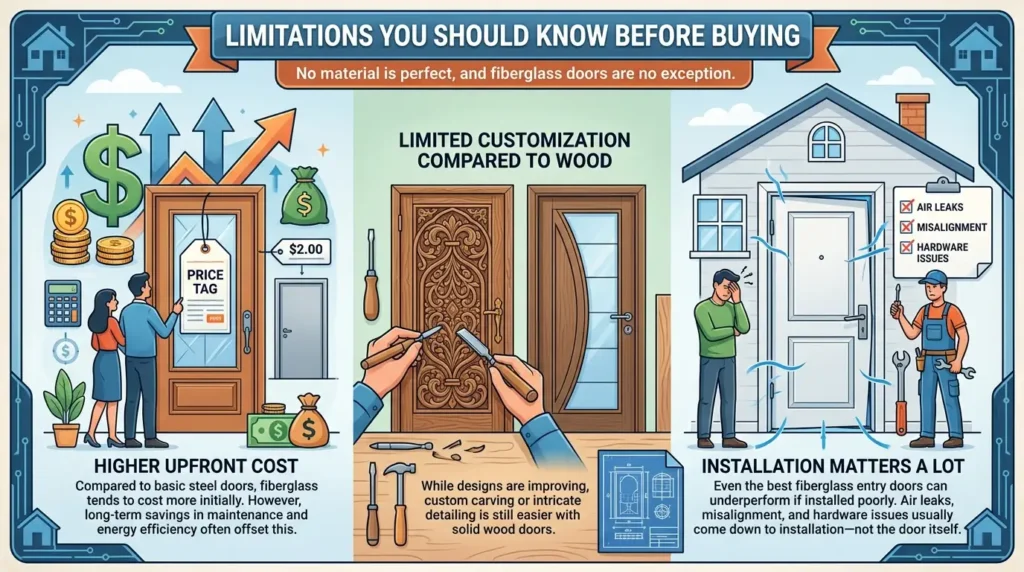
No material is perfect, and fiberglass doors are no exception.

Higher Upfront Cost
Compared to basic steel doors, fiberglass tends to cost more initially. However, the long-term savings in maintenance and energy efficiency often offset this.

Limited Customization Compared to Wood
While designs are improving, custom carving or intricate detailing is still easier with solid wood doors.

Installation Matters a Lot
Even the best fiberglass entry doors can underperform if installed poorly. Air leaks, misalignment, and hardware issues usually come down to installation—not the door itself.

Limitations You Should Know Before Buying

Key Things to Consider Before You Choose

1. Door Configuration

Think about how the door fits your entryway:

  • Single vs. double doors
  • Prehung vs. slab doors
  • Glass inserts or solid panels

For example, a Single Prehung Fiberglass Door in Black with 1 Lite can offer a clean, modern look while allowing natural light into the entry.

2. Insulation Rating

Look for doors with:

  • Polyurethane cores
  • Good energy ratings
  • Tight weatherstripping

This is especially important if your front door faces direct sun or strong winds.

3. Finish and Style

Fiberglass doors can replicate:

  • Oak, mahogany, or walnut textures
  • Smooth painted finishes
  • Rustic or contemporary designs

Choose a style that complements your home’s architecture—not just current trends.

4. Glass Options

If your door includes glass:

  • Look for double or triple-pane glass
  • Consider low-E coatings for energy efficiency
  • Evaluate privacy levels (clear vs. frosted vs. decorative)

5. Hardware Compatibility

Make sure the door supports:

  • Secure lock systems
  • Smart locks (if needed)
  • Durable hinges and handles

A strong door is only as secure as its hardware.

Common Mistakes to Avoid

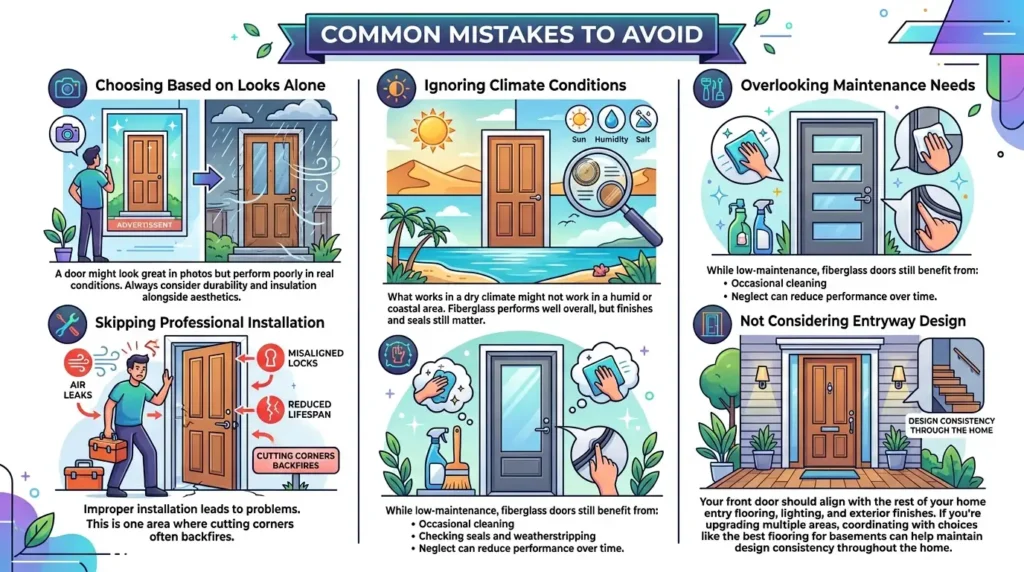
Choosing Based on Looks Alone

A door might look great in photos but perform poorly in real conditions. Always consider durability and insulation alongside aesthetics.

Ignoring Climate Conditions

What works in a dry climate might not work in a humid or coastal area. Fiberglass performs well overall, but finishes and seals still matter.

Skipping Professional Installation

Improper installation leads to:

  • Air leaks
  • Misaligned locks
  • Reduced lifespan

This is one area where cutting corners often backfires.

Overlooking Maintenance Needs

While low-maintenance, fiberglass doors still benefit from:

  • Occasional cleaning
  • Checking seals and weatherstripping

Neglect can reduce performance over time.

Not Considering Entryway Design

Your front door should align with the rest of your home entry flooring, lighting, and exterior finishes. If you’re upgrading multiple areas, coordinating with choices like the best flooring for basements can help maintain design consistency throughout the home.

Common Mistakes to Avoid

Expert Tips for Choosing the Best Fiberglass Entry Doors

Focus on Core Construction

Not all fiberglass doors are equal. Pay attention to:

  • Core density
  • Frame quality
  • Reinforcement around lock areas

These details affect both durability and security.

Test the Finish Quality

Run your hand over the surface. A good front door fiberglass finish should feel:

  • Smooth or realistically textured
  • Evenly coated
  • Free from bubbles or inconsistencies

Consider Long-Term Value

Instead of asking, “What’s the cheapest option?” ask:

  • How long will this door last?
  • What maintenance will it need?
  • Will it improve energy efficiency?

Often, spending a bit more upfront saves money later.

Don’t Ignore Weather Sealing

Look for:

  • Tight-fitting frames
  • High-quality weatherstripping
  • Threshold durability

These details make a noticeable difference in comfort.

Real-World Use Cases

  1. Busy Family Homes

Fiberglass doors handle daily wear kids, pets, constant use without dents or scratches showing easily.

  1. Coastal or Humid Areas

Unlike wood, fiberglass won’t warp or rot, making it ideal for high-moisture environments.

  1. Rental or Investment Properties

Low maintenance and durability reduce long-term repair costs, making fiberglass a practical choice.

  1. Modern Renovations

Clean-lined designs with glass inserts work well in contemporary homes, especially when paired with neutral exterior finishes.

What Homeowners Are Saying

We switched from a wooden door to fiberglass, and the difference in insulation was immediate. The house feels more comfortable year-round.

After two years, it still looks brand new. No warping, no repainting—just basic cleaning.

Installation made all the difference. Once it was properly fitted, we noticed zero drafts.

Frequently Asked Questions

Are fiberglass front entry doors better than wood?

They’re more durable and require less maintenance than wood, especially in humid or extreme weather conditions.

How long do fiberglass entry doors last?

With proper installation and minimal maintenance, they can last 20–30 years or more.

Do fiberglass doors look like real wood?

Yes. Many modern designs replicate wood grain very realistically, especially higher-end models.

Are fiberglass doors energy efficient?

Yes. Their insulated cores help reduce heat transfer and improve indoor comfort.

Can fiberglass doors crack or dent?

They’re resistant to dents and cracks, but extreme impact can still cause damage—though it’s less common than with steel or wood.

Final Thoughts

Fiberglass front entry doors strike a strong balance between durability, energy efficiency, and design flexibility. They’re not the cheapest option upfront, but in real-world use, they often prove to be one of the most practical choices for homeowners.

The key is to focus on construction quality, proper installation, and choosing a design that fits your home not just what looks good in a catalog.

If you take the time to evaluate these factors carefully, you’ll end up with a door that performs well for years without constant maintenance or costly repairs.

About the Author

Spire Building Supplies Editorial Team

The Spire Building Supplies team works closely with builders, contractors, and homeowners to understand what actually performs well in real construction environments. With hands-on experience in materials, installation challenges, and long-term durability, the team focuses on practical guidance not just product descriptions so readers can make informed, confident decisions for their homes.

Interior Double Doors for dining room

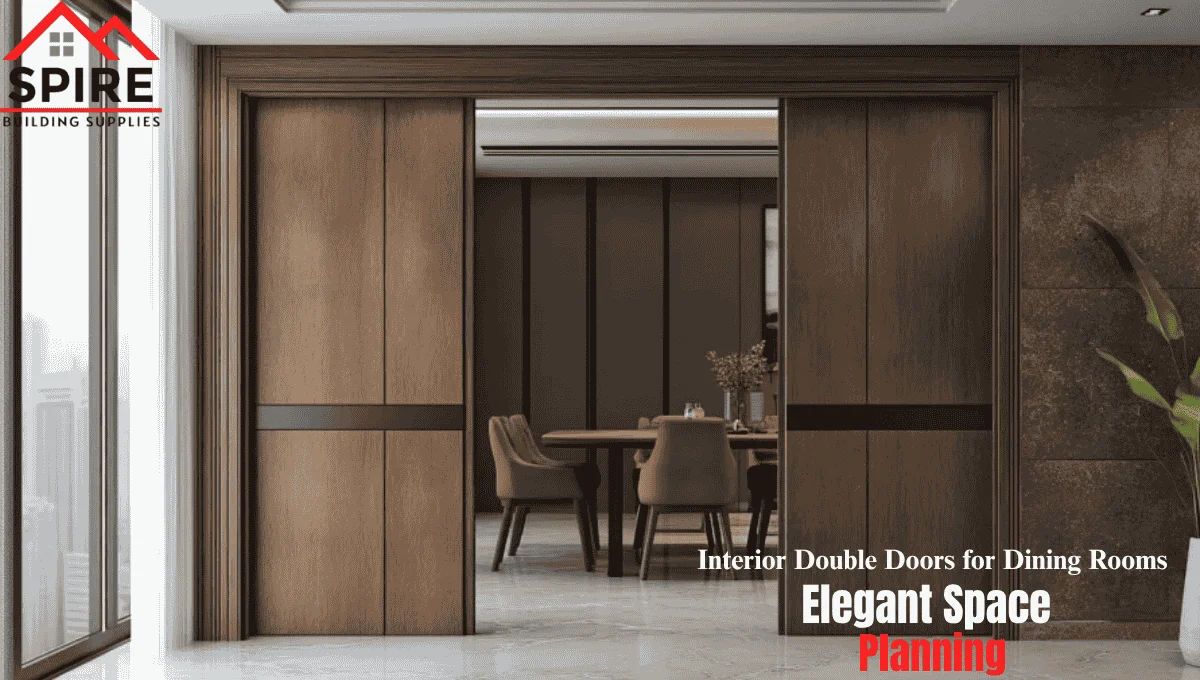
Interior Double Doors for Dining Rooms: Elegant Space Planning

What if one simple design choice could completely change how your dining room feels the moment someone walks in? Not the table. Not the lighting. But the doors. Interior double doors have quietly become one of the most impactful upgrades in modern homes across Texas. They don’t just separate spaces—they create flow, frame your dining area like a centerpiece, and instantly add a sense of openness or privacy when you need it. Whether you’re hosting a lively dinner or enjoying a quiet family meal, the right double doors can transform the entire experience.

At Spire Building Supplies, we’ve seen firsthand how homeowners shift from basic layouts to more intentional, elegant spaces—simply by choosing the right interior double doors. And the difference isn’t subtle—it’s immediate.

Why Interior Double Doors Are Ideal for Dining Rooms

Dining rooms are unique spaces. They need openness for gatherings but also separation for privacy and noise control. An interior door solves this challenge effortlessly.

✔ Balanced Open & Closed Living

Double doors allow you to:

  • Open up your dining room for entertaining guests
  • Close it off for formal dinners or quiet family meals

This flexibility is especially valuable in modern open-concept homes across Texas.

✔ Enhanced Natural Light

If you choose glass or semi-glass options, double doors

  • Allow natural light to flow between rooms
  • Make smaller dining areas feel more spacious

✔ Elevated Visual Appeal

Compared to single doors, double doors:

  • Create symmetry
  • Add architectural depth
  • Improve perceived home value

Real Experience: What Homeowners in Texas Prefer

From real projects handled by Spire Building Supplies, homeowners in cities like Dallas, Austin, and Houston consistently choose:

  • Shaker-style interior double doors for modern homes
  • Glass panel double doors for transitional spaces
  • Solid panel doors for formal dining rooms

One clear trend: clean lines + neutral finishes dominate current preferences.

Best Styles of Interior Double Doors for Dining Rooms

Choosing the right style isn’t just about looks—it’s about how the space is used daily.

1. Shaker Style Double Doors (Most Popular)

Shaker doors remain the top choice because of their simplicity and versatility.

Common options include:

Why homeowners love them:

  • Clean, modern lines
  • Works with both contemporary and traditional interiors
  • Easy to pair with different finishes

2. Glass Interior Double Doors

Perfect for semi-formal dining areas.

Best for:

  • Open-concept homes
  • Homes needing more light flow

Pros:

  • Brightens space
  • Makes rooms feel larger

Cons:

  • Less privacy

3. Solid Panel Double Doors

If privacy and sound control matter most:

Best for:

  • Formal dining rooms
  • Homes with frequent gatherings

Benefits:

  • Better noise reduction
  • Strong visual presence

4. French Style Interior Double Doors

A timeless option that blends elegance with openness.

Key features:

  • Multiple glass panes
  • Classic appeal

Space Planning Tips for Dining Rooms

Installing interior double doors is not just about the product—it’s about how it fits into your space.

1. Measure Door Clearance Properly

Double doors need enough swing space. Always:

  • Measure wall-to-wall clearance
  • Consider furniture placement

2. Align with Dining Table Layout

Your doors should:

  • Open without blocking chairs
  • Complement table positioning

3. Think About Lighting

Doors with glass panels:

  • Enhance natural lighting during daytime
  • Reduce need for artificial light

4. Match Interior Theme

For example:

  • Farmhouse → White shaker double doors
  • Modern → Black framed glass doors
  • Traditional → Wood grain panel doors

Material Guide: What Works Best

Choosing the right material impacts durability, maintenance, and long-term value.

Solid Wood

  • Premium look
  • Long-lasting
  • Higher cost

MDF (Medium Density Fiberboard)

  • Budget-friendly
  • Smooth finish
  • Ideal for painted doors

Glass + Wood Combination

  • Stylish
  • Functional
  • Balanced light + privacy

Installation Insights (From Real Projects)

At Spire Building Supplies, one recurring issue we see is improper installation.

Common Mistakes to Avoid:

  • Incorrect frame alignment
  • Ignoring door swing direction
  • Using low-quality hardware

Pro Tip:

Always choose prehung interior double doors if you want:

  • Faster installation
  • Better alignment
  • Reduced labor costs

Cost of Interior Double Doors in Texas (2026)

Prices vary depending on style, material, and customization.

Average Cost Range:

  • Basic MDF Double Doors: $250 – $600
  • Shaker-Style Double Doors: $400 – $900
  • Solid Wood Double Doors: $800 – $2,000+
  • Glass Panel Double Doors: $700 – $1,500

Installation Cost:

  • $150 – $500 depending on complexity

Why Choose Spire Building Supplies

Choosing the right supplier matters just as much as choosing the right door.

Proven Industry Experience
Spire has worked with homeowners, contractors, and builders across Texas and the USA.

Quality You Can Trust
Each product is selected based on durability, performance, and design standards.

Customer-Focused Approach
From selection to installation guidance, Spire ensures:

  • Clear communication
  • Reliable product quality
  • Ongoing support

Testimonials from Real Customers

James R., Dallas, TX
I installed shaker interior double doors from Spire Building Supplies, and it completely changed how my dining room feels. It looks more open and high-end now.

Melissa T., Austin, TX
The 5-panel shaker doors were exactly what we needed. Great quality, easy installation, and perfect fit for our home.

Carlos M., Houston, TX
We chose glass interior double doors for our dining space, and the natural light difference is amazing. Highly recommend Spire.

People Also Ask (PAA)

Are interior double doors worth it?
Yes, they improve functionality, enhance visual appeal, and can increase perceived home value, especially in dining areas.

What size are standard interior double doors?
The most common size is:

  • Height: 80 inches (6’8)
  • Width: 60 to 72 inches total

Do interior double doors add value to a home?
Yes. Buyers often view double doors as a premium feature, particularly in dining rooms and living areas.

Which style is best for dining rooms?
Shaker-style and glass panel double doors are the most popular due to their balance of style and practicality.

Can I install interior double doors in a small space?
Yes, but consider:

  • Sliding double doors
  • Narrow-width configurations

Final Thoughts

Interior double doors are more than just an upgrade—they are a strategic design decision that impacts how your dining room looks, feels, and functions every day. Whether you choose a 2-panel shaker 8’0″ height, a 5-panel shaker 6’8″ height, or a 5-panel shaker 6’8″ 80 inch, the key is aligning your choice with your space, lifestyle, and long-term goals.

If you’re planning a dining room upgrade in Texas or anywhere in the USA, investing in the right interior double doors can deliver both immediate visual impact and lasting value.

See our exclusive collection of fiber classic doors; visit this page: Best Budget-Friendly Fiber Classic Doors Without Compromising Quality

Author Bio

Spire Building Supplies:
Spire Building Supplies is a trusted USA-based supplier known for quality interior doors and practical expertise, helping homeowners and builders choose the right solutions with confidence.

Exterior iron doors

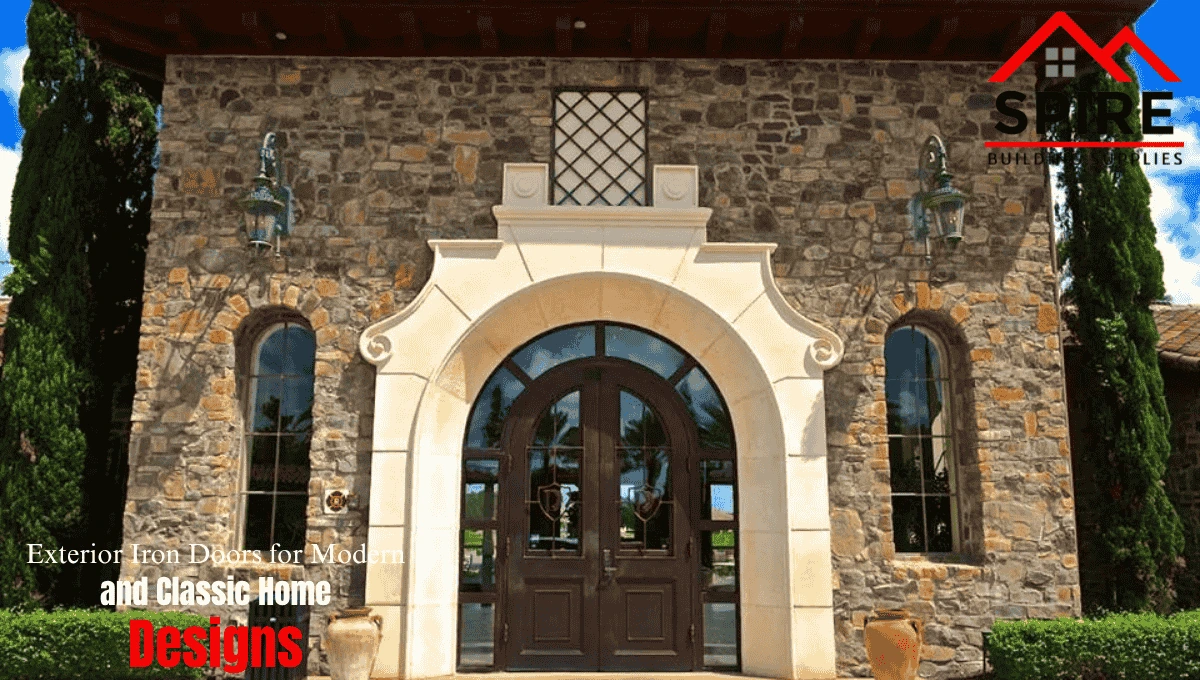
Exterior Iron Doors for Modern and Classic Home Designs

There’s something about a well-chosen front door that changes everything. It’s the first thing guests notice, the last thing you see when you leave for work, and one of the most lasting impressions your home makes on the street. Exterior iron doors have held a prominent place in residential design for centuries and if you’re considering one, you’re in good company. But choosing the right iron door requires more than picking a style you like. The material, construction, finish, glass configuration, and how well it’s matched to your home’s architecture all matter. This guide covers what you actually need to know before making that decision.

What Makes Iron Doors Different From Other Entry Doors

Iron doors particularly wrought iron front doors are in a category of their own. They’re heavier, more durable, and visually more commanding than wood, fiberglass, or steel doors. But that weight and presence come with trade-offs that buyers often don’t fully consider until after installation.

Here’s what sets them apart:

Material strength: Wrought iron is exceptionally resistant to warping, shrinking, and cracking problems that plague wood doors in climates with humidity swings or temperature extremes.

Design versatility: Iron can be forged, bent, and welded into elaborate scroll patterns, geometric grids, or clean minimalist frames. Few materials offer the same range of detail.

Longevity: A properly maintained iron entry door can outlast the house itself. That’s not a figure of speech some historic iron doors are hundreds of years old and still functional.

Glass integration: Most modern iron doors incorporate decorative or clear tempered glass panels, which allow light into the entryway without sacrificing security.

Weight: Iron doors are heavy often 200 to 400+ pounds depending on size and glass content. This means the frame, hinges, and substructure all need to be appropriately reinforced.

Styles That Work: Modern, Classic, and Everything In Between

One of the most common misconceptions is that iron doors are exclusively traditional or Mediterranean in style. That was true for a long time, but contemporary manufacturing has changed the picture significantly.

Classic and Mediterranean Designs

The original aesthetic for wrought iron front doors features ornate scrollwork, arch tops, and decorative glass — often with a warm bronze, oil-rubbed, or black patina finish. These pair beautifully with stucco exteriors, Spanish tile roofs, Tuscan-inspired masonry, and traditional Colonial or craftsman architecture.

Modern and Minimalist Designs

Clean-line iron doors have become increasingly popular in modern and transitional homes. Think flat bar grids, simple frame profiles, large glass panels, and matte black or satin finishes. These work especially well with contemporary homes featuring flat rooflines, large windows, and neutral palettes.

Transitional Designs

Transitional iron doors blend elements of both — perhaps a clean frame with subtle scrollwork accents, or a geometric pattern with a warmer finish. These tend to be the most flexible in terms of pairing with different home styles.

If you’re browsing options, take a look at the iron doors collection at Spire Building Supplies — it includes styles that span the design spectrum from traditional to contemporary.

Single vs. Double Iron Entry Doors: What to Choose

The size and configuration of your iron front door matters more than most buyers realize — both aesthetically and practically.

Single iron doors are the standard for most residential entrances. They’re more affordable, easier to install, and appropriate for standard-width doorways (typically 36 inches). A well-designed single iron door can still make a dramatic statement without overwhelming a modestly-sized facade. The Single Exterior Wrought Iron Door is a good example of how much presence a single door can carry.

Double iron doors are suited for grander entrances — wider openings, larger homes, or architectural situations where a pair of doors is proportionally appropriate. They create an undeniably dramatic effect but require more structural support and a wider rough opening.

A useful rule of thumb: if your entryway feels proportionally balanced with a single door, use a single door. Double doors on a narrow or small-scale facade can look overscaled and out of place.

Prehung vs. Slab: Understanding the Difference

If you’re shopping for exterior iron doors, you’ll quickly encounter these two terms.

Slab door: Just the door itself no frame, no hinges, no threshold. A slab iron door is installed into an existing frame. This is rarely the right choice for exterior applications unless you have a very specific reason and a very solid existing frame.

Prehung door: The door comes already mounted in a new frame, with hinges attached and the frame prepped for installation. This is the standard and recommended approach for exterior iron door replacement or new installation. The Winslow Wrought Iron Prehung Front Door is a good example of a prehung unit that’s built for clean, complete installation.

For almost all homeowners replacing an existing door, prehung is the right choice. The old frame comes out, the new prehung unit goes in, and you don’t have to worry about alignment issues that come from fitting a slab into an aged or imperfect existing frame.

Benefits of Exterior Iron Doors

Let’s look at why so many homeowners choose iron, and what the experience actually tends to look like in practice.

  • Curb appeal and resale value: Iron doors consistently rank among the highest-impact exterior upgrades for visual impression and perceived home value.
  • Security: The weight and construction of iron entry doors make forced entry significantly more difficult compared to hollow-core or standard wood doors.
  • Low warping and weather resistance: Unlike wood, iron doesn’t absorb moisture and warp. In humid climates or climates with wide temperature swings, this is a real practical advantage.
  • Customization: Many manufacturers offer custom sizing, finish options, glass configurations, and hardware — giving homeowners precise control over the final look.
  • Timelessness: Iron doesn’t follow trends the way other materials do. A well-chosen iron door looks appropriate across decades.

Realistic Limitations to Know Before You Buy

Honest buying decisions require knowing the limitations, not just the highlights.

Cost: Quality iron doors are not inexpensive. Expect to pay significantly more than you would for a fiberglass or steel door — and then add installation, which is more labor-intensive due to weight.

Energy efficiency: Iron is a conductor, which means thermal efficiency can be lower than composite or fiberglass alternatives unless the door is designed with thermal breaks or well-insulated glass panels. Look for iron doors specifically engineered for energy performance if this is a priority.

Maintenance: Iron will rust if the finish is compromised and moisture gets in. This requires periodic inspection and touch-up of the finish — especially in coastal or high-humidity environments. Some doors use weatherproof powder coatings that significantly reduce this concern, but they’re not maintenance-free.

Weight and installation complexity: Iron doors require professional installation in most cases. The weight stresses hinges, frames, and thresholds differently than a standard door — and getting the alignment right matters for long-term performance.

Condensation: In cold climates, iron doors can experience condensation on the interior surface during cold snaps if not properly sealed. This is manageable with proper weatherstripping and threshold seals.

Common Mistakes People Make When Choosing Iron Doors

These are the mistakes that tend to show up most often — worth reading carefully before you commit.

Choosing style without measuring the opening: Iron doors are heavy and often custom-sized. Measuring your rough opening accurately before shopping saves significant time and money. Measure width and height at multiple points, since older doorways are rarely perfectly square.

Ignoring the glass-to-iron ratio: More glass means more light but less privacy and potentially lower security and energy efficiency. Think about what your entryway actually needs — not just what looks best in a photo.

Underestimating installation complexity: Some homeowners assume installing an iron door is similar to installing a standard interior door. It isn’t. Hire experienced installers who have worked with iron specifically.

Forgetting about hardware compatibility: Wrought iron doors need hardware (locks, handles, hinges) that’s rated for the weight and finish. Mismatched hardware is both a functional and aesthetic problem.

Skipping weatherstripping: Iron doors without proper weatherstripping will have air leaks regardless of how well the door itself is made. Make sure the unit you buy includes quality weatherstripping, or plan to add it separately.

Not thinking about the entryway interior: The interior side of an iron door — especially one with large glass panels — becomes a significant visual element of your entryway. Consider how it coordinates with your flooring, baseboard trim styles, and wall finishes so the overall entry space feels cohesive.

Expert Tips for Getting This Right

Test the finish in your climate: If you live in a coastal or humid region, ask specifically about the corrosion resistance of the finish. Powder-coated finishes generally outperform painted iron in these conditions.

Think about your sidelights: Many iron front door installations look significantly better with matching sidelights (narrow glass panels on either side of the door). This adds light, symmetry, and visual weight appropriate for larger facades.

Consider a storm door only if necessary: In extremely harsh climates, a storm door adds protection — but visually, it can hide the iron door’s design. If you live in a mild climate, skip the storm door and let the iron speak for itself.

Plan your exterior lighting early: Iron doors, especially dark-finished ones, can disappear at night without proper lighting. Wall sconces, overhead lanterns, or recessed path lighting make a significant difference in how the door reads after dark.

Match the finish to your exterior hardware: Door handles, house numbers, light fixtures, and mail slots should all coordinate with the finish of the iron door. Mixing warm bronze with cool matte black, for example, creates a disjointed look that’s easy to avoid with a little planning.

Real-World Use Cases

Classic Colonial home in the Southeast: The homeowner replaced a painted wood door that was warping due to humidity. A single wrought iron front door with decorative scrollwork and dual glass panels solved the warping problem while significantly elevating curb appeal. The oil-rubbed bronze finish coordinated with the existing brick and brass exterior hardware.

Modern stucco home in the Southwest: A contemporary iron door with a flat grid pattern and large clear glass panels replaced a generic steel door. The matte black finish tied together the dark trim and metal roof accents. The owner noted that neighbors regularly comment on the entryway upgrade.

Mediterranean revival renovation: Double iron entry doors with an arched top and mosaic glass panels anchored a complete exterior renovation. The iron doors were the design decision that unified the roofline, stonework, and landscaping into a coherent aesthetic.

People Also Ask:

How long do exterior iron doors last?

With proper maintenance, iron doors can last 30 to 50 years or more. Wrought iron doors in well-protected historic buildings have lasted centuries. The key factors are finish quality, weatherstripping condition, and periodic touch-ups to prevent rust.

Are iron doors energy efficient?

Standard iron doors conduct heat and cold more than fiberglass or insulated steel doors. However, many modern iron doors are designed with thermal breaks and insulated glass that substantially improve energy performance. Look for this feature specifically if energy efficiency is a priority.

Do iron doors rust?

Yes, if the protective finish is compromised and bare metal is exposed to moisture. Quality iron doors come with protective coatings (often powder coat) that resist rust for years. Inspect the finish periodically and touch up any chips or scratches to prevent rust from developing.

Can I install an iron door myself?

Technically possible, but not recommended. Iron doors are very heavy and require precise alignment to function correctly and seal properly. Most homeowners benefit from hiring experienced installers — ideally ones with specific experience in iron door installation.

What finish is best for an iron door?

Powder coating is generally the most durable and low-maintenance option, providing strong protection against rust and UV fading. Oil-rubbed and hand-forged finishes offer more traditional aesthetics but may require more maintenance over time. Your choice should factor in climate, maintenance preferences, and the look you want to achieve.

What Customers Say

We replaced a wood door that had been warping for years. The iron door has been in place for three seasons now with no issues at all and the house looks completely different from the street. Worth every penny. — Homeowner, Texas

I was nervous about the weight and installation, but our contractor had done iron doors before and it went smoothly. The door operates smoothly and the quality is immediately obvious when you touch it. — Homeowner, Arizona

We went with a single iron door with sidelights instead of a double door, and it was the right call for our home’s scale. It looks proportional and elegant not overdone. — Homeowner, Florida

Final Thoughts

Exterior iron doors are one of the few home upgrades that deliver on both aesthetics and function if you choose and install them correctly. The mistakes are easy to avoid with a bit of upfront research, and the payoff in curb appeal, security, and longevity is real. Take the time to measure accurately, understand the climate-specific considerations for your region, and work with installers who know the material.

If you’re exploring options, browsing a well-curated selection of iron doors is a good place to start getting a feel for what styles, sizes, and configurations are available.

About the Editorial Team

This article was written by the content team at Spire Building Supplies a group of building products specialists and home design researchers with hands-on experience across exterior doors, millwork, and architectural hardware. Our goal is to give homeowners and contractors the kind of practical, honest guidance that helps them make better decisions not just sell products. We test what we talk about, consult with installers and contractors in the field, and update our content when specifications or industry practices change.

pantry doors ideas

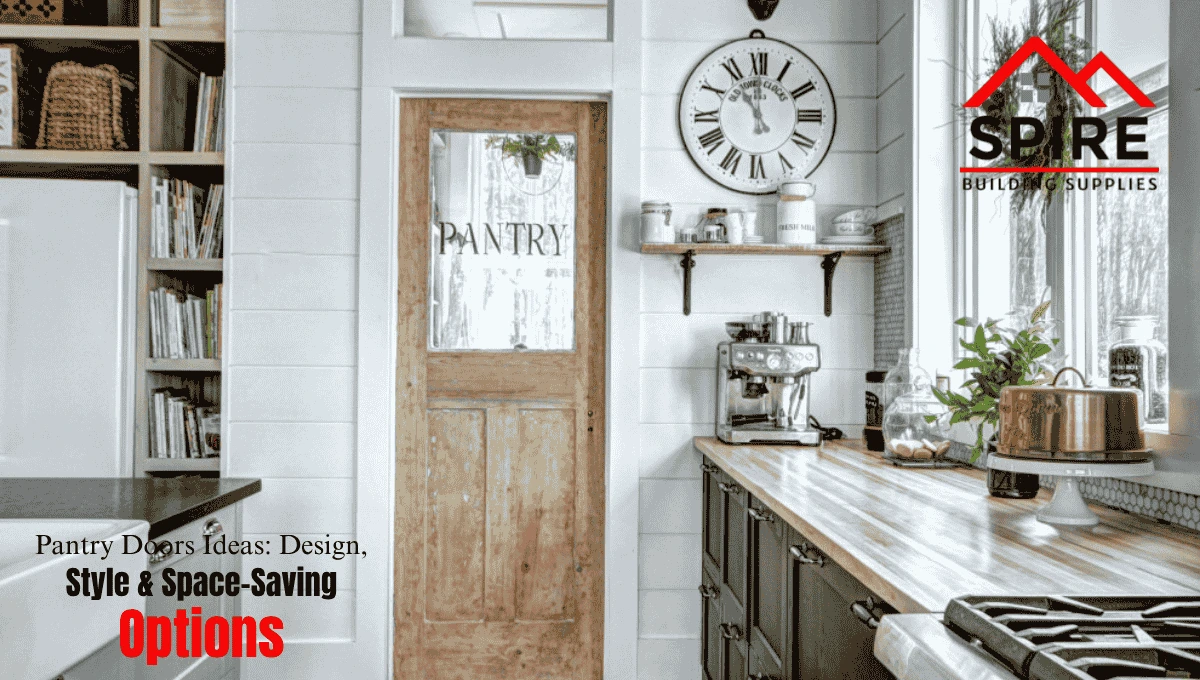
Pantry Doors Ideas: Design, Style & Space-Saving Options

Choosing the right pantry door often gets overlooked during kitchen planning but it can make a surprising difference in both function and style. The best pantry doors ideas don’t just look good; they improve access, save space, and complement your kitchen layout. A poorly chosen door, on the other hand, can block movement, clash with your design, or simply feel inconvenient over time.

This guide breaks down practical, real-world pantry door options, helping homeowners and builders understand what works, what doesn’t, and how to choose the right solution for different kitchen setups.

What You Need to Know About Pantry Doors

A pantry door is more than just an entry point—it affects:

  • Kitchen flow (how easily you move around)
  • Storage accessibility
  • Visual appeal of the space
  • Light and openness

Key Factors That Matter

Before exploring styles, it’s important to understand:

  • Available space (tight kitchens vs open layouts)
  • Pantry size (walk-in vs cabinet-style)
  • Usage frequency (daily vs occasional)
  • Design consistency (matching cabinets, flooring, and overall theme)

Explore options here:
Pantry doors

Popular Pantry Door Designs

Let’s look at pantry door designs that actually work in real homes—not just in catalogs.

1. Sliding Pantry Door (Space-Saving Favorite)

A sliding pantry door is one of the most practical solutions for smaller kitchens.

Why it works:

  • No swing clearance needed
  • Ideal for tight layouts
  • Easy to operate

Where it fits best:

  • Apartments
  • Compact kitchens
  • Modern minimalist homes

Real insight: Sliding doors reduce obstruction but require wall space for the track.

2. Hinged Swing Doors (Traditional Choice)

These are standard kitchen pantry doors with inward or outward opening.

Pros:

  • Simple installation
  • Works with most layouts
  • Cost-effective

Cons:

  • Requires clearance space
  • Can block movement in tight areas

3. Glass Pantry Doors

Glass panels add a decorative element while keeping the space visually open.

Benefits:

  • Makes the kitchen feel larger
  • Adds natural light
  • Stylish for modern interiors

Consideration:

  • Requires organized pantry (everything is visible)

4. Frosted Glass Doors

A practical compromise between style and privacy.

  • Light passes through
  • Hides clutter
  • Works well in contemporary kitchens

5. Barn-Style Pantry Doors

A trending option, especially in farmhouse or rustic kitchens.

  • Mounted on a sliding track
  • Adds character
  • Space-saving like sliding doors

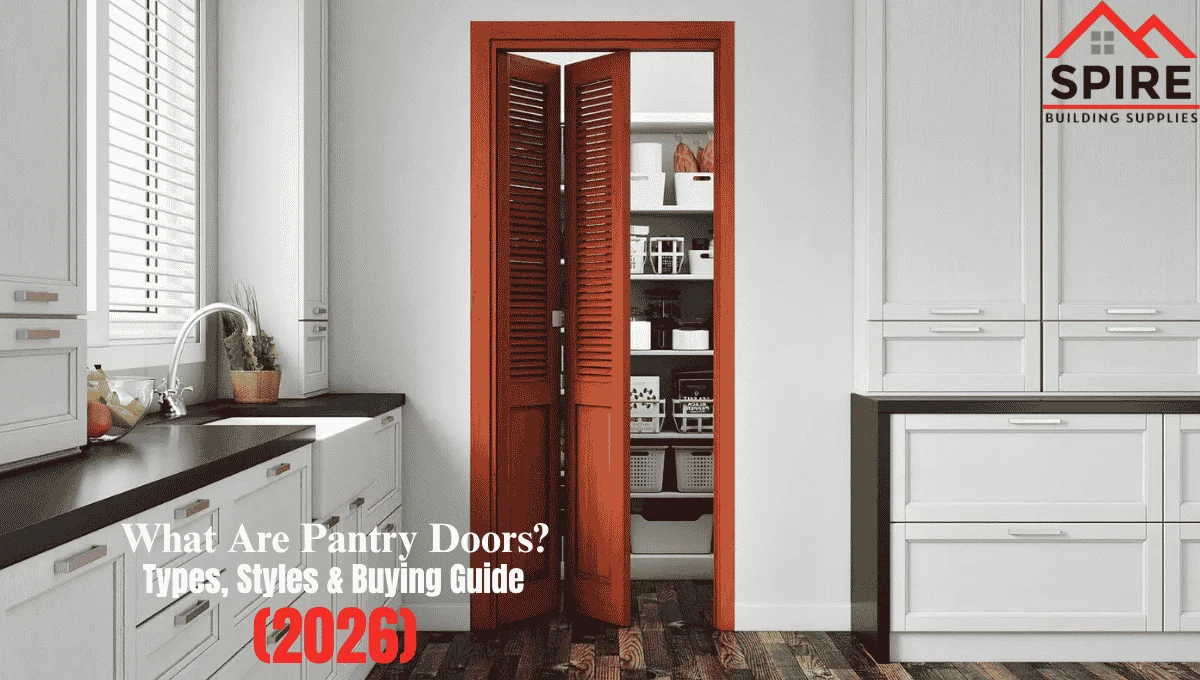
6. Pocket Doors

These doors slide into the wall, completely disappearing when open.

Advantages:

  • Maximum space efficiency
  • Clean, seamless look

Limitation:

  • Requires wall cavity installation (best during construction)

7. Double Pantry Doors

Perfect for larger pantry openings.

  • Easier access
  • Balanced appearance
  • Ideal for walk-in pantries

Benefits of Choosing the Right Pantry Door

  1. Better Space Utilization

The right door can free up valuable kitchen space.

  1. Improved Workflow

Easy access to pantry items saves time during cooking and organizing.

  1. Enhanced Aesthetics

A well-chosen door ties the entire kitchen design together.

  1. Increased Property Appeal

Thoughtful design choices can improve resale value.

Limitations to Consider

No option is perfect. Each pantry door design comes with trade-offs:

  • Sliding doors need wall space
  • Hinged doors need clearance
  • Glass doors require maintenance
  • Pocket doors require structural planning

Understanding these limitations helps avoid costly mistakes.

How to Choose the Right Pantry Door

When comparing different kitchen pantry doors, focus on what actually matters in daily use.

  1. Measure Your Space Carefully
  • Check door swing clearance
  • Consider nearby cabinets and appliances
  1. Match Your Kitchen Style
  • Modern → glass or sliding doors
  • Traditional → paneled hinged doors
  • Rustic → barn-style doors
  1. Consider Door Height Options

Standard heights matter for both function and aesthetics:

Taller doors create a more open, premium look.

  1. Think About Daily Usage
  • Frequent access → easy-open designs
  • Less frequent use → style-focused options
  1. Installation Complexity

Some doors (like pocket or barn doors) require more planning compared to standard hinged doors.

Common Mistakes to Avoid

  1. Ignoring Space Constraints

Choosing a swinging door in a tight kitchen can disrupt movement.

  1. Prioritizing Style Over Function

A stylish door that’s hard to use becomes frustrating quickly.

  1. Overlooking Storage Visibility

Glass doors look great—but only if your pantry stays organized.

  1. Not Planning Installation Early

Some door types need structural preparation.

  1. Choosing the Wrong Size

Incorrect height or width can affect both usability and appearance.

Expert Tips That Make a Difference

Based on real-world projects:

  • Choose sliding or pocket doors for small kitchens
  • Use frosted glass if you want light without clutter visibility
  • Match door finish with cabinets for a cohesive look
  • Test door movement before finalizing (especially in tight spaces)
  • Consider long-term use, not just initial appearance

Real-World Examples

  1. Small Kitchen Upgrade

A homeowner replaced a swinging door with a sliding pantry door—freeing up space and improving movement around the kitchen island.

  1. New Construction Project

A builder installed 8-foot pantry doors in an open kitchen, creating a more spacious and premium feel.

  1. Modern Renovation

Frosted glass doors were used to add light while hiding pantry clutter—balancing function and aesthetics.

  1. Full Kitchen Remodel

A barn-style door added character to a farmhouse kitchen while saving space.

Pantry Doors vs Other Door Installations

If you’re planning multiple door upgrades, it’s helpful to understand installation basics.

Learn more here:
patio door installation

While pantry doors are simpler, proper alignment and fitting still matter for long-term performance.

What Homeowners Say

Switching to a sliding pantry door made our small kitchen feel much bigger.

We chose frosted glass, and it’s the perfect balance between style and practicality.

Upgrading to taller pantry doors changed the whole look of our kitchen.

FAQs

  1. What is the best type of pantry door for small kitchens?

Sliding or pocket doors work best because they don’t require swing space.

  1. Are glass pantry doors practical?

Yes, but they require a well-organized pantry since contents are visible.

  1. What size pantry door should I choose?

Standard sizes are 6’8″ and 8’0″, depending on ceiling height and design preference.

  1. Do pantry doors affect kitchen design?

Absolutely. They play a big role in both aesthetics and functionality.

  1. Can I install a pantry door myself?

Basic hinged doors are DIY-friendly, but sliding or pocket doors may require professional installation.

Final Thoughts

The best pantry doors ideas come down to balancing space, style, and everyday usability. A good choice improves how your kitchen looks and works, while a poor one can create daily inconvenience.

Instead of focusing only on design trends, think about how you actually use your kitchen. The right pantry door should feel natural, easy to use, and visually consistent with your space.

About the Author

Editorial Team – Spire Building Supplies
The team at Spire Building Supplies brings practical, hands-on experience in residential construction and home improvement. Their insights are based on real-world applications, helping homeowners and builders make smart, functional design decisions that stand the test of time.

Fiber Classic Doors

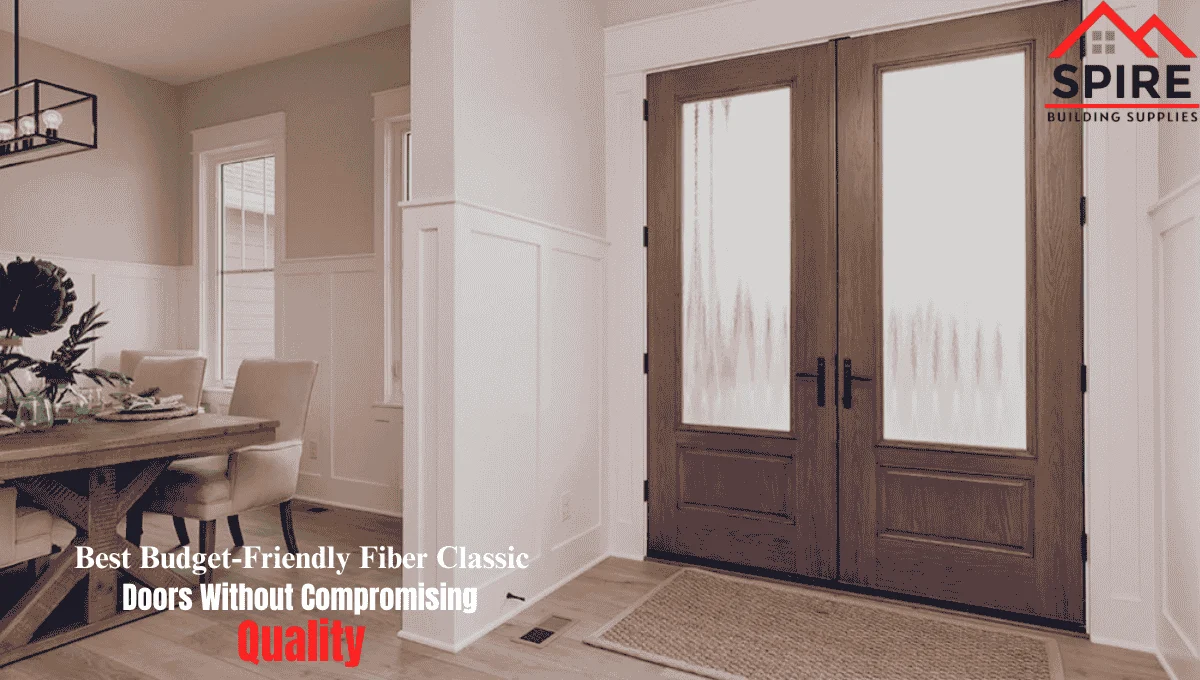
Best Budget-Friendly Fiber Classic Doors Without Compromising Quality

When homeowners start searching for Fiber Classic Doors, one concern shows up almost every time: “Can I get durability, style, and performance without overspending?” The short answer is yes—but only if you know what to look for.

At Spire Building Supplies, we’ve worked with contractors, builders, and homeowners across the USA—especially in Texas—who want long-lasting entry doors that don’t inflate their renovation budget. This guide is built from real-world experience, not just theory, so you can confidently choose a door that balances price and performance.

Why Fiber Classic Doors Are a Smart Budget Choice

Fiber Classic (fiberglass) doors have quietly become one of the most practical investments in home building & renovation supplies. Unlike traditional wood, they don’t warp in heat, crack in cold weather, or demand constant maintenance.

Key Advantages You Actually Notice:

  • Durability in Texas weather (heat, humidity, storms)
  • Low maintenance compared to wood doors
  • Energy efficiency that helps reduce utility bills
  • Real wood-like texture without the cost
  • Long lifespan (15–25+ years with proper care)

For homeowners working within a budget, this combination is hard to beat.

What Makes a Fiber Classic Door “Budget-Friendly” (Without Being Cheap)

Not all affordable doors are equal. A low price can sometimes mean compromised quality—but not always.

Here’s how to tell the difference:

1. Material Core Quality

A good Fiber Classic door uses a high-density polyurethane foam core, which improves insulation and structural strength.

2. Fiberglass Skin Thickness

Thicker fiberglass panels resist dents and scratches better—especially important for busy households.

3. Frame Construction

Look for composite or reinforced frames instead of basic wood frames that may warp over time.

4. Finish & Texture

Premium budget doors still offer realistic wood grain textures—something you’ll notice every day.

Popular Budget-Friendly Fiber Classic Door Styles

Choosing the right style is just as important as choosing the right material. Let’s break down some of the most in-demand options.

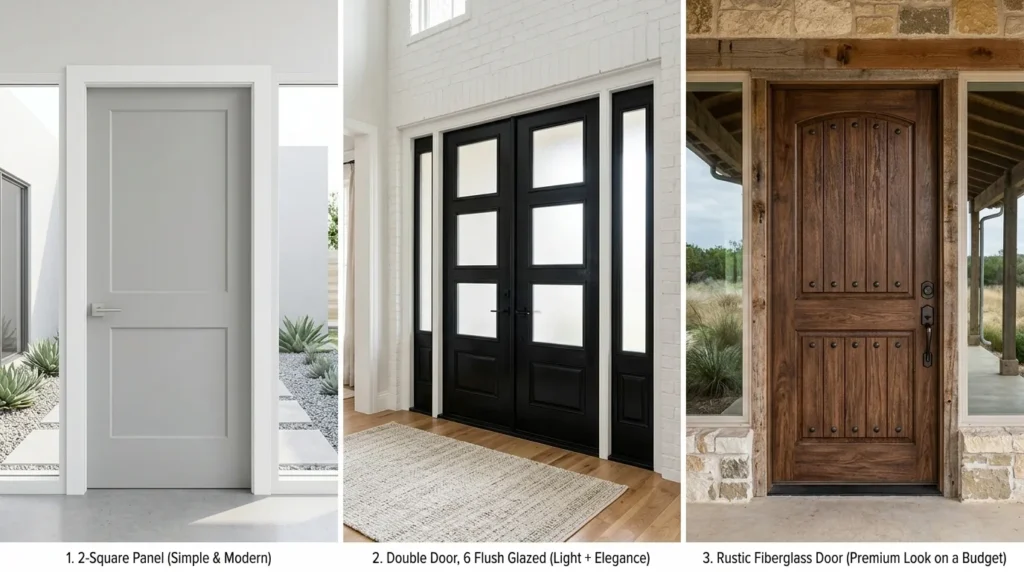
1. 2-Square Panel Fiber Door (Simple & Modern)

A 2-square-panel Fiber door is ideal if you want a clean, minimal look without extra cost.

Best for:

  • Contemporary homes
  • Rental properties
  • Interior-to-exterior transitions

Why it works:

  • Fewer design elements = lower cost
  • Easy to paint or customize
  • Timeless appearance

2. Double Door with 6 Flush Glazed (Light + Elegance)

A double door With 6 flush-glazed panels, it brings in natural light while maintaining privacy.

Best for:

  • Main entrances
  • Larger homes in Texas suburbs
  • Homes needing brighter entryways

Benefits:

  • Enhances curb appeal
  • Makes spaces feel larger
  • Adds resale value

3. Rustic Fiberglass Door (Premium Look on a Budget)

A rustic fiberglass door gives you that high-end wooden look without the maintenance headaches.

Best for:

  • Farmhouse-style homes
  • Ranch-style properties in Texas
  • Homes with earthy or natural aesthetics

Why homeowners love it:

  • Authentic wood-grain finish
  • Weather resistance
  • No termite issues

Popular Budget-Friendly Fiber Classic Door Styles

How to Choose the Right Budget Fiber Classic Door

Choosing the right door isn’t just about price—it’s about value over time.

Step-by-Step Decision Guide:

✔ Step 1: Define Your Entry Needs

  • Main entry or secondary door?
  • High traffic or occasional use?

✔ Step 2: Consider Climate (Important for Texas)

Texas weather can be extreme. Choose doors with:

  • UV-resistant finishes
  • Insulated cores
  • Weather-sealed edges

✔ Step 3: Focus on Energy Efficiency

Look for:

  • ENERGY STAR-rated doors
  • Tight sealing systems
  • Insulated glass (if applicable)

✔ Step 4: Pick the Right Style

Match your home’s architecture:

  • Modern → 2 panel styles
  • Traditional → panel + glass
  • Rustic → wood-grain fiberglass

What Homeowners Often Get Wrong

From years of industry experience, here are common mistakes:

Choosing the cheapest option blindly
Leads to early replacement costs

Ignoring insulation quality
Results in higher energy bills

Overlooking installation
Even the best door fails if poorly installed

Not considering sunlight exposure
Can cause fading or expansion issues

Fiber Classic Doors vs Other Materials (Quick Comparison)

Feature Fiber Classic Doors Wood Doors Steel Doors
Price Affordable Expensive Moderate
Maintenance Low High Low
Durability High Medium High
Energy Efficiency Excellent Moderate Good
Weather Resistance Excellent Poor Good

For budget-conscious homeowners in Texas, fiberglass consistently offers the best balance.

Energy Efficiency: Save More Than Just Upfront Cost

One overlooked benefit of Fiber Classic Doors is long-term savings.

How They Help:

  • Reduce heat transfer in summer
  • Keep interiors warm in winter
  • Lower HVAC usage

Over time, this can offset your initial purchase cost.

Why Homeowners Trust Spire Building Supplies

When choosing doors, trust matters just as much as price.

What Sets Spire Apart:

You’re not just buying a door—you’re investing in long-term performance.

Installation Tips to Maximize Value

Even the best Fiber Classic Doors won’t perform well if installed incorrectly.

Pro Tips:

  • Always ensure proper sealing
  • Use professional installers for exterior doors
  • Check frame alignment
  • Install weather stripping properly

Maintenance Guide (Keep It Looking New)

Good news: maintenance is minimal.

Simple Routine:

  • Clean with mild soap every few months
  • Inspect seals annually
  • Repaint or refinish every few years (if needed)

Customer Testimonials

Real Feedback from Spire Building Supplies Customers

James R. (Houston, TX)
I wanted something affordable but strong for my front entry. The Fiber Classic door I got has held up perfectly through heat and storms.

Maria L. (Dallas, TX)
The double door with glass panels completely changed how my entry looks. It feels brighter and more premium.

Daniel K. (Austin, TX)
I was considering wood, but the maintenance scared me. Fiberglass gave me the same look without the stress.

People Also Ask (PAA)

Are Fiber Classic Doors better than wood doors?
Yes. Fiber Classic doors resist warping, require less maintenance, and last longer—especially in extreme climates like Texas.

How long do Fiberglass Classic Doors last?
With proper installation and care, they can last 20–25 years or more.

Are budget fiberglass doors durable?
Yes, if they use high-quality cores and fiberglass skins. Budget doesn’t mean low quality—it depends on construction.

Can Fiber Classic Doors be painted or stained?
Absolutely. Many models are designed to mimic wood and can be stained or painted easily.

Do Fiber Classic Doors increase home value?
Yes. They improve curb appeal, energy efficiency, and buyer perception.

Final Thoughts: Affordable Without Compromise

Choosing Fiber Classic Doors doesn’t mean sacrificing quality. In fact, for many homeowners in Texas, it’s the smartest way to balance cost, durability, and style.

Whether you go with a 2-square-panel Fiber door, a double door With 6 flush glazed or rustic fiberglass door, the key is focusing on construction quality and long-term value—not just the price tag.

If you make the right choice now, you won’t have to think about replacing your door for decades.

Author Bio

Written By Building Materials Expert
With hands-on experience in the USA construction market, especially Texas, the author specializes in creating practical, experience-driven content for homeowners and contractors. Their work focuses on real-world performance, material durability, and helping readers make confident buying decisions in the home building & renovation supplies industry.

shaker style interior doors

Shaker Style Interior Doors: A Complete Buying Guide

Few interior design choices hold up across as many home styles as shaker style interior doors. Whether you’re finishing a craftsman bungalow, a modern farmhouse, or a clean contemporary build, shaker doors fit without forcing the aesthetic. But that versatility also means they’re easy to get wrong the wrong profile, the wrong material, or the wrong finish can make a thoughtfully designed space feel disconnected. This guide will help you understand exactly what makes a shaker door work, where the real differences between options lie, and how to make a decision you won’t second-guess six months after installation.

What Makes a Door “Shaker Style”?

The shaker style comes from 18th-century Shaker furniture-making a tradition built on functional simplicity, clean lines, and quality craftsmanship. Applied to doors, the defining feature is a flat recessed center panel framed by clean, square-edged rails and stiles. No decorative carving.

What you get is a door with visual structure the frame-and-panel look without the fussiness of traditional raised panel designs. That restraint is exactly why shaker doors interior have remained popular across so many decades and so many design movements.

The number of panels matters too. A single large recessed panel reads more modern and open. Two stacked panels introduce a bit more visual rhythm and suit transitional or traditional spaces better. Understanding this difference before you shop saves a lot of time.

Shaker Doors vs. Other Interior Door Styles

Before committing, it’s worth knowing how shaker doors compare to what else is available.

Flat panel (slab) doors — Completely flush with no panel detail. More minimalist than shaker. Work well in ultra-modern or Scandinavian-influenced interiors but can feel stark in warmer, more layered spaces.

Raised panel doors — Traditional carved profiles with decorative detailing. The opposite of shaker’s restraint. Common in colonial and Victorian-era homes, less suited to contemporary builds.

French doors — Glass-paned doors. Different functional category, though shaker-style frames around glass inserts are available.

Shaker doors sit in the middle — they have enough detail to feel intentional without the formality of traditional raised panel designs. That’s the reason they’ve become the dominant interior door style in new construction and renovation alike.

Panel Count: One Panel vs. Two Panel

This is one of the most important and most overlooked decisions in the buying process.

Single Panel Shaker Doors

A 1 Panel Shaker 6’8″ Height Interior Door features one large recessed panel that spans most of the door face. The result is clean, open, and slightly more contemporary in feel. It works well in:

  • Modern and transitional homes
  • Spaces where you want a lighter, more open visual
  • Rooms with minimal trim profiles

1 Panel Shaker 8'0" Height

Two Panel Shaker Doors

A two panel shaker door divides the face into two stacked panels, creating slightly more visual weight and structure. This suits:

  • Craftsman and farmhouse interiors
  • Spaces with more detailed trim and molding
  • Transitional homes where some traditional influence is present

The difference seems subtle in photos, but in person across a hallway of six or eight doors — the panel count shapes the entire rhythm of the space.

Two Panel Shaker Doors

Material Options and What They Mean in Practice

Hollow Core vs. Solid Core

Most shaker interior doors are available in both configurations. Hollow core doors are lighter and more affordable — the right choice for closets, laundry rooms, and secondary bedrooms where acoustic performance isn’t a priority. Solid core doors are heavier, dampen sound more effectively, and feel more substantial. They’re worth the cost in primary bedrooms, home offices, and bathrooms.

MDF vs. Wood Veneer Facing

MDF-faced shaker doors are dimensionally stable — they resist warping and paint exceptionally well. For painted finishes, MDF is often the better choice. Wood veneer doors suit stained or natural finishes and bring genuine warmth to the grain.

Primed vs. Unfinished

Many shaker doors come factory-primed and ready for paint. This saves prep time and gives you a consistent base. Unfinished doors offer more flexibility for stains and custom finishes but require more on-site work.

Shaker Doors and Cabinets: Keeping the Interior Cohesive

One of the most effective design moves in modern interiors is carrying the shaker profile from doors through to shaker cabinet doors creating visual continuity between the cabinetry and the door frames throughout a space.

In a kitchen, for example, if your cabinet doors use a flat-recessed panel shaker profile, matching that same profile on the adjacent pantry door or utility door reads as intentional design rather than coincidence. It’s a detail that interior designers use consistently and one that’s easy to apply yourself if you know what to look for.

The key is matching the rail and stile width. Standard shaker cabinet doors often use slightly narrower frames than full interior doors, but the proportions should be in harmony. When in doubt, bring a sample door panel to the cabinet showroom or bring a cabinet door sample when you’re selecting your interior shaker door.

Pre-hung vs. Slab: Which Do You Need?

This is a basic but important distinction that catches buyers off guard.

Slab doors are just the door panel — no frame, no hinges, no hardware prepped. You need an existing door frame to hang them into. If you’re replacing existing doors that already have frames in good condition, slab is fine.

Pre-hung doors come as a complete unit: door, frame, hinges, and sometimes the door stop. If you’re framing a new opening, finishing a room addition, or the existing frame is damaged, pre-hung is the right choice.

Ordering the wrong type means extra labor cost or a trip back to the supplier. Measure your existing frame (or new rough opening) carefully before deciding.

For standard 6’8″ height openings, the 1 Panel Shaker 6’8″ Height 80 Inch Interior Door is a well-suited option that fits the most common residential rough openings without custom sizing.

What to Think About Before You Buy

Door Swing Direction

Every interior door is either left-hand or right-hand swing, depending on which side the hinges are on and the direction the door opens. Stand in the doorway facing the room — if the hinges are on your left, it’s a left-hand door. Get this wrong on a pre-hung unit and you’ve got a return on your hands.

Width and Height

Standard interior doors are 80″ tall and range from 24″ to 36″ wide. Bathrooms typically use 24″–28″. Bedrooms use 28″–32″. Main passage doors and primary bedrooms benefit from 32″–36″. If you’re building to code with accessibility in mind, 32″ clear opening is the minimum for wheelchair access.

Thickness

Most residential interior doors are 1-3/8″ thick. Some solid core and exterior-grade doors run 1-3/4″. Make sure your hardware (locksets, hinges, door stops) is sized to match.

Finish Coordination

Shaker doors take paint beautifully. The most popular choices are crisp white, warm off-white, and charcoal/black for an accent door. If you’re staining, test on a sample piece first — MDF doesn’t take stain the way wood veneer does.

Coordinating your floor and door finish is a good habit. If you’re working on flooring at the same time, the best vinyl plank flooring guide covers how to think about undertones and finish coordination between floors and interior elements.

Common Mistakes to Avoid

  1. Mixing Panel Styles Across a Floor

Using a single-panel shaker in the hallway, a two-panel in the bedroom, and a flat slab on the bathroom creates visual noise. Pick one profile and use it consistently throughout a level. Small variations in profile are much more noticeable in person than in product photos.

  1. Ordering Before Measuring the Rough Opening

Don’t trust your memory or the previous door’s dimensions — especially in older homes where openings were sometimes built out of square. Measure the rough opening height and width, not the old door itself.

  1. Skipping the Primer on MDF Doors

MDF absorbs paint differently than wood. If you apply a finish coat directly to bare or lightly sanded MDF, you’ll get blotchy, uneven results. Two coats of quality primer before any finish paint is not optional — it’s the only way to get a clean, professional result.

  1. Ignoring the Frame and Casing

The door is only part of what you see. Thin, poorly installed casing makes even a great door look cheap. Make sure your casing profile complements the shaker detail — a simple flat or slightly stepped profile works best. Avoid overly ornate casing around a shaker door.

  1. Choosing Hardware That Conflicts With the Style

Ornate Victorian lever sets on a shaker door look out of place. Shaker-style doors pair best with clean, simple hardware — square or rounded lever sets, minimalist backplates, and matte finishes (black, satin nickel, or brushed brass). The hardware is the last thing a person touches on their way in and out of a room. Don’t let it undercut the door selection.

  1. Buying Pre-Hung When You Only Needed a Slab

Pre-hung units are more expensive and harder to transport. If your existing frame is square and in good shape, a slab door is the smarter buy. Check the frame with a level before you order.

Expert Tips From the Field

Paint the door before hanging it. Laying the door flat and painting it before installation gives you access to all edges and eliminates the masking and cleanup required when painting in place. It also lets you get the edges — which are often missed — properly coated.

Use three hinges on any door taller than 80″. Standard 6’8″ doors work on two hinges. Anything taller benefits from a third hinge in the middle to prevent racking and long-term sagging.

Don’t skip the undercut. Interior doors should be undercut 3/4″ to 1″ from the finished floor to allow air return through the HVAC system. This is code in many jurisdictions and practically important in any conditioned space. Ask your supplier or carpenter to confirm the right clearance for your floor type.

Order 10% extra if you’re cutting to size. Slab doors can typically be trimmed up to 3/4″ per side. If you’re fitting a non-standard opening, having a spare door gives you margin for error.

Sample the finish first. Order a primed door sample and paint or stain it exactly as you plan to finish the full set. Live with it in the space for 48 hours under different lighting conditions before committing.

Real-World Use Cases

Full Home Renovation, Transitional Style: A homeowner replacing 1990s raised panel doors throughout a two-storey home chose a two panel shaker profile in primed MDF, painted Sherwin-Williams Alabaster. The updated doors immediately modernized the interior without requiring any trim replacement. Total cost was significantly less than a custom millwork solution, and the result was cohesive across all 11 doors.

New Build, Modern Farmhouse: A builder specifying doors for a custom home used single-panel shaker doors throughout the main floor and secondary bedrooms, with the same profile in a taller format for the primary suite. The consistent profile across 14 openings gave the interior a deliberate, designed feeling that clients frequently comment on.

Rental Property Upgrade: An investor refreshing a duplex replaced original hollow-core flat slabs with primed single-panel shaker doors in standard sizing. The change required no framing work, cost less than expected, and noticeably elevated the perceived quality of the units during showings.

People Also Ask

What makes a door “shaker style”? A shaker door has a flat recessed center panel surrounded by clean, square-edged rails and stiles. No ornate molding or curves — just structured simplicity. That’s what defines the style.

Are shaker interior doors more expensive than flat slab doors? Generally, yes — slightly. The panel construction adds manufacturing complexity. But the price gap between a basic shaker door and a flat slab is modest, and the visual return is significant in most interior contexts.

Can shaker doors be used in a modern home? Yes. Single-panel shaker doors work very well in modern and minimalist interiors. The key is choosing the right panel count (one panel reads cleaner and more contemporary) and keeping hardware minimal.

What’s the best finish for shaker interior doors? Paint is the most popular choice, and MDF-faced shaker doors take paint exceptionally well with proper priming. Crisp white and warm off-white tones are the most versatile. For stained finishes, choose a wood veneer door instead of MDF.

Should interior doors match throughout a home? Generally, yes — especially on the same floor. Consistent door style, finish, and hardware throughout a level creates a cohesive interior. It’s fine to vary between floors if the design intent changes, but mixing profiles within the same visual field creates noise.

What Customers Have Said

We replaced every door in our main floor with single-panel shakers — primed, painted white. The transformation was bigger than I expected for what felt like a simple change. Everything just looks more intentional now. — M. Lindqvist, Homeowner, BC

As a contractor, I’ve been spec’ing shaker doors on most of my builds for the past four years. Clients love them, they install cleanly, and the style doesn’t date quickly. That’s what matters to me. — T. Okonkwo, Residential Contractor, Alberta

I was worried about matching my kitchen cabinets with the door profile — but once I found a shaker door with the same rail width as my uppers, it looked like it was always meant to be that way. — R. Sato, Homeowner, Ontario

Final Thoughts

Shaker style interior doors earn their popularity honestly — they’re versatile, timeless, and easy to integrate into almost any interior. But getting them right means thinking through panel count, material, swing direction, and finish before you order. The decisions aren’t complicated, but skipping them is where most buyers run into problems.

Take the time to measure carefully, sample your finish, and pick a profile you’ll use consistently. Done right, shaker doors are one of the simplest ways to give an interior a cohesive, considered look — and one of the most cost-effective upgrades available in a renovation or new build.

About The Author

Written by the Spire Building Supplies Editorial Team — building materials specialists and residential design advisors with hands-on experience across residential construction, renovation, and interior finishing. Our content is written to help you make better decisions, not to steer you toward a particular product.

wrought iron single entry doors

Wrought Iron Single Entry Doors: Complete Buyer’s Guide

Choosing the right wrought iron single entry doors is one of those decisions that seems straightforward until you realize how many variables affect performance, appearance, and long-term value. From material quality to installation details, the wrong choice can lead to drafts, rust issues, or a door that simply doesn’t fit your home’s style.

This guide breaks down what actually matters. Whether you’re a homeowner upgrading your entrance or a builder specifying doors for a project, you’ll learn how to compare options, avoid common mistakes, and choose a door that performs as well as it looks.

What Are Wrought Iron Single Entry Doors?

A wrought iron single entry door is a single-panel exterior door made primarily from steel or iron, often combined with decorative glass and metalwork. Unlike double doors, it fits standard entryways while still offering a premium, architectural look.

Key Characteristics

  • Heavy-duty metal construction
  • Decorative or minimalist iron designs
  • Glass panels (clear, frosted, or insulated)
  • Weather-sealed frames for exterior use

If you’ve searched for iron entry doors near me or wrought iron entry doors near me, you’ve likely seen both ornate and modern variations. The key is understanding which features actually impact performance—not just appearance.

Why Homeowners and Builders Choose Iron Entry Doors

  1. Strong First Impression

A well-designed front entry wrought iron door adds immediate visual weight to a home. Even a single door can create a focal point when paired with the right design and finish.

  1. Security and Strength

Compared to wood or fiberglass, iron doors provide:

  • Higher resistance to forced entry
  • Reinforced frames and locking systems
  • Long-term structural stability
  1. Longevity

With proper coating and care, these doors can last decades without warping, cracking, or rotting.

  1. Design Flexibility

From simple geometric frames to intricate scrollwork, iron doors adapt to:

  • Modern homes
  • Mediterranean styles
  • Traditional architecture

Benefits vs Limitations: What to Expect

Benefits

  • Exceptional durability in harsh weather
  • Low risk of warping or pest damage
  • Customizable appearance
  • Strong resale value

Limitations

  • Higher upfront cost than standard wood doors
  • Heavy weight requires proper installation
  • Potential heat transfer if not insulated properly
  • Finish maintenance in humid or coastal climates

If budget or insulation is a concern, some homeowners compare alternatives like Fiberglass double entry doors, which offer different trade-offs in cost and durability.

Key Buying Considerations (What Actually Matters)

1. Material and Build Quality

Not all iron doors are built the same.

Look for:

  • 12–14 gauge steel thickness
  • Fully welded frames (not spot-welded)
  • Powder-coated or baked-on finishes

Lower-quality doors often cut corners here, which leads to early wear.

2. Glass Options

Glass impacts both privacy and energy efficiency.

Common choices:

  • Clear glass – maximum visibility and light
  • Frosted glass – privacy without losing brightness
  • Double-pane insulated glass – better thermal performance

A practical example is the Single Exterior Wrought Iron Door, which balances design and functionality.

3. Style and Design Fit

Your door should match your home’s architecture—not fight it.

  • Modern → clean lines, minimal ornamentation
  • Traditional → curved ironwork, decorative elements
  • Transitional → subtle patterns with neutral finishes

For a more decorative option, the Langston Wrought Iron Exterior Prehung Single Door shows how design can become a statement feature.

4. Size and Fit

Even standard doors require precise measurements.

  • Measure rough opening, not just door slab
  • Account for frame thickness
  • Check swing direction and clearance

Improper sizing is one of the most common (and expensive) mistakes.

5. Insulation and Energy Efficiency

Iron naturally conducts heat, so insulation matters.

Look for:

  • Foam-insulated cores
  • Thermal breaks
  • Quality weatherstripping

Without these, you may notice drafts or temperature fluctuations.

6. Hardware and Security Features

The door is only as strong as its hardware.

  • Multi-point locking systems
  • Heavy-duty hinges
  • Corrosion-resistant handles

Avoid pairing a premium door with low-grade hardware.

7. Installation Quality

Even the best door won’t perform well if installed poorly.

Professional installation ensures:

  • Proper sealing
  • Smooth operation
  • Structural alignment

This is especially important for heavier iron doors.

Common Mistakes to Avoid

Choosing Based Only on Appearance

A visually appealing door may lack insulation or durability.

Ignoring Climate Conditions

Coastal and humid environments require stronger finishes and rust protection.

Skipping Professional Installation

DIY installs often result in misalignment and air leaks.

Overlooking Glass Quality

Single-pane glass reduces both insulation and security.

Not Considering Long-Term Maintenance

Even durable materials need occasional upkeep.

Expert Tips from Real-World Experience

  • Inspect welds closely – clean welds indicate better craftsmanship
  • Ask about finish warranties – especially in humid climates
  • Choose timeless designs if resale value matters
  • Test door weight and swing before installation
  • Plan for proper framing support due to door weight

Many buyers searching for a front-entry wrought iron door for sale focus on price first—but long-term performance depends on build quality and installation.

Real-World Use Cases

  1. Entry Upgrade in a Suburban Home

A homeowner replaces a basic wood door with a wrought iron model. Result: improved security and a noticeable boost in curb appeal.

  1. Builder Spec for New Construction

A builder selects iron doors for a mid-range home to increase perceived value without major structural changes.

  1. Privacy-Focused Entryway

Using frosted glass allows natural light while maintaining privacy—ideal for homes near sidewalks or streets.

Comparing Wrought Iron to Other Door Materials

Feature Wrought Iron Wood Fiberglass
Durability Very High Medium High
Maintenance Low–Medium High Low
Security Excellent Moderate Good
Cost Higher Medium–High Medium
Style Options High High Moderate

For broader options, you can explore Iron Doors to see different styles and configurations.

Maintenance: What You Should Expect

Wrought iron doors are relatively low maintenance, but not maintenance-free.

Basic upkeep includes:

  • Cleaning with mild soap and water
  • Checking seals annually
  • Touching up scratches to prevent rust
  • Lubricating hinges and locks

In humid or coastal areas, you may need to inspect finishes more frequently.

FAQs:

  1. Are wrought iron single entry doors energy efficient?

Yes, if they include insulated cores and double-pane glass. Without these, they can transfer heat.

  1. How long do wrought iron doors last?

With proper care, they can last 30 years or more.

  1. Do wrought iron doors require a lot of maintenance?

Not much. Occasional cleaning and minor touch-ups are usually enough.

  1. Are iron entry doors secure?

Yes, they are among the most secure residential door options available.

  1. Can I customize a wrought iron door?

Yes. Most doors can be customized in size, design, finish, and glass type.

What Customers Are Saying

We wanted something durable but stylish—our iron door completely changed the look of our entryway.

The frosted glass option gave us privacy without sacrificing natural light.

Installation made a huge difference. Once properly fitted, the door feels solid and secure.

Final Thoughts

A wrought iron single entry door is more than a design upgrade—it’s a structural and functional investment. When chosen carefully, it offers long-term durability, strong security, and a noticeable improvement in curb appeal.

Focus on what truly matters: build quality, insulation, proper fit, and installation. Avoid shortcuts, and you’ll end up with a door that performs reliably for years—not just something that looks good on day one.

About the Author

Spire Building Supplies Editorial Team
The team at Spire Building Supplies works closely with contractors, builders, and homeowners to understand how materials perform beyond the showroom. With hands-on experience in door selection, installation challenges, and long-term durability, the team focuses on practical advice that helps customers make confident, informed decisions.

Back to Top

Search For Products

Product has been added to your cart