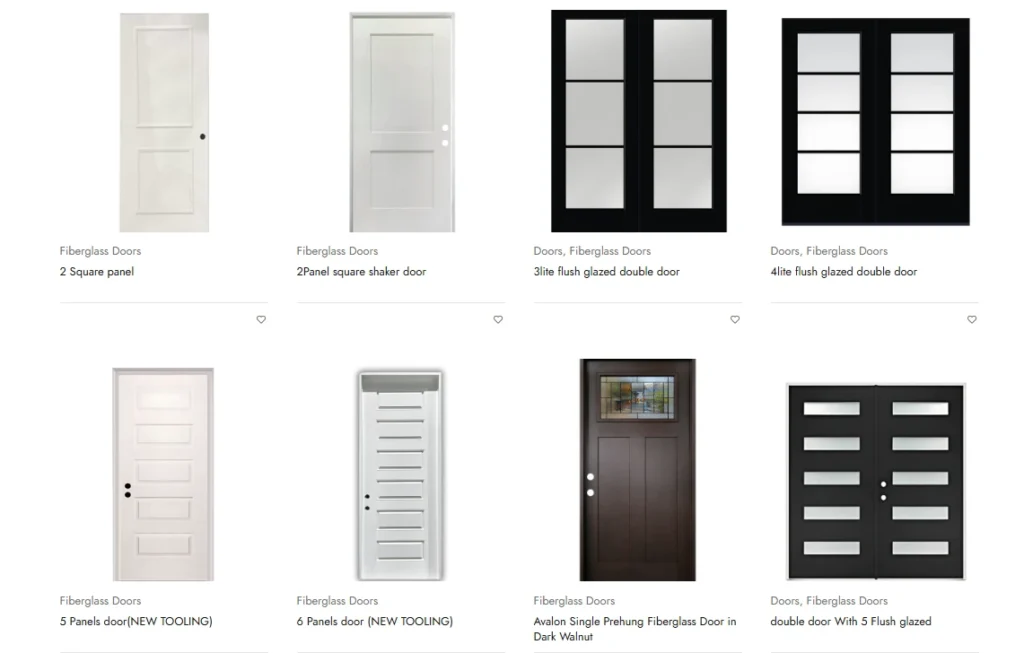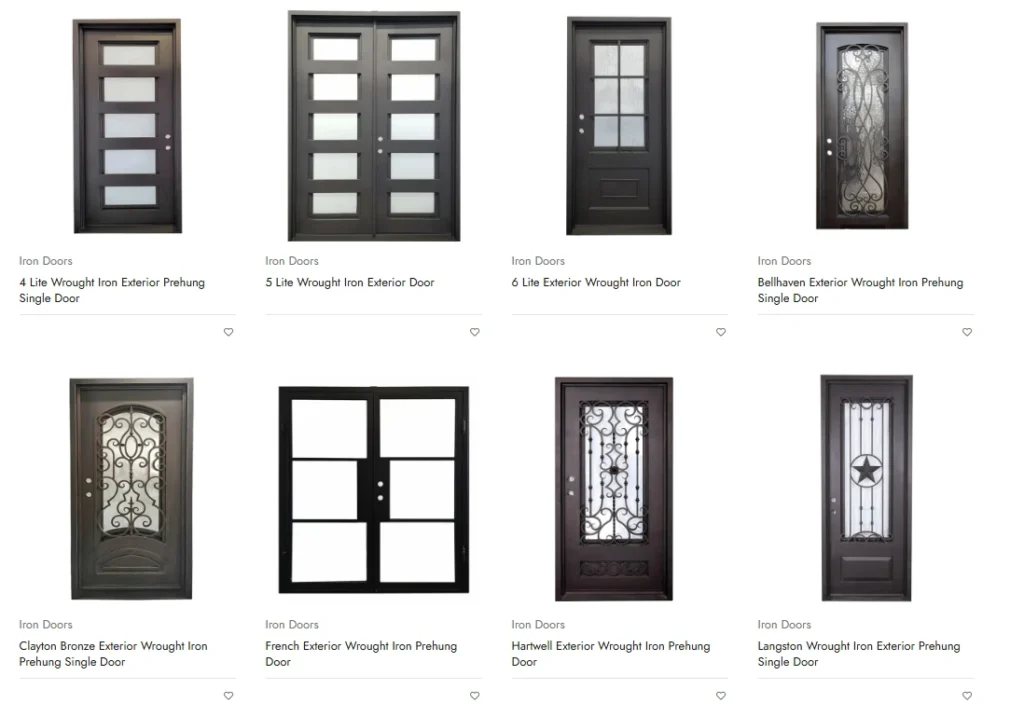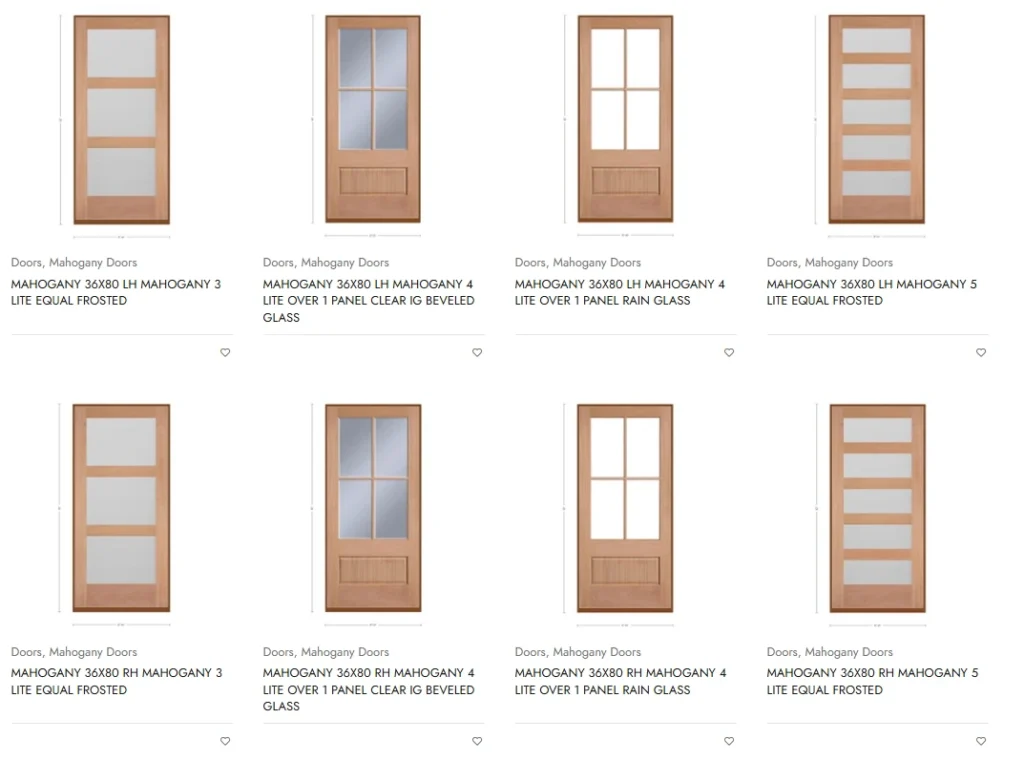
Exterior iron doors

Exterior Iron Doors for Modern and Classic Home Designs

There’s something about a well-chosen front door that changes everything. It’s the first thing guests notice, the last thing you see when you leave for work, and one of the most lasting impressions your home makes on the street. Exterior iron doors have held a prominent place in residential design for centuries and if you’re considering one, you’re in good company. But choosing the right iron door requires more than picking a style you like. The material, construction, finish, glass configuration, and how well it’s matched to your home’s architecture all matter. This guide covers what you actually need to know before making that decision.

What Makes Iron Doors Different From Other Entry Doors

Iron doors particularly wrought iron front doors are in a category of their own. They’re heavier, more durable, and visually more commanding than wood, fiberglass, or steel doors. But that weight and presence come with trade-offs that buyers often don’t fully consider until after installation.

Here’s what sets them apart:

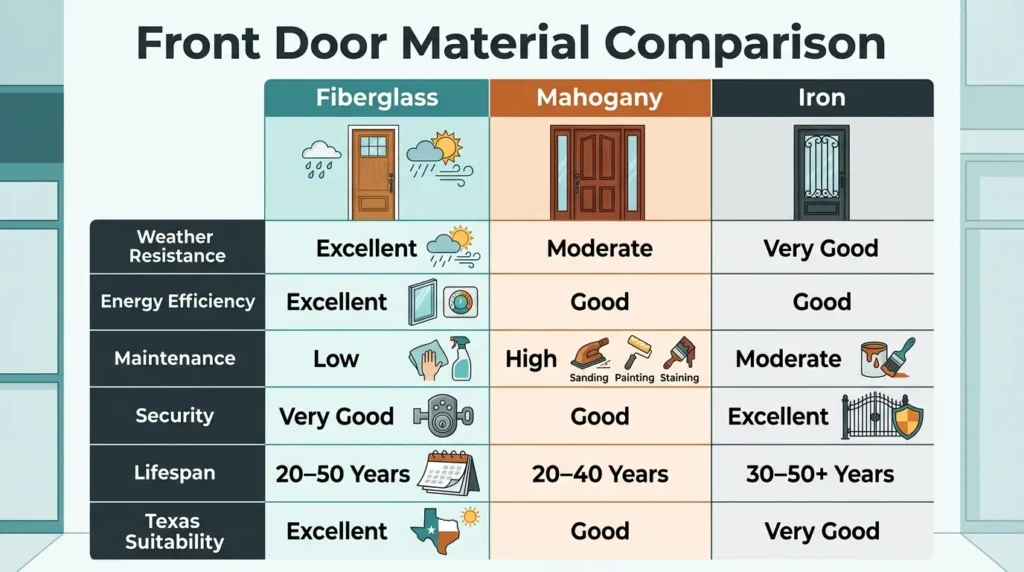
Material strength: Wrought iron is exceptionally resistant to warping, shrinking, and cracking problems that plague wood doors in climates with humidity swings or temperature extremes.

Design versatility: Iron can be forged, bent, and welded into elaborate scroll patterns, geometric grids, or clean minimalist frames. Few materials offer the same range of detail.

Longevity: A properly maintained iron entry door can outlast the house itself. That’s not a figure of speech some historic iron doors are hundreds of years old and still functional.

Glass integration: Most modern iron doors incorporate decorative or clear tempered glass panels, which allow light into the entryway without sacrificing security.

Weight: Iron doors are heavy often 200 to 400+ pounds depending on size and glass content. This means the frame, hinges, and substructure all need to be appropriately reinforced.

Styles That Work: Modern, Classic, and Everything In Between

One of the most common misconceptions is that iron doors are exclusively traditional or Mediterranean in style. That was true for a long time, but contemporary manufacturing has changed the picture significantly.

Classic and Mediterranean Designs

The original aesthetic for wrought iron front doors features ornate scrollwork, arch tops, and decorative glass — often with a warm bronze, oil-rubbed, or black patina finish. These pair beautifully with stucco exteriors, Spanish tile roofs, Tuscan-inspired masonry, and traditional Colonial or craftsman architecture.

Modern and Minimalist Designs

Clean-line iron doors have become increasingly popular in modern and transitional homes. Think flat bar grids, simple frame profiles, large glass panels, and matte black or satin finishes. These work especially well with contemporary homes featuring flat rooflines, large windows, and neutral palettes.

Transitional Designs

Transitional iron doors blend elements of both — perhaps a clean frame with subtle scrollwork accents, or a geometric pattern with a warmer finish. These tend to be the most flexible in terms of pairing with different home styles.

If you’re browsing options, take a look at the iron doors collection at Spire Building Supplies — it includes styles that span the design spectrum from traditional to contemporary.

Single vs. Double Iron Entry Doors: What to Choose

The size and configuration of your iron front door matters more than most buyers realize — both aesthetically and practically.

Single iron doors are the standard for most residential entrances. They’re more affordable, easier to install, and appropriate for standard-width doorways (typically 36 inches). A well-designed single iron door can still make a dramatic statement without overwhelming a modestly-sized facade. The Single Exterior Wrought Iron Door is a good example of how much presence a single door can carry.

Double iron doors are suited for grander entrances — wider openings, larger homes, or architectural situations where a pair of doors is proportionally appropriate. They create an undeniably dramatic effect but require more structural support and a wider rough opening.

A useful rule of thumb: if your entryway feels proportionally balanced with a single door, use a single door. Double doors on a narrow or small-scale facade can look overscaled and out of place.

Prehung vs. Slab: Understanding the Difference

If you’re shopping for exterior iron doors, you’ll quickly encounter these two terms.

Slab door: Just the door itself no frame, no hinges, no threshold. A slab iron door is installed into an existing frame. This is rarely the right choice for exterior applications unless you have a very specific reason and a very solid existing frame.

Prehung door: The door comes already mounted in a new frame, with hinges attached and the frame prepped for installation. This is the standard and recommended approach for exterior iron door replacement or new installation. The Winslow Wrought Iron Prehung Front Door is a good example of a prehung unit that’s built for clean, complete installation.

For almost all homeowners replacing an existing door, prehung is the right choice. The old frame comes out, the new prehung unit goes in, and you don’t have to worry about alignment issues that come from fitting a slab into an aged or imperfect existing frame.

Benefits of Exterior Iron Doors

Let’s look at why so many homeowners choose iron, and what the experience actually tends to look like in practice.

  • Curb appeal and resale value: Iron doors consistently rank among the highest-impact exterior upgrades for visual impression and perceived home value.
  • Security: The weight and construction of iron entry doors make forced entry significantly more difficult compared to hollow-core or standard wood doors.
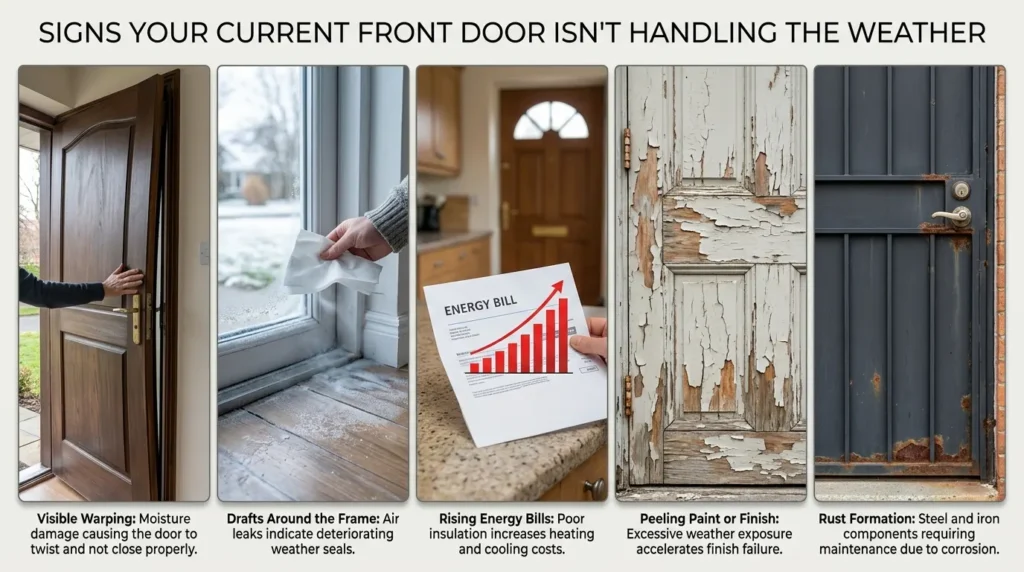
  • Low warping and weather resistance: Unlike wood, iron doesn’t absorb moisture and warp. In humid climates or climates with wide temperature swings, this is a real practical advantage.
  • Customization: Many manufacturers offer custom sizing, finish options, glass configurations, and hardware — giving homeowners precise control over the final look.
  • Timelessness: Iron doesn’t follow trends the way other materials do. A well-chosen iron door looks appropriate across decades.

Realistic Limitations to Know Before You Buy

Honest buying decisions require knowing the limitations, not just the highlights.

Cost: Quality iron doors are not inexpensive. Expect to pay significantly more than you would for a fiberglass or steel door — and then add installation, which is more labor-intensive due to weight.

Energy efficiency: Iron is a conductor, which means thermal efficiency can be lower than composite or fiberglass alternatives unless the door is designed with thermal breaks or well-insulated glass panels. Look for iron doors specifically engineered for energy performance if this is a priority.

Maintenance: Iron will rust if the finish is compromised and moisture gets in. This requires periodic inspection and touch-up of the finish — especially in coastal or high-humidity environments. Some doors use weatherproof powder coatings that significantly reduce this concern, but they’re not maintenance-free.

Weight and installation complexity: Iron doors require professional installation in most cases. The weight stresses hinges, frames, and thresholds differently than a standard door — and getting the alignment right matters for long-term performance.

Condensation: In cold climates, iron doors can experience condensation on the interior surface during cold snaps if not properly sealed. This is manageable with proper weatherstripping and threshold seals.

Common Mistakes People Make When Choosing Iron Doors

These are the mistakes that tend to show up most often — worth reading carefully before you commit.

Choosing style without measuring the opening: Iron doors are heavy and often custom-sized. Measuring your rough opening accurately before shopping saves significant time and money. Measure width and height at multiple points, since older doorways are rarely perfectly square.

Ignoring the glass-to-iron ratio: More glass means more light but less privacy and potentially lower security and energy efficiency. Think about what your entryway actually needs — not just what looks best in a photo.

Underestimating installation complexity: Some homeowners assume installing an iron door is similar to installing a standard interior door. It isn’t. Hire experienced installers who have worked with iron specifically.

Forgetting about hardware compatibility: Wrought iron doors need hardware (locks, handles, hinges) that’s rated for the weight and finish. Mismatched hardware is both a functional and aesthetic problem.

Skipping weatherstripping: Iron doors without proper weatherstripping will have air leaks regardless of how well the door itself is made. Make sure the unit you buy includes quality weatherstripping, or plan to add it separately.

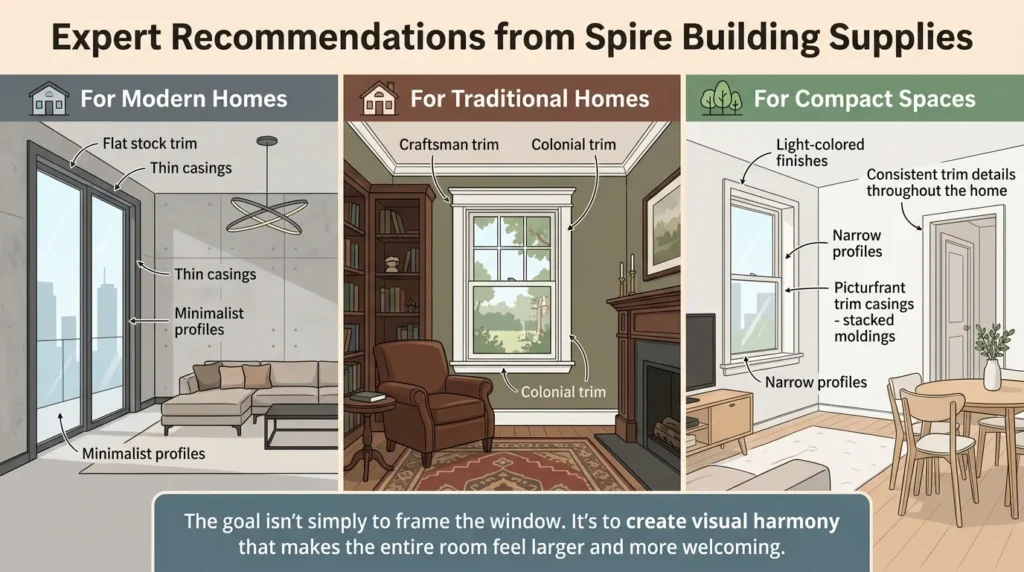
Not thinking about the entryway interior: The interior side of an iron door — especially one with large glass panels — becomes a significant visual element of your entryway. Consider how it coordinates with your flooring, baseboard trim styles, and wall finishes so the overall entry space feels cohesive.

Expert Tips for Getting This Right

Test the finish in your climate: If you live in a coastal or humid region, ask specifically about the corrosion resistance of the finish. Powder-coated finishes generally outperform painted iron in these conditions.

Think about your sidelights: Many iron front door installations look significantly better with matching sidelights (narrow glass panels on either side of the door). This adds light, symmetry, and visual weight appropriate for larger facades.

Consider a storm door only if necessary: In extremely harsh climates, a storm door adds protection — but visually, it can hide the iron door’s design. If you live in a mild climate, skip the storm door and let the iron speak for itself.

Plan your exterior lighting early: Iron doors, especially dark-finished ones, can disappear at night without proper lighting. Wall sconces, overhead lanterns, or recessed path lighting make a significant difference in how the door reads after dark.

Match the finish to your exterior hardware: Door handles, house numbers, light fixtures, and mail slots should all coordinate with the finish of the iron door. Mixing warm bronze with cool matte black, for example, creates a disjointed look that’s easy to avoid with a little planning.

Real-World Use Cases

Classic Colonial home in the Southeast: The homeowner replaced a painted wood door that was warping due to humidity. A single wrought iron front door with decorative scrollwork and dual glass panels solved the warping problem while significantly elevating curb appeal. The oil-rubbed bronze finish coordinated with the existing brick and brass exterior hardware.

Modern stucco home in the Southwest: A contemporary iron door with a flat grid pattern and large clear glass panels replaced a generic steel door. The matte black finish tied together the dark trim and metal roof accents. The owner noted that neighbors regularly comment on the entryway upgrade.

Mediterranean revival renovation: Double iron entry doors with an arched top and mosaic glass panels anchored a complete exterior renovation. The iron doors were the design decision that unified the roofline, stonework, and landscaping into a coherent aesthetic.

People Also Ask:

How long do exterior iron doors last?

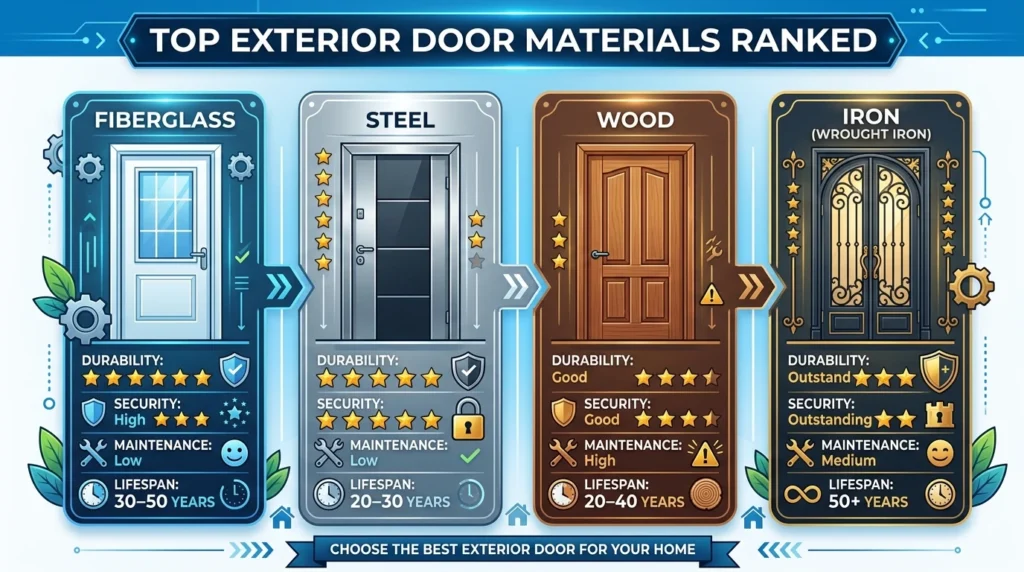
With proper maintenance, iron doors can last 30 to 50 years or more. Wrought iron doors in well-protected historic buildings have lasted centuries. The key factors are finish quality, weatherstripping condition, and periodic touch-ups to prevent rust.

Are iron doors energy efficient?

Standard iron doors conduct heat and cold more than fiberglass or insulated steel doors. However, many modern iron doors are designed with thermal breaks and insulated glass that substantially improve energy performance. Look for this feature specifically if energy efficiency is a priority.

Do iron doors rust?

Yes, if the protective finish is compromised and bare metal is exposed to moisture. Quality iron doors come with protective coatings (often powder coat) that resist rust for years. Inspect the finish periodically and touch up any chips or scratches to prevent rust from developing.

Can I install an iron door myself?

Technically possible, but not recommended. Iron doors are very heavy and require precise alignment to function correctly and seal properly. Most homeowners benefit from hiring experienced installers — ideally ones with specific experience in iron door installation.

What finish is best for an iron door?

Powder coating is generally the most durable and low-maintenance option, providing strong protection against rust and UV fading. Oil-rubbed and hand-forged finishes offer more traditional aesthetics but may require more maintenance over time. Your choice should factor in climate, maintenance preferences, and the look you want to achieve.

What Customers Say

We replaced a wood door that had been warping for years. The iron door has been in place for three seasons now with no issues at all and the house looks completely different from the street. Worth every penny. — Homeowner, Texas

I was nervous about the weight and installation, but our contractor had done iron doors before and it went smoothly. The door operates smoothly and the quality is immediately obvious when you touch it. — Homeowner, Arizona

We went with a single iron door with sidelights instead of a double door, and it was the right call for our home’s scale. It looks proportional and elegant not overdone. — Homeowner, Florida

Final Thoughts

Exterior iron doors are one of the few home upgrades that deliver on both aesthetics and function if you choose and install them correctly. The mistakes are easy to avoid with a bit of upfront research, and the payoff in curb appeal, security, and longevity is real. Take the time to measure accurately, understand the climate-specific considerations for your region, and work with installers who know the material.

If you’re exploring options, browsing a well-curated selection of iron doors is a good place to start getting a feel for what styles, sizes, and configurations are available.

About the Editorial Team

This article was written by the content team at Spire Building Supplies a group of building products specialists and home design researchers with hands-on experience across exterior doors, millwork, and architectural hardware. Our goal is to give homeowners and contractors the kind of practical, honest guidance that helps them make better decisions not just sell products. We test what we talk about, consult with installers and contractors in the field, and update our content when specifications or industry practices change.

baseboard trim styles

Baseboard Trim Styles: Design Ideas and Buying Guide

Baseboards are easy to overlook but the moment you walk into a room where they’re done right, you notice. The right baseboard trim styles can ground a space, add architectural character, and make a room feel finished in a way that paint and flooring alone simply can’t. Choose the wrong style or skip the details, and even a beautifully renovated room can feel unresolved.

This guide breaks down the most popular baseboard and trim profiles, how to choose the right one for your home, what to watch out for when buying, and how to install baseboard trim without common mistakes. Whether you’re renovating a single room or outfitting an entire build, you’ll leave with a clear picture of what works and why.

What Is Baseboard Trim and Why Does It Matter?

Baseboard trim is the molding that runs along the bottom of interior walls where they meet the floor. Its practical job is to cover the gap between drywall and flooring protecting the wall from scuffs, moisture, and foot traffic. But its design role is just as important.

Well-chosen trim creates visual continuity between the floor and wall, helps define the overall style of a space, and adds a sense of quality and craftsmanship that’s hard to replicate with other finishes.

Baseboard heights typically range from 3 to 6 inches, with taller profiles generally reading as more formal or high-end.

Common Baseboard Trim Styles Explained

1. Flat (Pencil or Sanitary) Baseboard

This is the simplest profile a flat, straight board with minimal or no detailing. It works well in modern, minimalist, or Scandinavian-inspired interiors where clean lines are the goal. Flat baseboard is often used in commercial spaces and new construction where a streamlined look is preferred.

It’s budget-friendly and easy to install, but it can look stark if the rest of the space has detailed woodwork.

2. Stepped or Colonial Baseboard

One of the most common styles in North American homes, colonial baseboard features a flat middle section with a small stepped cap at the top and a curved or beveled base at the bottom. It has a classic look that suits traditional, transitional, and farmhouse-style interiors without being overly ornate.

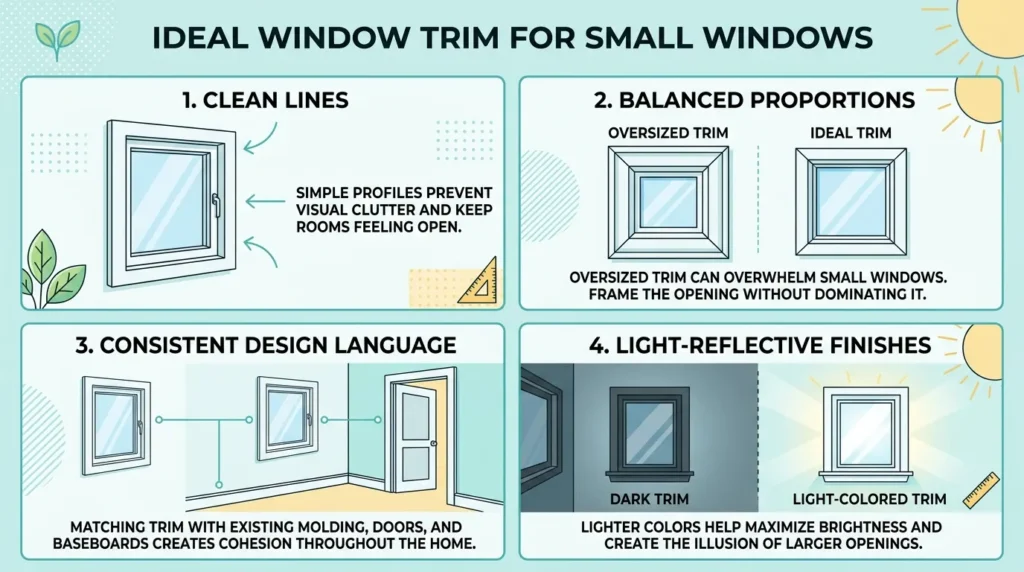
This profile pairs well with standard door and window casings, making it easy to maintain a cohesive trim package throughout a home.

3. Ogee or S-Curve Baseboard

The ogee profile uses an S-shaped curve that adds elegance without going into full traditional territory. It’s a popular choice for craftsman-style homes and period renovations, where the trim is meant to feel deliberate and refined. Ogee profiles tend to look best when used consistently with matching casing profiles on doors and windows.

4. Cove Baseboard

Cove profiles feature a concave curve that creates a gentle, softer visual transition from wall to floor. They work particularly well in rooms with rounded architectural details or in spaces aiming for a softer aesthetic — bathrooms and bedrooms especially.

5. Craftsman (Arts & Crafts) Baseboard

Thicker, taller, and more substantial than standard colonial trim, craftsman baseboard is typically 4 to 5 inches tall with a flat face and a simple top cap. It reads as architectural and intentional — less ornate than Victorian styles but with far more presence than flat modern trim.

It suits bungalows, craftsman homes, transitional interiors, and spaces where you want trim that draws the eye without looking fussy.

6. Flexible Baseboard Trim

Not every wall is perfectly straight. In older homes, curved walls, bay windows, and uneven surfaces can make standard rigid trim nearly impossible to install cleanly. Flexible trim solves this — it bends to follow curved surfaces without cracking or gapping.

A good example is the 1X6x10 Straight Flexible Trim Baseboard, which offers the height and visual weight of a wide baseboard while accommodating walls that don’t behave.

How to Match Baseboard Style to Your Interior

Choosing baseboard trim isn’t just about picking a profile you like it needs to work with the room around it.

Consider your ceiling height. Taller ceilings support taller, more detailed trim. In a room with 8-foot ceilings, a 3.5-inch colonial baseboard feels proportional. Push the same room to 5-inch craftsman trim and it can start to look heavy.

Match your door and window casing. The baseboard and casing don’t need to be identical, but they should come from the same design family. A flat, modern baseboard paired with an ornate Victorian casing will look disconnected.

Think about what’s above the baseboard, too. If you’re planning crown molding — like the Crown 4-1/4 x 9/16 FJ Primed — choose a baseboard profile that complements it. A heavily detailed crown with a completely flat baseboard can feel imbalanced.

Factor in floor type. Thick hardwood floors require more clearance at the base of the trim. Thinner vinyl plank or tile can work with a wider range of baseboard heights without creating proportion issues.

What to Look for When Buying Baseboard Trim

Material Options

  • Solid wood — durable, paintable, and stainable, but susceptible to moisture in humid rooms. Best for living areas and bedrooms.
  • MDF (Medium-Density Fiberboard) — smooth, consistent, and takes paint extremely well. Excellent for painted trim in dry areas. Avoid in bathrooms or anywhere moisture is likely.
  • Finger-jointed (FJ) pine — budget-friendly and stable, ideal for painted applications. Uses shorter wood pieces bonded together, which makes it less prone to warping than clear pine.
  • Flexible PVC or foam — ideal for curved walls or moisture-prone environments. Doesn’t warp, rot, or swell.

Primed vs. Unprimed

Primed trim is ready to paint immediately and saves time on site. Unprimed wood is the right choice if you’re staining or applying a natural finish.

Profile Consistency

When buying trim in multiple pieces, make sure the profiles match exactly especially if sourcing from different batches. Even small deviations can be noticeable at joints.

How to Install Baseboard Trim: Key Considerations

You don’t need to be a finish carpenter to install baseboard trim, but the details matter. Here’s what to know going in.

Measure twice, cut once especially at corners. Inside corners are typically coped (one piece is cut to overlap the profile of the other), while outside corners require precise 45-degree miters. A poorly fit miter joint is one of the most common complaints in DIY trim work.

Account for the floor. Always install flooring before baseboard trim. The trim should sit on top of the finished floor surface, not the subfloor, to cover the expansion gap properly.

Nail placement matters. Nails should hit studs for a secure hold. Use a stud finder and mark locations before you start. Two nails per stud location one near the top edge, one near the bottom prevents the board from bowing outward over time.

Leave a small gap at the floor. Floating floors need room to expand. Don’t nail trim directly into floating flooring.

Caulk and fill before painting. Caulk the top edge of the baseboard where it meets the wall, and fill nail holes with wood filler. These steps make the difference between trim that looks professional and trim that looks installed by a homeowner in a hurry.

For guidance on how the trim package interacts with other millwork in a room including door surrounds our article on pantry door ideas covers complementary trim considerations worth reading.

Common Mistakes to Avoid

Going too short. Standard 2.5-inch baseboard can look like an afterthought in most rooms. A minimum of 3.5 inches reads as intentional.

Ignoring the rest of the trim package. Buying baseboard without thinking about door casing, window casing, and crown molding creates visual inconsistency. Plan the full trim package before purchasing.

Buying the wrong material for the room. MDF baseboard in a bathroom is a common and costly mistake. Use moisture-resistant materials anywhere humidity is a factor.

Skipping the primer coat on raw wood. Raw trim absorbs paint unevenly. Always prime before the finish coat, even if the trim claims to be paint-ready.

Not buying enough. Add at least 10–15% to your linear footage estimate to account for waste, cuts, and damaged pieces.

Expert Tips for a Better Result

  • Sand primed trim lightly before painting factory primer can be rough and will show through the finish coat.
  • Use painter’s tape on the floor, not the wall, to protect finished flooring during installation.
  • If you’re matching existing trim in an older home, bring a small sample piece when shopping profiles that sound identical often aren’t.
  • In rooms with high humidity (bathrooms, laundry), consider a continuous bead of construction adhesive along the back of the trim in addition to nails.
  • For wide, tall baseboards, a second piece of trim (a small cap molding) at the top can give extra depth and shadow detail without needing a single oversized piece.

FAQ:

What is the most popular baseboard trim style?

Colonial baseboard is the most widely used profile in North American homes. It has a stepped, slightly detailed shape that works with traditional, transitional, and farmhouse interiors. Craftsman-style baseboard is a close second and is gaining popularity in renovations.

How tall should baseboard trim be?

For standard 8-foot ceilings, 3 to 4 inches is a common range. For 9-foot ceilings and above, 4 to 5.5 inches reads more proportional. Taller trim in a room with low ceilings can make the space feel cramped.

Can I install baseboard trim over carpet?

Yes, but it requires care. The trim should be installed at the right height so it sits just above the carpet pile. Some installers use a carpet scrap as a spacer to get the correct gap.

What’s the difference between baseboard and base molding?

They’re often used interchangeably. “Baseboard” usually refers to the main flat board that runs along the floor. “Base molding” can refer to the full assembly, including a base cap (on top) and base shoe (at the floor), which add more detail to the profile.

Do I need to hire a professional to install baseboard trim?

Not necessarily. Many homeowners with basic carpentry skills and a miter saw can successfully install baseboard trim in straightforward rooms. Tight, complex spaces with lots of angled walls, curved surfaces, or difficult transitions are better handled by a finish carpenter.

What Our Customers Are Saying

We used flexible trim throughout our older home where the walls were far from straight. The difference versus rigid trim we tried before was immediate no gaps, no cracking. Really happy with the result. — Kevin M., homeowner renovation project

I appreciated having someone walk me through the full trim package baseboard, casing, and crown before I ordered. Made a huge difference in how cohesive everything looked once it was installed. — Sandra T., general contractor client

Final Thoughts on Choosing the Right Baseboard Trim

Baseboard trim is one of those finishing details that people rarely notice when it’s done well but always notice when it’s not. The right profile, height, and material can make a room feel complete and intentional. The wrong choice, or a rushed installation, can undermine everything else you’ve invested in a space.

The good news is that with a little planning upfront matching your trim to your interior style, choosing the right material for the room, and taking the time to install it properly baseboard trim is one of the most rewarding upgrades you can make. It’s relatively affordable, visible in every room, and delivers a level of polish that’s hard to achieve any other way.

Whether you’re starting fresh in a new build or updating the trim in a renovation, take the time to get it right. Measure carefully, plan the full trim package before you buy, and don’t cut corners on the finishing steps. The result will speak for itself.

Browse Spire Building Supplies‘ full range of trim profiles and baseboard options to find the right fit for your project.

About the Spire Building Supplies Editorial Team

The content team at Spire Building Supplies draws on years of hands-on experience in residential and commercial construction, trim carpentry, and building materials. Our goal is straightforward: give you accurate, practical information that helps you make better decisions whether you’re a first-time DIYer or a seasoned professional. We know what works in the field, and we write for people who need real answers, not marketing copy.

pantry doors ideas

Pantry Doors Ideas: Design, Style & Space-Saving Options

Choosing the right pantry door often gets overlooked during kitchen planning but it can make a surprising difference in both function and style. The best pantry doors ideas don’t just look good; they improve access, save space, and complement your kitchen layout. A poorly chosen door, on the other hand, can block movement, clash with your design, or simply feel inconvenient over time.

This guide breaks down practical, real-world pantry door options, helping homeowners and builders understand what works, what doesn’t, and how to choose the right solution for different kitchen setups.

What You Need to Know About Pantry Doors

A pantry door is more than just an entry point—it affects:

  • Kitchen flow (how easily you move around)
  • Storage accessibility
  • Visual appeal of the space
  • Light and openness

Key Factors That Matter

Before exploring styles, it’s important to understand:

  • Available space (tight kitchens vs open layouts)
  • Pantry size (walk-in vs cabinet-style)
  • Usage frequency (daily vs occasional)
  • Design consistency (matching cabinets, flooring, and overall theme)

Explore options here:
Pantry doors

Popular Pantry Door Designs

Let’s look at pantry door designs that actually work in real homes—not just in catalogs.

1. Sliding Pantry Door (Space-Saving Favorite)

A sliding pantry door is one of the most practical solutions for smaller kitchens.

Why it works:

  • No swing clearance needed
  • Ideal for tight layouts
  • Easy to operate

Where it fits best:

  • Apartments
  • Compact kitchens
  • Modern minimalist homes

Real insight: Sliding doors reduce obstruction but require wall space for the track.

2. Hinged Swing Doors (Traditional Choice)

These are standard kitchen pantry doors with inward or outward opening.

Pros:

  • Simple installation
  • Works with most layouts
  • Cost-effective

Cons:

  • Requires clearance space
  • Can block movement in tight areas

3. Glass Pantry Doors

Glass panels add a decorative element while keeping the space visually open.

Benefits:

  • Makes the kitchen feel larger
  • Adds natural light
  • Stylish for modern interiors

Consideration:

  • Requires organized pantry (everything is visible)

4. Frosted Glass Doors

A practical compromise between style and privacy.

  • Light passes through
  • Hides clutter
  • Works well in contemporary kitchens

5. Barn-Style Pantry Doors

A trending option, especially in farmhouse or rustic kitchens.

  • Mounted on a sliding track
  • Adds character
  • Space-saving like sliding doors

6. Pocket Doors

These doors slide into the wall, completely disappearing when open.

Advantages:

  • Maximum space efficiency
  • Clean, seamless look

Limitation:

  • Requires wall cavity installation (best during construction)

7. Double Pantry Doors

Perfect for larger pantry openings.

  • Easier access
  • Balanced appearance
  • Ideal for walk-in pantries

Benefits of Choosing the Right Pantry Door

  1. Better Space Utilization

The right door can free up valuable kitchen space.

  1. Improved Workflow

Easy access to pantry items saves time during cooking and organizing.

  1. Enhanced Aesthetics

A well-chosen door ties the entire kitchen design together.

  1. Increased Property Appeal

Thoughtful design choices can improve resale value.

Limitations to Consider

No option is perfect. Each pantry door design comes with trade-offs:

  • Sliding doors need wall space
  • Hinged doors need clearance
  • Glass doors require maintenance
  • Pocket doors require structural planning

Understanding these limitations helps avoid costly mistakes.

How to Choose the Right Pantry Door

When comparing different kitchen pantry doors, focus on what actually matters in daily use.

  1. Measure Your Space Carefully
  • Check door swing clearance
  • Consider nearby cabinets and appliances
  1. Match Your Kitchen Style
  • Modern → glass or sliding doors
  • Traditional → paneled hinged doors
  • Rustic → barn-style doors
  1. Consider Door Height Options

Standard heights matter for both function and aesthetics:

Taller doors create a more open, premium look.

  1. Think About Daily Usage
  • Frequent access → easy-open designs
  • Less frequent use → style-focused options
  1. Installation Complexity

Some doors (like pocket or barn doors) require more planning compared to standard hinged doors.

Common Mistakes to Avoid

  1. Ignoring Space Constraints

Choosing a swinging door in a tight kitchen can disrupt movement.

  1. Prioritizing Style Over Function

A stylish door that’s hard to use becomes frustrating quickly.

  1. Overlooking Storage Visibility

Glass doors look great—but only if your pantry stays organized.

  1. Not Planning Installation Early

Some door types need structural preparation.

  1. Choosing the Wrong Size

Incorrect height or width can affect both usability and appearance.

Expert Tips That Make a Difference

Based on real-world projects:

  • Choose sliding or pocket doors for small kitchens
  • Use frosted glass if you want light without clutter visibility
  • Match door finish with cabinets for a cohesive look
  • Test door movement before finalizing (especially in tight spaces)
  • Consider long-term use, not just initial appearance

Real-World Examples

  1. Small Kitchen Upgrade

A homeowner replaced a swinging door with a sliding pantry door—freeing up space and improving movement around the kitchen island.

  1. New Construction Project

A builder installed 8-foot pantry doors in an open kitchen, creating a more spacious and premium feel.

  1. Modern Renovation

Frosted glass doors were used to add light while hiding pantry clutter—balancing function and aesthetics.

  1. Full Kitchen Remodel

A barn-style door added character to a farmhouse kitchen while saving space.

Pantry Doors vs Other Door Installations

If you’re planning multiple door upgrades, it’s helpful to understand installation basics.

Learn more here:
patio door installation

While pantry doors are simpler, proper alignment and fitting still matter for long-term performance.

What Homeowners Say

Switching to a sliding pantry door made our small kitchen feel much bigger.

We chose frosted glass, and it’s the perfect balance between style and practicality.

Upgrading to taller pantry doors changed the whole look of our kitchen.

FAQs

  1. What is the best type of pantry door for small kitchens?

Sliding or pocket doors work best because they don’t require swing space.

  1. Are glass pantry doors practical?

Yes, but they require a well-organized pantry since contents are visible.

  1. What size pantry door should I choose?

Standard sizes are 6’8″ and 8’0″, depending on ceiling height and design preference.

  1. Do pantry doors affect kitchen design?

Absolutely. They play a big role in both aesthetics and functionality.

  1. Can I install a pantry door myself?

Basic hinged doors are DIY-friendly, but sliding or pocket doors may require professional installation.

Final Thoughts

The best pantry doors ideas come down to balancing space, style, and everyday usability. A good choice improves how your kitchen looks and works, while a poor one can create daily inconvenience.

Instead of focusing only on design trends, think about how you actually use your kitchen. The right pantry door should feel natural, easy to use, and visually consistent with your space.

About the Author

Editorial Team – Spire Building Supplies
The team at Spire Building Supplies brings practical, hands-on experience in residential construction and home improvement. Their insights are based on real-world applications, helping homeowners and builders make smart, functional design decisions that stand the test of time.

Fiber Classic Doors

Best Budget-Friendly Fiber Classic Doors Without Compromising Quality

When homeowners start searching for Fiber Classic Doors, one concern shows up almost every time: “Can I get durability, style, and performance without overspending?” The short answer is yes—but only if you know what to look for.

At Spire Building Supplies, we’ve worked with contractors, builders, and homeowners across the USA—especially in Texas—who want long-lasting entry doors that don’t inflate their renovation budget. This guide is built from real-world experience, not just theory, so you can confidently choose a door that balances price and performance.

Why Fiber Classic Doors Are a Smart Budget Choice

Fiber Classic (fiberglass) doors have quietly become one of the most practical investments in home building & renovation supplies. Unlike traditional wood, they don’t warp in heat, crack in cold weather, or demand constant maintenance.

Key Advantages You Actually Notice:

  • Durability in Texas weather (heat, humidity, storms)
  • Low maintenance compared to wood doors
  • Energy efficiency that helps reduce utility bills
  • Real wood-like texture without the cost
  • Long lifespan (15–25+ years with proper care)

For homeowners working within a budget, this combination is hard to beat.

What Makes a Fiber Classic Door “Budget-Friendly” (Without Being Cheap)

Not all affordable doors are equal. A low price can sometimes mean compromised quality—but not always.

Here’s how to tell the difference:

1. Material Core Quality

A good Fiber Classic door uses a high-density polyurethane foam core, which improves insulation and structural strength.

2. Fiberglass Skin Thickness

Thicker fiberglass panels resist dents and scratches better—especially important for busy households.

3. Frame Construction

Look for composite or reinforced frames instead of basic wood frames that may warp over time.

4. Finish & Texture

Premium budget doors still offer realistic wood grain textures—something you’ll notice every day.

Popular Budget-Friendly Fiber Classic Door Styles

Choosing the right style is just as important as choosing the right material. Let’s break down some of the most in-demand options.

1. 2-Square Panel Fiber Door (Simple & Modern)

A 2-square-panel Fiber door is ideal if you want a clean, minimal look without extra cost.

Best for:

  • Contemporary homes
  • Rental properties
  • Interior-to-exterior transitions

Why it works:

  • Fewer design elements = lower cost
  • Easy to paint or customize
  • Timeless appearance

2. Double Door with 6 Flush Glazed (Light + Elegance)

A double door With 6 flush-glazed panels, it brings in natural light while maintaining privacy.

Best for:

  • Main entrances
  • Larger homes in Texas suburbs
  • Homes needing brighter entryways

Benefits:

  • Enhances curb appeal
  • Makes spaces feel larger
  • Adds resale value

3. Rustic Fiberglass Door (Premium Look on a Budget)

A rustic fiberglass door gives you that high-end wooden look without the maintenance headaches.

Best for:

  • Farmhouse-style homes
  • Ranch-style properties in Texas
  • Homes with earthy or natural aesthetics

Why homeowners love it:

  • Authentic wood-grain finish
  • Weather resistance
  • No termite issues

How to Choose the Right Budget Fiber Classic Door

Choosing the right door isn’t just about price—it’s about value over time.

Step-by-Step Decision Guide:

✔ Step 1: Define Your Entry Needs

  • Main entry or secondary door?
  • High traffic or occasional use?

✔ Step 2: Consider Climate (Important for Texas)

Texas weather can be extreme. Choose doors with:

  • UV-resistant finishes
  • Insulated cores
  • Weather-sealed edges

✔ Step 3: Focus on Energy Efficiency

Look for:

  • ENERGY STAR-rated doors
  • Tight sealing systems
  • Insulated glass (if applicable)

✔ Step 4: Pick the Right Style

Match your home’s architecture:

  • Modern → 2 panel styles
  • Traditional → panel + glass
  • Rustic → wood-grain fiberglass

What Homeowners Often Get Wrong

From years of industry experience, here are common mistakes:

Choosing the cheapest option blindly
Leads to early replacement costs

Ignoring insulation quality
Results in higher energy bills

Overlooking installation
Even the best door fails if poorly installed

Not considering sunlight exposure
Can cause fading or expansion issues

Fiber Classic Doors vs Other Materials (Quick Comparison)

Feature Fiber Classic Doors Wood Doors Steel Doors
Price Affordable Expensive Moderate
Maintenance Low High Low
Durability High Medium High
Energy Efficiency Excellent Moderate Good
Weather Resistance Excellent Poor Good

For budget-conscious homeowners in Texas, fiberglass consistently offers the best balance.

Energy Efficiency: Save More Than Just Upfront Cost

One overlooked benefit of Fiber Classic Doors is long-term savings.

How They Help:

  • Reduce heat transfer in summer
  • Keep interiors warm in winter
  • Lower HVAC usage

Over time, this can offset your initial purchase cost.

Why Homeowners Trust Spire Building Supplies

When choosing doors, trust matters just as much as price.

What Sets Spire Apart:

You’re not just buying a door—you’re investing in long-term performance.

Installation Tips to Maximize Value

Even the best Fiber Classic Doors won’t perform well if installed incorrectly.

Pro Tips:

  • Always ensure proper sealing
  • Use professional installers for exterior doors
  • Check frame alignment
  • Install weather stripping properly

Maintenance Guide (Keep It Looking New)

Good news: maintenance is minimal.

Simple Routine:

  • Clean with mild soap every few months
  • Inspect seals annually
  • Repaint or refinish every few years (if needed)

Customer Testimonials

Real Feedback from Spire Building Supplies Customers

James R. (Houston, TX)
I wanted something affordable but strong for my front entry. The Fiber Classic door I got has held up perfectly through heat and storms.

Maria L. (Dallas, TX)
The double door with glass panels completely changed how my entry looks. It feels brighter and more premium.

Daniel K. (Austin, TX)
I was considering wood, but the maintenance scared me. Fiberglass gave me the same look without the stress.

People Also Ask (PAA)

Are Fiber Classic Doors better than wood doors?
Yes. Fiber Classic doors resist warping, require less maintenance, and last longer—especially in extreme climates like Texas.

How long do Fiberglass Classic Doors last?
With proper installation and care, they can last 20–25 years or more.

Are budget fiberglass doors durable?
Yes, if they use high-quality cores and fiberglass skins. Budget doesn’t mean low quality—it depends on construction.

Can Fiber Classic Doors be painted or stained?
Absolutely. Many models are designed to mimic wood and can be stained or painted easily.

Do Fiber Classic Doors increase home value?
Yes. They improve curb appeal, energy efficiency, and buyer perception.

Final Thoughts: Affordable Without Compromise

Choosing Fiber Classic Doors doesn’t mean sacrificing quality. In fact, for many homeowners in Texas, it’s the smartest way to balance cost, durability, and style.

Whether you go with a 2-square-panel Fiber door, a double door With 6 flush glazed or rustic fiberglass door, the key is focusing on construction quality and long-term value—not just the price tag.

If you make the right choice now, you won’t have to think about replacing your door for decades.

Author Bio

Written By Building Materials Expert
With hands-on experience in the USA construction market, especially Texas, the author specializes in creating practical, experience-driven content for homeowners and contractors. Their work focuses on real-world performance, material durability, and helping readers make confident buying decisions in the home building & renovation supplies industry.

What Is a Hollow Core Door

What Is a Hollow Core Door? Complete Buyer’s Guide (2026)

When homeowners ask what is a hollow core door, they’re usually trying to balance cost, durability, and style for interior spaces. A hollow core door is a lightweight interior door made with a thin outer shell (usually MDF or plywood) and a honeycomb or grid-like interior structure. It looks like a solid door from the outside but is engineered to be more affordable and easier to install.

At Spire Building Supplies, we’ve helped thousands of homeowners, contractors, and renovators across the USA—especially in Texas—choose the right interior doors for their projects. Based on real-world installations and customer feedback, hollow core doors remain one of the most practical solutions in modern home building & renovation supplies.

What Is a Hollow Core Door?

This door is not completely hollow core. Instead, it contains:

  • A lightweight honeycomb core (cardboard or composite)
  • A solid frame perimeter for structure
  • A smooth or molded outer surface

This design makes the door

  • Easier to carry and install
  • More budget-friendly than solid wood doors
  • Suitable for interior use (bedrooms, closets, offices)

Why Hollow Core Doors Are So Popular in 2026

Homeowners today want affordability + clean design + easy installation. Hollow core doors check all three boxes.

Key Benefits

1. Cost-Effective Solution
Compared to solid wood doors, hollow core options cost significantly less, making them ideal for large projects.

2. Lightweight & Easy Installation
Contractors in Texas often prefer them because they reduce labor time.

3. Modern Design Options
From classic panels to contemporary styles, options like:

  1. Molded Panel 1’6″ x 6’8″ 2-Panel Square
  2. Molded Panel 1’6″ x 6’8″ Riverside
  3. Molded Panel 1’6″ x 8’0″ Riverside

offer clean, versatile aesthetics for any interior.

4. Smooth Paint-Ready Surface
Perfect for homeowners who want to match interior themes.

Types of Hollow Core Doors You Should Know

Choosing the right type depends on your home style and room usage.

1. Molded Panel Doors

These are the most common and come in various designs like 2-panel, 3-panel, or 6-panel.

✔ Best for: Bedrooms, living areas
✔ Style: Traditional + modern blend

2. Flush Hollow Core Doors

Flat, smooth surfaces with a minimalist look.

✔ Best for: Modern interiors
✔ Style: Clean, simple

3. Textured or Woodgrain Finish Doors

Designed to mimic real wood without the high cost.

✔ Best for: Rustic or classic interiors

Hollow Core vs Solid Core Doors: Key Differences

Feature Hollow Core Door Solid Core Door
Weight Lightweight Heavy
Cost Budget-friendly More expensive
Sound Insulation Low Better
Durability Moderate High
Best Use Interior spaces Bedrooms, offices
  • If your priority is affordability and ease, hollow core doors are the better choice.
  • If you need soundproofing, consider solid core instead.

Are Hollow Core Doors Durable?

Yes—but with realistic expectations.

From our experience at Spire Building Supplies:

  • They handle daily use well in low-traffic areas
  • They are not ideal for heavy impact zones
  • With proper care, they can last 10–15 years or more

Pro Tip: Use them for closets, bedrooms, and pantries, not main entryways.

Where Should You Use Hollow Core Doors?

Ideal Locations

  • Bedrooms
  • Closets
  • Home offices
  • Laundry rooms

Avoid Using Them In

  • Main entrances
  • High-moisture areas (unless sealed properly)
  • High-impact zones

How to Choose the Right Hollow Core Door

Choosing the perfect door isn’t just about price—it’s about fit, function, and finish.

1. Pick the Right Size

Standard sizes include:

  • 1’6″ x 6’8″
  • 1’6″ x 8’0″

Make sure to measure your opening accurately.

2. Select the Design Style

  • Minimalist → Flush doors
  • Traditional → Panel designs
  • Modern → Riverside-style doors

3. Consider Finish Options

  • Primed (ready to paint)
  • Pre-finished
  • Woodgrain texture

4. Check Frame Compatibility

Ensure your door fits standard frames or plan adjustments.

Cost of Hollow Core Doors in Texas (2026)

Pricing varies based on size, design, and finish.

Average Price Range:

  • Basic models: $50–$100
  • Mid-range designs: $100–$200
  • Premium molded styles: $200+

Bulk purchases from Spire Building Supplies often reduce overall costs for contractors.

Installation Tips (From Real Projects)

Based on field experience:

  • Always check door alignment before fixing hinges
  • Use quality hinges to prevent sagging
  • Seal edges if installing in slightly humid areas
  • Avoid excessive trimming—it weakens structure

Common Mistakes to Avoid

  • Using hollow core doors for exterior use
  • Ignoring size measurements
  • Skipping proper hardware
  • Over-trimming the door

Do Hollow Core Doors Increase Home Value?

Indirectly, yes.

While they don’t add premium value like solid wood doors, they:

  • Improve interior aesthetics
  • Keep renovation costs low
  • Help maintain budget-friendly upgrades

For rental properties and budget remodels, they’re a smart investment.

Why Choose Spire Building Supplies?

At Spire Building Supplies, we focus on:

  • Reliable quality materials
  • Consistent sizing and finishes
  • Trusted by contractors across Texas
  • Wide range of interior door designs

Our experience in home building & renovation supplies ensures you get products that perform well in real-world conditions—not just in theory.

Real Customer Testimonials

James R. – Dallas, Texas
I used hollow core doors from Spire Building Supplies for a full home renovation. Installation was quick, and the finish looks clean and modern.

Angela M. – Houston, Texas
The Riverside design gave my interiors a fresh look without overspending. Great value for the price.

Carlos T. – Austin, Texas
As a contractor, I prefer these doors for budget projects. Lightweight, easy to handle, and consistent quality.

People Also Ask (PAA)

What is the difference between hollow-core and solid-core doors?
The main difference is that hollow core doors are lightweight and budget-friendly, while solid core doors are heavier, more durable, and provide better sound insulation.

Are hollow-core doors good for bedrooms?
Yes, they work well for bedrooms where sound insulation is not a top priority.

How long do hollow-core doors last?
Hollow core doors typically last 10–15 years with normal interior use and proper care.

Are hollow core doors cheaper than solid doors?
Yes, they are significantly more affordable, making them ideal for budget projects.

Do hollow core doors block sound?
They provide minimal sound insulation compared to solid-core doors.

Final Thoughts

So, what is a hollow-core door? It’s a smart, cost-effective interior solution that balances style, practicality, and affordability. While it may not match the strength of solid doors, it excels in everyday residential use where budget and efficiency matter most.

If you’re planning a renovation in Texas or anywhere in the USA, hollow core doors remain one of the most practical choices for modern interiors.

See our best collection of double sliding windows; visit this page. How Double Sliding Windows Improve Ventilation & Natural Light

Author Bio

Spire Building Supplies Team
The Spire Building Supplies team brings hands-on experience in construction materials, interior doors, and renovation solutions across the USA. With a strong focus on quality and customer trust, the team shares practical insights to help homeowners and contractors make informed decisions.

patio door installation

The Complete Patio Door Installation Guide: What You Need to Know

A new patio door can transform how a room feels more light, better flow, and a direct connection to your outdoor space. But patio door installation is one of those projects where the details matter more than most homeowners realize. Get the rough opening wrong, skip the flashing, or choose the wrong door type for your climate, and you’re looking at drafts, water damage, or a door that won’t seal properly for years.

This guide covers the full picture: door types, how installation actually works, what to look for before buying, the mistakes that cause the most problems, and the practical details that most guides skip over. Whether you’re doing it yourself or managing a contractor, this is what you actually need to know.

Understanding Your Patio Door Options

Before installation begins, you need to know what type of door you’re working with. The configuration affects the rough opening size, the installation process, the hardware, and ultimately how the door performs over time.

Sliding Patio Doors

The most common choice for residential use. Sliding patio doors operate on a track system one panel is fixed, the other slides. They’re space-efficient (no swing clearance needed), handle large glass panels well, and are generally easier to install than hinged alternatives. The main maintenance consideration is keeping the track clean and the rollers in good condition.

A popular option is the Full Lite Gliding Patio Door a clean, full-glass sliding design that maximizes natural light and suits both contemporary and transitional home styles. It’s a strong choice where the view and light transfer matter most.

Hinged (French) Patio Doors

French doors use one or two hinged panels that swing open. They create a wider clear opening when both panels are open, which is useful for moving furniture or for a more dramatic entry feel. They require swing clearance on one or both sides, which affects furniture placement near the door.

Vinyl vs. Wood vs. Fibreglass

The frame material affects energy performance, maintenance requirements, and cost. Here’s a practical breakdown:

  • Vinyl: Low maintenance, good thermal performance, cost-effective. The most common choice for Canadian climates. Doesn’t require painting or staining.
  • Wood: Best aesthetic warmth and natural feel. Requires periodic sealing or painting. More susceptible to moisture damage if not maintained.
  • Fibreglass: Highest performance for energy efficiency and durability. More expensive but holds up exceptionally well in extreme temperature swings.

For a well-priced vinyl option that performs reliably in most residential applications, the Inspire Series Vinyl Patio Door 6068 is worth considering. The 6068 sizing (6 feet wide, 6’8″ tall) suits standard rough openings and delivers solid thermal performance without the premium price of fibreglass.

Before Installation: What to Check First

Most installation problems start before the first screw goes in. These are the things worth getting right upfront.

Measure the Rough Opening Accurately

The rough opening is the framed hole in the wall where the door unit sits. For patio doors, rough opening width is typically the door width plus 1″ (for shimming and adjustment), and height is door height plus 0.5″ to 1″.

Check the Subfloor and Sill Condition

If you’re replacing an existing patio door, inspect the sill and surrounding subfloor before ordering your replacement. Water infiltration from a poorly sealed old door is common and often causes rot that isn’t visible until the old unit is removed. Replacing rotted framing adds time and cost — better to know before the new door arrives.

Understand Your Wall Construction

Standard 2×4 framing with exterior sheathing and interior drywall gives a wall thickness of approximately 4.5″ to 5″. Patio door frames (jamb depth) are sized accordingly. If your walls are thicker — common in older homes or in cases where extra insulation was added — you’ll need extension jambs or a custom-depth unit.

Confirm the Swing and Panel Configuration

For sliding doors: confirm which panel is the active (sliding) one, and whether it operates from the left or right. For hinged doors: determine inswing vs. outswing and left-hand vs. right-hand hinge. Getting this wrong at the order stage is one of the most common and frustrating mistakes in door replacement projects.

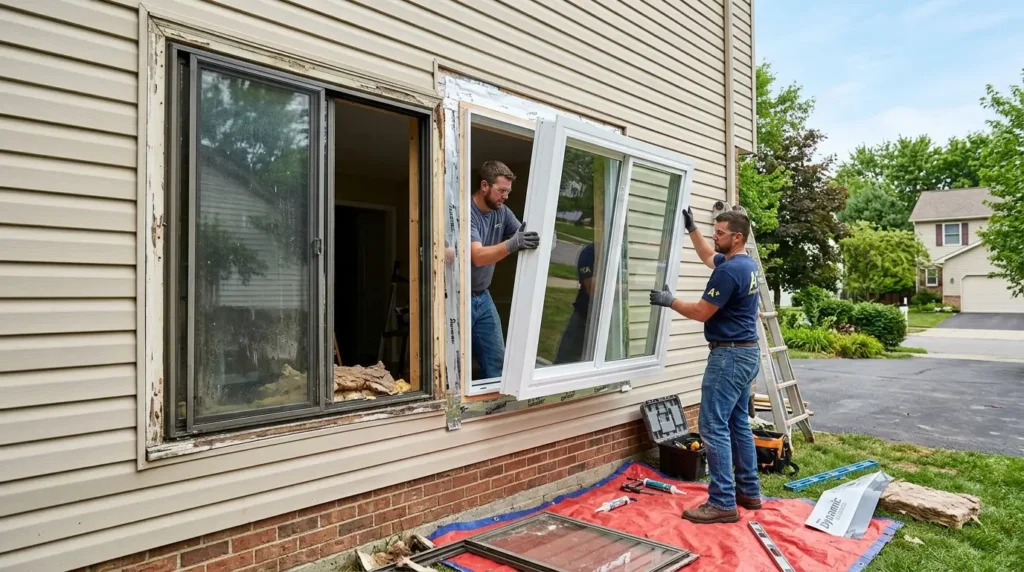
How Patio Door Installation Works: Step by Step

This section covers the standard process for a sliding patio door replacement in a wood-framed exterior wall. New construction or different door types will have variations, but the core sequence is the same.

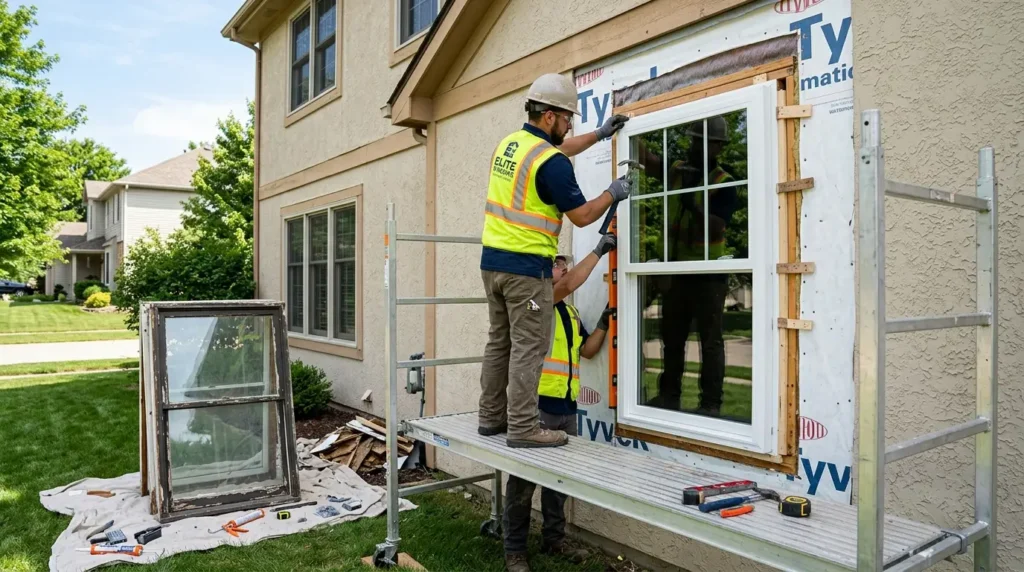
  1. Remove the existing door unit. Take out the old door, frame, and any trim. Inspect the rough opening for rot, damage, or moisture intrusion before proceeding.
  2. Prepare the rough opening. Check for square, level, and plumb. Correct any issues in the framing. Install a sill pan or sloped sill to direct any water that gets past the door away from the structure.
  3. Apply flashing tape. Flash the sill first, then the sides, overlapping properly so water runs down and out, never into the wall cavity. This is the single most important waterproofing step.
  4. Set the door unit. With help, lift the door into the rough opening. Set it on the sill, check for level, and adjust with shims as needed. Do not fasten permanently until the unit is square and plumb.
  5. Fasten through the frame. Secure the unit through the pre-drilled holes in the jamb, working from the hinge side first (for hinged doors) or the fixed panel side (for sliders). Check operation after each fastener.
  6. Insulate the gaps. Fill the space between the door frame and rough opening with low-expansion foam or fibreglass batt insulation. Avoid high-expansion foam — it can bow the frame and affect operation.
  7. Flash the exterior and install trim. Apply head flashing above the door, integrate with the house wrap, and install exterior casing. Caulk all exterior joints with a quality exterior-grade sealant.
  8. Install interior trim and hardware. Set interior casing, install the lock hardware, adjust the rollers or hinges for smooth operation, and do a final check of the seal and weatherstripping.

Common Patio Door Installation Mistakes to Avoid

  • Skipping the sill pan. A flat sill with no slope or drainage is a water infiltration problem waiting to happen. Even a small amount of water sitting against the door frame will eventually cause damage.
  • Using high-expansion foam around the frame. It’s tempting to fill fast. But high-expansion foam exerts pressure that can bow the jamb inward, causing the door to stick or not seal properly. Use low-expansion or batt insulation instead.
  • Not checking for plumb and square before fastening. Once you’ve driven screws, it’s much harder to correct alignment. Check level and plumb at every stage before shimming, after shimming, and after fastening.
  • Ignoring the head flashing. Side and sill flashing get attention, but the head (top) flashing is equally critical. Water running down the wall above the door needs to be directed outward over the door frame, not behind it.
  • Ordering the wrong hand or swing configuration. This is a very common and very avoidable mistake. Confirm the operating panel location and swing direction with your supplier before ordering, not after the unit arrives on site.
  • Forgetting to account for flooring height. If new flooring hasn’t been installed yet, the finished floor height will affect the door’s bottom clearance and operation. Factor this in before setting the door.

Expert Tips for a Better Installation

Have two people on site for the lift. Patio door units — especially full-lite glass panels — are heavy and awkward. A two-person installation is not optional; it’s how you avoid dropped glass, misaligned frames, and injuries.

Test operation before trimming. Install the door, check the slide or swing, confirm the lock aligns and engages cleanly, then install the trim. It’s much easier to adjust before casing is nailed.

Tape the rough opening sill before the door goes in. Self-adhesive flashing tape on the sill is fast and creates a proper waterproof bed for the door frame to sit on. Don’t skip it.

Caulk exterior joints — but not the weep holes. Weep holes at the bottom of sliding door frames are there to let water out. Accidentally sealing them is a common mistake that traps water inside the frame.

Check the weatherstripping after installation. Compress it slightly when the door closes. If there’s a gap anywhere, adjust the rollers or striker plate before calling the job done.

Register the warranty. Most quality door manufacturers require registration within a set window after purchase. Do it the day of installation while the details are fresh.

Real-World Scenarios: Where Installation Details Make the Difference

Replacing an Old Slider in a 1980s Home

Older homes often have non-standard rough openings — slightly out of square, with different wall thicknesses than modern builds. In these cases, plan for extra shimming time and inspect the sill and surrounding framing carefully before ordering. Many replacement projects in older homes reveal minor rot or moisture damage that needs to be addressed before the new door goes in.

New Construction with a Vinyl Slider

In new construction, the rough opening is set during framing. Confirm the door dimensions and rough opening requirements with your supplier before the framers finish — it’s far easier to adjust framing at that stage than after drywall. For standard new builds, a vinyl sliding door in a 6068 or 9068 configuration handles most residential openings well.

Upgrading to a Larger Opening

If you’re expanding an existing opening to accommodate a wider door, you’re into structural work — the header above the opening needs to be engineered for the new span. This is not a DIY situation. A structural engineer or experienced contractor needs to specify the header before any framing is cut.

If you’re still deciding on door style alongside this project, the guide to shaker style interior doors covers how to match interior and exterior door choices for a consistent aesthetic throughout the home.

What Our Customers Say

We replaced a 30-year-old sliding door ourselves using this guide as a reference. The flashing steps were the most useful our old door had significant rot at the sill that we would have buried again without knowing what to look for.

— Kevin M., Homeowner, Kelowna

We’ve installed Spire’s vinyl patio doors on four townhouse projects now. Consistent quality, good weatherstripping from the factory, and the sizing works with standard rough openings without modification.

— Sandra L., Residential Builder, Surrey

The Inspire Series door was a great fit for our budget and the installation was straightforward. The instructions were clear and the rollers adjusted easily to get a tight seal.

— Tom R., Homeowner, Calgary

Frequently Asked Questions

Can I install a patio door myself?

Yes, if you have intermediate carpentry skills and the right tools. A standard sliding door replacement in an existing opening is manageable for a capable DIYer. New construction installs and projects involving structural changes to the opening are better left to professionals.

How long does patio door installation take?

A straightforward replacement of an existing sliding door typically takes 4–8 hours for an experienced installer, or a full day for a DIYer doing it carefully for the first time. Projects with framing repairs, rot remediation, or structural changes take longer.

What size rough opening do I need for a patio door?

For most sliding patio doors, the rough opening should be the door width plus 1″ and the door height plus 0.5″ to 1″. Always confirm the required rough opening with your specific door’s installation instructions, as it can vary by manufacturer and frame design.

What is the best material for a patio door in a cold climate?

Vinyl and fibreglass both perform well in cold climates. Vinyl is the more common and cost-effective choice and handles temperature swings without significant expansion or contraction. Fibreglass offers the best overall energy performance but at a higher cost. Wood requires more maintenance in cold, wet climates.

How do I know if my patio door is properly sealed?

Close the door and check the weatherstripping contact around the entire perimeter it should compress slightly and leave no gaps. On a windy day, hold a candle or lighter near the edges; flickering indicates air infiltration. Proper roller adjustment and aligned lock hardware are also key to maintaining a good seal over time.

Final Thoughts

Patio door installation done right is a project that pays off for years in comfort, energy performance, and the daily experience of your space. Done wrong, it’s a source of ongoing problems that are expensive to fix after the fact.

The fundamentals aren’t complicated: measure accurately, flash properly, don’t rush the levelling, and use the right materials at every step. Most installation failures come down to shortcuts in those basics.

Whether you’re sourcing a single replacement door or specifying for a full build, the patio doors range at Spire Building Supplies covers standard residential sizes and configurations with the product knowledge to help you get the right unit for your specific opening.

About the Spire Building Supplies Editorial Team

The Spire Building Supplies content team draws on hands-on experience with residential and commercial building products. Our guides are written by people who understand how materials perform in the field not just on paper. We focus on giving homeowners and builders the practical information they need to make good decisions, avoid costly mistakes, and get results that hold up over time. No filler, no sales pitch just useful, honest guidance from people who know the product.

shaker style interior doors

Shaker Style Interior Doors: A Complete Buying Guide

Few interior design choices hold up across as many home styles as shaker style interior doors. Whether you’re finishing a craftsman bungalow, a modern farmhouse, or a clean contemporary build, shaker doors fit without forcing the aesthetic. But that versatility also means they’re easy to get wrong the wrong profile, the wrong material, or the wrong finish can make a thoughtfully designed space feel disconnected. This guide will help you understand exactly what makes a shaker door work, where the real differences between options lie, and how to make a decision you won’t second-guess six months after installation.

What Makes a Door “Shaker Style”?

The shaker style comes from 18th-century Shaker furniture-making a tradition built on functional simplicity, clean lines, and quality craftsmanship. Applied to doors, the defining feature is a flat recessed center panel framed by clean, square-edged rails and stiles. No decorative carving.

What you get is a door with visual structure the frame-and-panel look without the fussiness of traditional raised panel designs. That restraint is exactly why shaker doors interior have remained popular across so many decades and so many design movements.

The number of panels matters too. A single large recessed panel reads more modern and open. Two stacked panels introduce a bit more visual rhythm and suit transitional or traditional spaces better. Understanding this difference before you shop saves a lot of time.

Shaker Doors vs. Other Interior Door Styles

Before committing, it’s worth knowing how shaker doors compare to what else is available.

Flat panel (slab) doors — Completely flush with no panel detail. More minimalist than shaker. Work well in ultra-modern or Scandinavian-influenced interiors but can feel stark in warmer, more layered spaces.

Raised panel doors — Traditional carved profiles with decorative detailing. The opposite of shaker’s restraint. Common in colonial and Victorian-era homes, less suited to contemporary builds.

French doors — Glass-paned doors. Different functional category, though shaker-style frames around glass inserts are available.

Shaker doors sit in the middle — they have enough detail to feel intentional without the formality of traditional raised panel designs. That’s the reason they’ve become the dominant interior door style in new construction and renovation alike.

Panel Count: One Panel vs. Two Panel

This is one of the most important and most overlooked decisions in the buying process.

Single Panel Shaker Doors

A 1 Panel Shaker 6’8″ Height Interior Door features one large recessed panel that spans most of the door face. The result is clean, open, and slightly more contemporary in feel. It works well in:

  • Modern and transitional homes
  • Spaces where you want a lighter, more open visual
  • Rooms with minimal trim profiles

Two Panel Shaker Doors

A two panel shaker door divides the face into two stacked panels, creating slightly more visual weight and structure. This suits:

  • Craftsman and farmhouse interiors
  • Spaces with more detailed trim and molding
  • Transitional homes where some traditional influence is present

The difference seems subtle in photos, but in person across a hallway of six or eight doors — the panel count shapes the entire rhythm of the space.

Material Options and What They Mean in Practice

Hollow Core vs. Solid Core

Most shaker interior doors are available in both configurations. Hollow core doors are lighter and more affordable — the right choice for closets, laundry rooms, and secondary bedrooms where acoustic performance isn’t a priority. Solid core doors are heavier, dampen sound more effectively, and feel more substantial. They’re worth the cost in primary bedrooms, home offices, and bathrooms.

MDF vs. Wood Veneer Facing

MDF-faced shaker doors are dimensionally stable — they resist warping and paint exceptionally well. For painted finishes, MDF is often the better choice. Wood veneer doors suit stained or natural finishes and bring genuine warmth to the grain.

Primed vs. Unfinished

Many shaker doors come factory-primed and ready for paint. This saves prep time and gives you a consistent base. Unfinished doors offer more flexibility for stains and custom finishes but require more on-site work.

Shaker Doors and Cabinets: Keeping the Interior Cohesive

One of the most effective design moves in modern interiors is carrying the shaker profile from doors through to shaker cabinet doors creating visual continuity between the cabinetry and the door frames throughout a space.

In a kitchen, for example, if your cabinet doors use a flat-recessed panel shaker profile, matching that same profile on the adjacent pantry door or utility door reads as intentional design rather than coincidence. It’s a detail that interior designers use consistently and one that’s easy to apply yourself if you know what to look for.

The key is matching the rail and stile width. Standard shaker cabinet doors often use slightly narrower frames than full interior doors, but the proportions should be in harmony. When in doubt, bring a sample door panel to the cabinet showroom or bring a cabinet door sample when you’re selecting your interior shaker door.

Pre-hung vs. Slab: Which Do You Need?

This is a basic but important distinction that catches buyers off guard.

Slab doors are just the door panel — no frame, no hinges, no hardware prepped. You need an existing door frame to hang them into. If you’re replacing existing doors that already have frames in good condition, slab is fine.

Pre-hung doors come as a complete unit: door, frame, hinges, and sometimes the door stop. If you’re framing a new opening, finishing a room addition, or the existing frame is damaged, pre-hung is the right choice.

Ordering the wrong type means extra labor cost or a trip back to the supplier. Measure your existing frame (or new rough opening) carefully before deciding.

For standard 6’8″ height openings, the 1 Panel Shaker 6’8″ Height 80 Inch Interior Door is a well-suited option that fits the most common residential rough openings without custom sizing.

What to Think About Before You Buy

Door Swing Direction

Every interior door is either left-hand or right-hand swing, depending on which side the hinges are on and the direction the door opens. Stand in the doorway facing the room — if the hinges are on your left, it’s a left-hand door. Get this wrong on a pre-hung unit and you’ve got a return on your hands.

Width and Height

Standard interior doors are 80″ tall and range from 24″ to 36″ wide. Bathrooms typically use 24″–28″. Bedrooms use 28″–32″. Main passage doors and primary bedrooms benefit from 32″–36″. If you’re building to code with accessibility in mind, 32″ clear opening is the minimum for wheelchair access.

Thickness

Most residential interior doors are 1-3/8″ thick. Some solid core and exterior-grade doors run 1-3/4″. Make sure your hardware (locksets, hinges, door stops) is sized to match.

Finish Coordination

Shaker doors take paint beautifully. The most popular choices are crisp white, warm off-white, and charcoal/black for an accent door. If you’re staining, test on a sample piece first — MDF doesn’t take stain the way wood veneer does.

Coordinating your floor and door finish is a good habit. If you’re working on flooring at the same time, the best vinyl plank flooring guide covers how to think about undertones and finish coordination between floors and interior elements.

Common Mistakes to Avoid

  1. Mixing Panel Styles Across a Floor

Using a single-panel shaker in the hallway, a two-panel in the bedroom, and a flat slab on the bathroom creates visual noise. Pick one profile and use it consistently throughout a level. Small variations in profile are much more noticeable in person than in product photos.

  1. Ordering Before Measuring the Rough Opening

Don’t trust your memory or the previous door’s dimensions — especially in older homes where openings were sometimes built out of square. Measure the rough opening height and width, not the old door itself.

  1. Skipping the Primer on MDF Doors

MDF absorbs paint differently than wood. If you apply a finish coat directly to bare or lightly sanded MDF, you’ll get blotchy, uneven results. Two coats of quality primer before any finish paint is not optional — it’s the only way to get a clean, professional result.

  1. Ignoring the Frame and Casing

The door is only part of what you see. Thin, poorly installed casing makes even a great door look cheap. Make sure your casing profile complements the shaker detail — a simple flat or slightly stepped profile works best. Avoid overly ornate casing around a shaker door.

  1. Choosing Hardware That Conflicts With the Style

Ornate Victorian lever sets on a shaker door look out of place. Shaker-style doors pair best with clean, simple hardware — square or rounded lever sets, minimalist backplates, and matte finishes (black, satin nickel, or brushed brass). The hardware is the last thing a person touches on their way in and out of a room. Don’t let it undercut the door selection.

  1. Buying Pre-Hung When You Only Needed a Slab

Pre-hung units are more expensive and harder to transport. If your existing frame is square and in good shape, a slab door is the smarter buy. Check the frame with a level before you order.

Expert Tips From the Field

Paint the door before hanging it. Laying the door flat and painting it before installation gives you access to all edges and eliminates the masking and cleanup required when painting in place. It also lets you get the edges — which are often missed — properly coated.

Use three hinges on any door taller than 80″. Standard 6’8″ doors work on two hinges. Anything taller benefits from a third hinge in the middle to prevent racking and long-term sagging.

Don’t skip the undercut. Interior doors should be undercut 3/4″ to 1″ from the finished floor to allow air return through the HVAC system. This is code in many jurisdictions and practically important in any conditioned space. Ask your supplier or carpenter to confirm the right clearance for your floor type.

Order 10% extra if you’re cutting to size. Slab doors can typically be trimmed up to 3/4″ per side. If you’re fitting a non-standard opening, having a spare door gives you margin for error.

Sample the finish first. Order a primed door sample and paint or stain it exactly as you plan to finish the full set. Live with it in the space for 48 hours under different lighting conditions before committing.

Real-World Use Cases

Full Home Renovation, Transitional Style: A homeowner replacing 1990s raised panel doors throughout a two-storey home chose a two panel shaker profile in primed MDF, painted Sherwin-Williams Alabaster. The updated doors immediately modernized the interior without requiring any trim replacement. Total cost was significantly less than a custom millwork solution, and the result was cohesive across all 11 doors.

New Build, Modern Farmhouse: A builder specifying doors for a custom home used single-panel shaker doors throughout the main floor and secondary bedrooms, with the same profile in a taller format for the primary suite. The consistent profile across 14 openings gave the interior a deliberate, designed feeling that clients frequently comment on.

Rental Property Upgrade: An investor refreshing a duplex replaced original hollow-core flat slabs with primed single-panel shaker doors in standard sizing. The change required no framing work, cost less than expected, and noticeably elevated the perceived quality of the units during showings.

People Also Ask

What makes a door “shaker style”? A shaker door has a flat recessed center panel surrounded by clean, square-edged rails and stiles. No ornate molding or curves — just structured simplicity. That’s what defines the style.

Are shaker interior doors more expensive than flat slab doors? Generally, yes — slightly. The panel construction adds manufacturing complexity. But the price gap between a basic shaker door and a flat slab is modest, and the visual return is significant in most interior contexts.

Can shaker doors be used in a modern home? Yes. Single-panel shaker doors work very well in modern and minimalist interiors. The key is choosing the right panel count (one panel reads cleaner and more contemporary) and keeping hardware minimal.

What’s the best finish for shaker interior doors? Paint is the most popular choice, and MDF-faced shaker doors take paint exceptionally well with proper priming. Crisp white and warm off-white tones are the most versatile. For stained finishes, choose a wood veneer door instead of MDF.

Should interior doors match throughout a home? Generally, yes — especially on the same floor. Consistent door style, finish, and hardware throughout a level creates a cohesive interior. It’s fine to vary between floors if the design intent changes, but mixing profiles within the same visual field creates noise.

What Customers Have Said

We replaced every door in our main floor with single-panel shakers — primed, painted white. The transformation was bigger than I expected for what felt like a simple change. Everything just looks more intentional now. — M. Lindqvist, Homeowner, BC

As a contractor, I’ve been spec’ing shaker doors on most of my builds for the past four years. Clients love them, they install cleanly, and the style doesn’t date quickly. That’s what matters to me. — T. Okonkwo, Residential Contractor, Alberta

I was worried about matching my kitchen cabinets with the door profile — but once I found a shaker door with the same rail width as my uppers, it looked like it was always meant to be that way. — R. Sato, Homeowner, Ontario

Final Thoughts

Shaker style interior doors earn their popularity honestly — they’re versatile, timeless, and easy to integrate into almost any interior. But getting them right means thinking through panel count, material, swing direction, and finish before you order. The decisions aren’t complicated, but skipping them is where most buyers run into problems.

Take the time to measure carefully, sample your finish, and pick a profile you’ll use consistently. Done right, shaker doors are one of the simplest ways to give an interior a cohesive, considered look — and one of the most cost-effective upgrades available in a renovation or new build.

About The Author

Written by the Spire Building Supplies Editorial Team — building materials specialists and residential design advisors with hands-on experience across residential construction, renovation, and interior finishing. Our content is written to help you make better decisions, not to steer you toward a particular product.

buy double sliding windows in texas

How Double Sliding Windows Improve Ventilation & Natural Light

Walk into a room that feels stuffy, dim, and closed off—and you instantly notice the discomfort. Now imagine the opposite: fresh air flowing smoothly, sunlight filling every corner, and a space that feels open, breathable, and alive. That transformation often starts with one smart upgrade—choosing to buy double sliding windows.

In modern homes across Texas, ventilation and natural light are no longer luxuries—they are essentials for comfort, energy efficiency, and everyday living. Double sliding windows offer a simple yet powerful way to achieve both, making them a top choice for homeowners who want practical performance without compromising on style.

What Are Double Sliding Windows?

Double sliding windows, also known as horizontal sliding windows, feature two operable sashes that move horizontally along a track. Unlike single sliders, both sides can open, allowing for improved airflow and flexibility.

This design is particularly popular in home renovation & building supplies projects where homeowners want:

  • Wide, unobstructed views
  • Easy operation
  • Increased ventilation control

Why Ventilation Matters More Than Ever in Modern Homes

Indoor air quality has become a top priority, especially in urban areas across Texas. Poor ventilation can lead to:

  • Increased humidity
  • Mold growth
  • Indoor pollutants buildup

Double sliding windows address these issues directly.

1. Dual Opening for Maximum Airflow

Because both sashes can open, double-sliding windows create cross-ventilation. This allows fresh air to enter from one side while stale air exits from the other.

Result: A constant flow of clean, fresh air without needing mechanical ventilation.

2. Better Air Circulation in Larger Rooms

In living rooms, offices, or open-plan layouts, airflow often becomes uneven. Double sliding windows solve this by:

  • Allowing wider openings
  • Distributing air evenly
  • Reducing hot or cold spots

3. Ideal for Texas Climate

Texas experiences hot summers and mild winters. With double sliding windows:

  • You can control airflow based on weather
  • Reduce reliance on HVAC systems
  • Improve indoor comfort naturally

How Double Sliding Windows Increase Natural Light

Natural light is not just about brightness—it directly affects mood, productivity, and energy savings.

1. Larger Glass Area

Double sliding windows typically have a wider frame and larger glass panels. This means:

  • More sunlight enters your home
  • Rooms feel bigger and more open

2. Slim Frame Design

Modern vinyl window designs like:

  1. INSPIRE VINYL SVS 3030
  2. INSPIRE VINYL SVS 4030
  3. INSPIRE VINYL SVS 5030

are engineered with slimmer frames, allowing more glass surface and less obstruction.

This significantly boosts daylight penetration without increasing window size.

3. Consistent Lighting Throughout the Day

Unlike smaller or fixed windows, sliding windows provide:

  • Even light distribution
  • Reduced need for artificial lighting
  • Enhanced interior ambiance

Real Experience: Before & After Impact

From our experience at Spire Building Supplies, customers often report:

Before Installation:

  • Dark interiors
  • Limited airflow
  • High energy bills

After Installing Double Sliding Windows:

  • Brighter rooms instantly
  • Noticeable airflow improvement
  • Reduced dependence on AC during mild weather

Energy Efficiency Benefits

While ventilation and light are the primary advantages, energy efficiency is a major bonus.

Lower Energy Bills

With improved airflow and daylight:

  • Less need for air conditioning
  • Reduced use of artificial lighting

Insulated Vinyl Frames

Products like INSPIRE VINYL SVS 4030 are built with insulated frames that:

  • Maintain indoor temperature
  • Prevent heat transfer

Eco-Friendly Living

Better ventilation reduces energy consumption, making your home more sustainable.

Choosing the Right Double Sliding Window

If you’re planning to buy double sliding windows, here are key factors to consider:

1. Size & Placement

  • Large windows for living rooms
  • Medium sizes like INSPIRE VINYL SVS 3030 for bedrooms
  • Wider options like INSPIRE VINYL SVS 5030 for open spaces

2. Frame Material

Vinyl is the most popular choice because it offers:

  • Durability
  • Low maintenance
  • Energy efficiency

3. Glass Options

Consider:

  • Double-pane glass for insulation
  • Low-E coatings for heat control

Common Mistakes to Avoid

Even high-quality windows won’t perform well if chosen incorrectly.

Ignoring Ventilation Needs
Choose window sizes based on room airflow requirements.

Poor Installation
Improper fitting can cause air leaks and reduce efficiency.

Focusing Only on Price
Low-cost options often compromise durability and insulation.

Why Homeowners Trust Spire Building Supplies

Choosing the right supplier matters just as much as choosing the right window.

At Spire Building Supplies, we focus on:

  • High-quality vinyl window systems
  • Reliable product performance
  • Customer-focused service
  • Proven experience in Home Renovation & Building Supplies

Our product range, including INSPIRE VINYL SVS 3030, INSPIRE VINYL SVS 4030, and INSPIRE VINYL SVS 5030, is designed to meet modern building standards across Texas and the USA.

Customer Testimonials

James R. – Houston, Texas
I decided to buy double sliding windows from Spire Building Supplies during my home renovation. The airflow improvement was immediate, and my living room feels twice as bright.”

Melissa T. – Dallas, Texas
We installed INSPIRE VINYL SVS 5030 in our main area, and the difference is unbelievable. Less need for lights during the day and better ventilation.”

Daniel K. – Austin, Texas
Great experience with Spire Building Supplies. The team guided us through the process, and the windows perform exactly as promised.”

People Also Ask (PAA)

Do double sliding windows improve airflow?
Yes, significantly. Since both panels can open, they allow cross-ventilation, which improves indoor air circulation compared to single sliding or fixed windows.

Are double sliding windows good for natural light?
Absolutely. Their wide glass panels and slim frames maximize sunlight entry, making rooms brighter and more inviting.

Are double-sliding windows energy efficient?
Yes, especially when using insulated vinyl models like INSPIRE VINYL SVS 4030. They help regulate indoor temperature and reduce energy consumption.

Should I buy double sliding windows for my home in Texas?
Yes. They are ideal for Texas climates because they allow better airflow during hot months and help maintain comfort indoors.

Final Thoughts

If your goal is to create a healthier, brighter, and more energy-efficient home, choosing to buy double sliding windows is a smart investment.

They offer:

  • Superior ventilation
  • Increased natural light
  • Better energy efficiency
  • Modern design appeal

For homeowners in Texas, these benefits are even more valuable due to the region’s climate and lifestyle needs.

See our exclusive collection of baseboards. Visit this page: How to Choose the Perfect Baseboard Design for Your Home (2026 Guide)

Author Bio

Spire Building Supplies Team
Spire Building Supplies is a trusted name in the USA for premium window solutions and home renovation & building supplies. With years of hands-on industry experience, the team is dedicated to helping homeowners and builders choose high-performance products that deliver long-term value, comfort, and reliability.

best vinyl plank flooring

Best Vinyl Plank Flooring for Homes: Complete Buying Guide

Choosing the best vinyl plank flooring can make or break how your home looks, feels, and performs over time. For homeowners and builders, it’s one of the most practical flooring options available but only if you understand what you’re actually buying. The wrong choice can lead to premature wear, water damage issues, or floors that simply don’t hold up to daily life.

This guide breaks down everything you need to know from materials and construction to real-world performance so you can make a confident, informed decision that works for your home or project.

What Is Vinyl Plank Flooring? (And Why It’s So Popular)

Vinyl plank flooring is a synthetic flooring material designed to mimic the appearance of natural wood while offering better resistance to moisture, scratches, and wear.

Key Components

Most modern vinyl plank flooring consists of:

  • Wear layer – Protects against scratches and stains
  • Design layer – Printed pattern that mimics wood grain
  • Core layer – Provides stability (rigid core or flexible)
  • Backing layer – Adds support and sometimes sound insulation

Why Homeowners and Builders Choose It

  • Looks like real wood without the maintenance
  • Handles moisture better than traditional hardwood
  • Easier and faster to install
  • Suitable for most rooms, including kitchens and basements

This combination is why many consider it among the best flooring options for modern homes.

Types of Vinyl Plank Flooring You Should Know

Not all vinyl plank flooring performs the same. Understanding the differences helps you avoid costly mistakes.

1. Luxury Vinyl Plank (LVP)

Often referred to as the best luxury vinyl plank flooring, LVP offers thicker construction, better durability, and more realistic wood textures.

Best for:

  • Living rooms
  • Bedrooms
  • High-traffic areas

2. Rigid Core (SPC & WPC)

  • SPC (Stone Plastic Composite): Very durable, great for high traffic
  • WPC (Wood Plastic Composite): Softer underfoot, better for comfort

3. Glue-Down Vinyl Plank

  • Ideal for commercial or high-traffic environments
  • Requires professional installation
  • Extremely stable over time

4. Click-Lock (Floating) Vinyl Plank

  • Easy DIY installation
  • Popular for residential use
  • Works well over existing subfloors

A product like MOHAWK BRAND VINYL CLICK-DOWN FLOORING-Flooring is a good example of click-lock systems designed for ease of installation and long-term reliability.

Benefits and Limitations of Vinyl Plank Flooring

Benefits

  • Water resistance: Suitable for kitchens and the best flooring for bathroom in many cases
  • Durability: Resists scratches and dents
  • Low maintenance: Easy to clean
  • Affordability: Lower cost than hardwood
  • Design versatility: Wide range of styles and finishes

Limitations

  • Not completely waterproof in all cases (especially at seams)
  • Can feel less premium than real hardwood
  • Lower-quality options may fade or wear quickly
  • Subfloor preparation is critical

Understanding these trade-offs helps you choose the right product for your specific needs—not just what looks good in a showroom.

How to Choose the Right Vinyl Plank Flooring

This is where most buyers go wrong—they focus on appearance and overlook performance factors.

  1. Check the Wear Layer Thickness

The wear layer determines how long your flooring lasts.

  • 6–12 mil: Light residential use
  • 12–20 mil: Standard residential
  • 20+ mil: High-traffic or commercial use
  1. Evaluate Core Construction

Rigid core options are more stable and resistant to dents, especially in busy households.

  1. Consider Room Usage
  • Bathrooms: Look for water-resistant or waterproof options
  • Living areas: Focus on durability and aesthetics
  • Bedrooms: Comfort and noise reduction matter more
  1. Compare Installation Methods
  • Click-lock for DIY convenience
  • Glue-down for long-term stability
  1. Look at Realistic Design

High-quality planks have:

  • Embossed textures
  • Natural wood grain patterns
  • Variation between planks

For example, options like Poppy Reserve Luxury Vinyl Tile And Plank 6 mm-Flooring offer a balance of thickness, durability, and design realism.

Practical Buying Considerations

If you’re browsing options under Flooring, here’s what actually matters in real-life scenarios:

  1. What to Compare
  • Thickness (total and wear layer)
  • Warranty length
  • Water resistance rating
  • Installation requirements
  • Brand reliability

2. What People Often Overlook

  • Subfloor condition
  • Expansion gaps
  • Underlayment compatibility
  • Color variation under different lighting

3. What Works Best in Real Homes

  • Neutral tones for resale value
  • Medium textures to hide wear
  • Durable finishes for high-traffic areas

Common Mistakes to Avoid

These mistakes can lead to costly repairs or dissatisfaction.

  1. Choosing the Cheapest Option

Lower-cost vinyl often has thinner wear layers and shorter lifespan.

  1. Ignoring Subfloor Preparation

Uneven subfloors cause:

  • Gaps
  • Clicking noises
  • Premature wear
  1. Using the Wrong Type for Wet Areas

Not all vinyl is fully waterproof. Always check specifications.

  1. Overlooking Installation Quality

Even premium flooring performs poorly if installed incorrectly.

  1. Mismatching Flooring Across Spaces

Inconsistent flooring disrupts visual flow and reduces home value.

Expert Tips for Better Results

Choose Slightly Higher Quality Than You Think You Need

It pays off in durability and long-term satisfaction.

Test Samples at Home

Lighting can change how flooring looks throughout the day.

Plan Transitions Between Rooms

Smooth transitions improve both aesthetics and functionality.

Consider Long-Term Maintenance

Some finishes hide scratches better than others.

Think About the Entire Interior

Flooring should complement doors, walls, and finishes. For example, pairing flooring choices with entry features like wrought iron single entry doors creates a cohesive design.

Real-World Examples

Example 1: Family Home Upgrade

A homeowner replaced worn carpet with vinyl plank flooring:

  • Improved durability for kids and pets
  • Easier cleaning
  • Modernized appearance

Example 2: Rental Property Renovation

A builder installed rigid core vinyl:

  • Reduced maintenance costs
  • Increased tenant appeal
  • Faster installation turnaround

Example 3: Bathroom Remodel

Switching to water-resistant vinyl created a practical alternative to tile, making it one of the best flooring for bathroom projects with easier maintenance.

Customer Experiences

We installed vinyl plank throughout our home, and it’s held up perfectly with pets and kids.

The click-lock system made installation much easier than expected.

Upgrading to a thicker wear layer was worth it—no visible scratches after a year.

FAQ:

What is the best vinyl plank flooring for homes?

High-quality luxury vinyl plank with a thick wear layer and rigid core is typically the best choice for durability and performance.

Is vinyl plank flooring good for bathrooms?

Yes, many options are water-resistant or waterproof, making them suitable for bathroom use.

How long does vinyl plank flooring last?

With proper installation and care, it can last 10–25 years depending on quality.

Can vinyl plank flooring look like real wood?

Yes, modern designs closely mimic natural wood grain and texture.

Is vinyl plank better than hardwood?

It depends—vinyl is more water-resistant and affordable, while hardwood offers a more premium natural feel.

Final Thoughts

Vinyl plank flooring has become a go-to solution for modern homes because it balances durability, style, and cost. But not all options are equal. By focusing on wear layers, core construction, and real-world performance, you can avoid common pitfalls and choose flooring that truly lasts.

The goal isn’t just to find something that looks good today it’s to invest in flooring that continues to perform well years down the line.

About the Author

Spire Building Supplies Editorial Team
The Spire Building Supplies team works closely with homeowners, contractors, and builders to understand how materials perform in real-world conditions. Their insights are based on hands-on experience with installation, product durability, and practical use helping readers make informed decisions that hold up over time.

baseboard design ideas 2026

How to Choose the Perfect Baseboard Design for Your Home (2026 Guide)

When it comes to baseboard design ideas 2026, most homeowners underestimate their impact—until they see the difference the right trim makes. Baseboards are not just functional; they define the transition between walls and flooring, influence perceived room height, and tie your entire interior together. In modern homes, especially those built with quality home building & renovation supplies, baseboards are now a design statement—not an afterthought.

At Spire Building Supplies, years of hands-on industry experience and customer feedback have shown one thing clearly: the right baseboard choice can elevate an average space into a polished, cohesive interior.

Why Baseboards Matter More in 2026 Than Ever

Interior design trends in 2026 focus on clean lines, intentional details, and long-term durability. As a result, trim baseboards now play a bigger role in:

  • Enhancing architectural depth
  • Protecting walls from wear and tear
  • Creating visual harmony between floors and walls
  • Increasing perceived property value

Moreover, modern buyers and homeowners are more detail-orientated. Even subtle elements like trim profiles influence how “finished” a home feels.

Understanding Baseboard Basics Before You Choose

Before diving into styles, it’s essential to understand the three core components:

1. Height

  • Short (2–3 inches): Works in compact spaces or budget builds
  • Medium (4–5 inches): The most common and versatile option
  • Tall (6+ inches): Ideal for luxury interiors and high ceilings

2. Thickness

Thicker baseboards provide a more premium appearance and durability, especially in high-traffic areas.

3. Profile Style

Profiles range from flat modern boards to decorative colonial trims. Your choice should match your interior theme.

Top Baseboard Design Ideas 2026

1. Flat Minimalist Baseboards

Clean, sharp, and simple—flat baseboards are dominating modern interiors. They pair perfectly with minimalist homes and open layouts.

Best for: Contemporary, Scandinavian, and industrial interiors

2. Tall Statement Baseboards

In 2026, taller baseboards are trending in upscale homes. They create a dramatic vertical effect and make ceilings feel higher.

Pro Tip: Combine tall baseboards with neutral wall colors for a refined look.

3. Shadow Gap Baseboards

Instead of visible trim, shadow gaps create a recessed line between the wall and floor.

Why it works:

  • Ultra-modern aesthetic
  • Seamless wall appearance
  • Popular in luxury architecture

4. Decorative Traditional Profiles

Still relevant for classic homes, these include curved edges and layered detailing.

Best for:

  • Traditional homes
  • Transitional interiors

5. Flexible Baseboards for Curved Walls

For unique layouts, flexibility matters. Products like 1x6x10 straight flexible trim baseboards are ideal for curved walls or unconventional spaces.

Choosing the Right Material for Baseboards

Material selection directly affects durability, maintenance, and cost.

MDF (Medium-Density Fiberboard)

One of the most popular choices in 2026.

  • Smooth finish for painting
  • Budget-friendly
  • Ideal for indoor use

Examples include:

These primed MDF trims from Spire Building Supplies ensure consistent quality and easy installation.

Solid Wood

  • Natural grain appeal
  • Long-lasting
  • Higher cost

PVC / Flexible Trim

  • Water-resistant
  • Perfect for bathrooms and basements
  • Works well for curved designs

How to Match Baseboards with Flooring

Your flooring and baseboards must complement each other.

Hardwood Floors

  • Use contrasting or matching tones
  • White baseboards remain a timeless choice

Tile Flooring

  • Choose moisture-resistant materials
  • Keep profiles simple for a clean finish

Vinyl (LVP) Flooring

  • Stick with modern flat baseboards
  • Neutral tones work best

How to Match Baseboards with Wall Colors

This is where design decisions truly come together.

White Baseboards + Colored Walls

  • Classic and versatile
  • Makes walls stand out

Matching Baseboards & Walls

  • Creates a seamless, modern look
  • Works best in minimalist interiors

Contrasting Baseboards

  • Adds visual interest
  • Ideal for bold design statements

Room-by-Room Baseboard Selection Guide

Living Room
Go for medium to tall baseboards to create a welcoming, finished look.

Bedrooms
Soft, clean designs work best—nothing too heavy or ornate.

Kitchen
Choose durable, easy-to-clean materials like MDF or PVC.

Bathrooms
Moisture resistance is key—avoid untreated wood.

Installation Tips from Industry Experts

Based on real contractor feedback from Spire Building Supplies, here are practical insights:

  • Always measure twice before cutting
  • Use high-quality adhesive and nails
  • Fill gaps with caulk for a seamless finish
  • Paint after installation for a polished look

Common Mistakes to Avoid

Even experienced homeowners make these errors:

  • Choosing baseboards too small for the room
  • Ignoring wall and floor color coordination
  • Mixing too many styles
  • Using low-quality materials

Avoiding these ensures a long-lasting and professional result.

Do Baseboards Increase Home Value in 2026?

Yes—and more than most people expect.

Well-designed baseboards:

  • Improve overall interior appeal
  • Signal attention to detail
  • Increase perceived home quality

In competitive real estate markets, these subtle upgrades can influence buyer decisions.

Why Homeowners Trust Spire Building Supplies

Choosing the right supplier is just as important as choosing the right design.

Spire Building Supplies stands out because of:

Their trim collection ensures that every project—whether small or large—meets modern design expectations.

Real Customer Testimonials

James R. – Houston, Texas
I upgraded my home using MDF trims from Spire Building Supplies, and the difference is impressive. The finish looks clean, and installation was smooth.

Emily S. – Dallas, Texas
The flexible baseboard option worked perfectly for my curved wall. I had been searching for something like this, and the quality met my expectations.

Michael T. – Austin, Texas
Spire’s trim quality stands out. Clean edges, easy to paint, and durable—exactly what I needed for my renovation project.

People Also Ask (PAA)

What is the most popular baseboard style in 2026?
Flat and minimalist baseboards are currently the most popular due to their clean and modern appearance.

What size baseboard is best for modern homes?
Typically, 4–6 inches works best, but taller baseboards are preferred for high ceilings.

Are MDF baseboards good for long-term use?
Yes, MDF baseboards are durable, cost-effective, and provide a smooth painted finish, making them a top choice for interiors.

Should baseboards match the floor or walls?
It depends on your design goal. Matching walls creates a seamless look, while contrasting adds visual depth.

Can baseboards be used in bathrooms?
Yes, but moisture-resistant materials like PVC are recommended.

Final Thoughts

Choosing the right baseboard isn’t just about filling a gap between the wall and floor—it’s about defining your space. With evolving baseboard design ideas 2026, homeowners now have more options than ever to create interiors that feel intentional, modern, and complete.

Focus on proportion, material, and style alignment. When done right, baseboards become one of the most impactful finishing touches in your home.

See our exclusive collection of durable single-hung windows. Visit this page: Do Durable Single-Hung Windows Increase Home Value?

Author Bio

Spire Building Supplies Team
A team of building materials experts based in Texas, providing practical insights and trusted guidance in home building & renovation supplies.

Back to Top

Search For Products

Product has been added to your cart